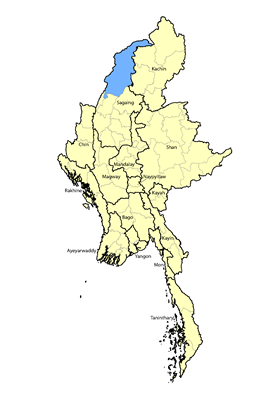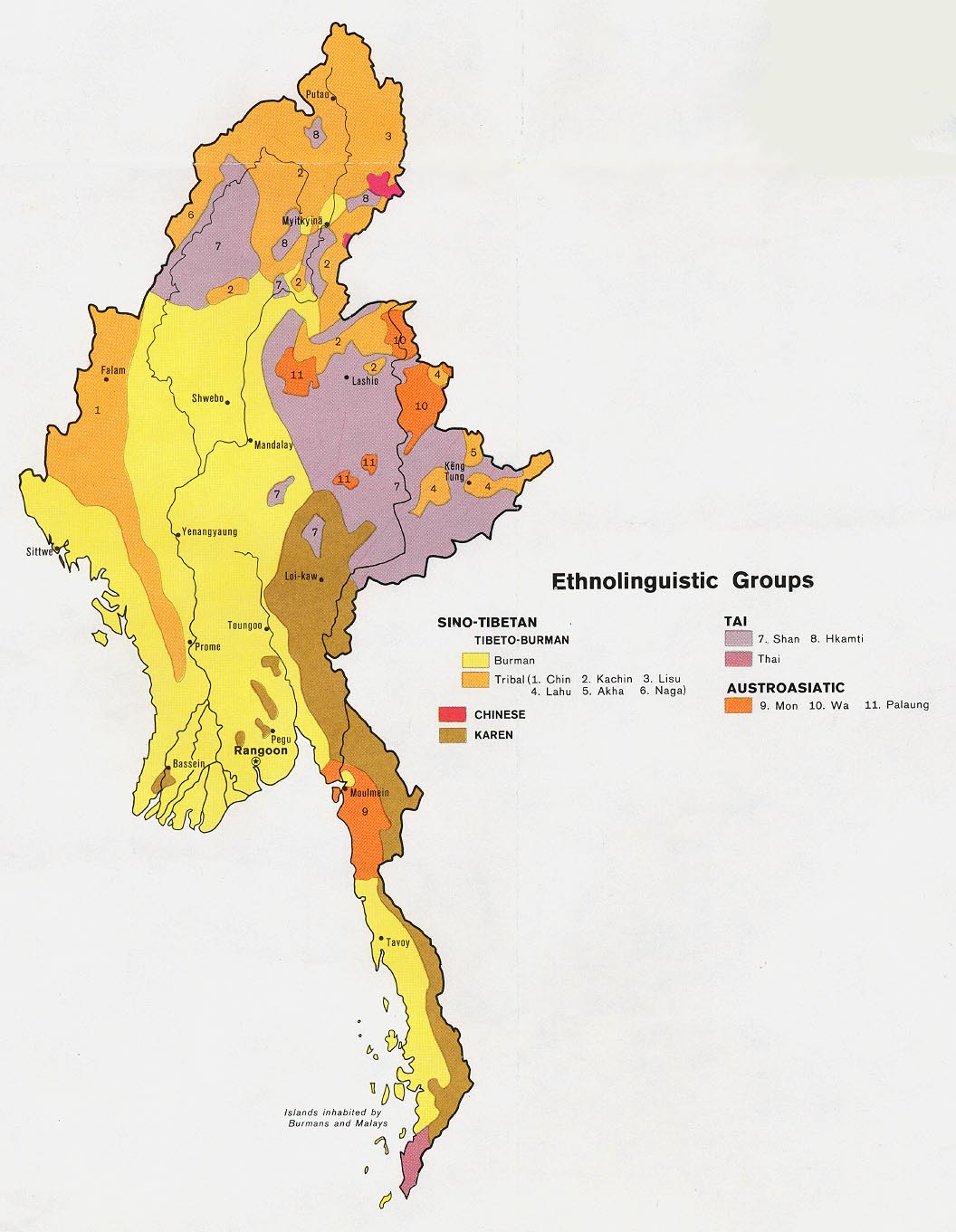

Hasas inhabit the Dunghi area of Lahe Township in western Myanmar's mountainous Sagaing Region. Their main village, Lulum, used to be situated east of the Hangya River, but in the past they moved away and established a new community near Taka. After settling into their new location, they decided to call the village Lulum after their former abode. The two nearest neighbors of the Hasa are the Gaqlun and Raqnu, with 70 households of Gaqlun people living in Taka village. More Hasa people live across the border in the Indian state of Arunachal Pradesh, where they are officially known as the Haisa Tangsa.
Although the Hasa are practically invisible in Myanmar due to not being recognized by the government, across the border in India they have been granted official status as a Scheduled Tribe. In that country, most of the Hasa dwell in the East Siang District, which is about 155 miles (250 km) west of the border area where most of the other Tangshang tribes in India live. That distance has separated the Myanmar and India Hasa communities and caused them to drift apart culturally and linguistically. According to the 2011 Indian census, 848 Hasa (Haisa) people spoke Adi as their first language, while only 122 were still able to speak their mother tongue.
In contrast to their counterparts in India who are rapidly losing their language, Hasa remains in vigorous use in Myanmar. It has been found to belong to a group of 11 loosely related Tangshang varieties that also include Gaqchan, Gaqyi, Henching, Khalak, Kochung, Lakki, Lungkhi, Rasa, Ringkhu, and Shangti. As each of these tribes has its own cultural identity and dialect, they have been profiled separately in this book.
Although little is known of the origins of the Hasa people, their present neighbors say that all the Hasa left their ancestral region and relocated to their current location. Interestingly, several of the languages determined to be related to Hasa are spoken by tribes in Kachin State, suggesting they may have originally lived there and not in the Sagaing Region, which most Tangshang tribes acknowledge as their historical homeland.
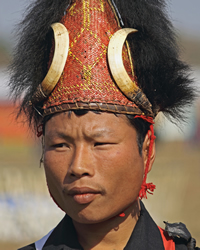
Despite their differing culture, history, and speech, all Tangshang tribes love to hold festivals and perform their traditional songs and dances. A foreign visitor recorded what it was like to attend a New Year festival in Lahe as 29 different Naga and Tangshang tribes arrived, each dressed in their traditional garb: "Each group made its way down to the main festival grounds to announce their arrival and to stage a demonstration of martial and dancing abilities as they whirled around, daring anyone to challenge them. Their vitality was amazing. These were people who had walked for days, stopping only to sleep on the way, then pausing to put on their finery before sweeping into Lahe looking as fit as the day they set out. The magnificence of the costumes and ornaments, the powerful primeval chants, and the quantity of lethal weapons, left us with a profound sense of raw power."
Although in Myanmar almost all Hasa people profess to follow Jesus Christ, across the border in India only 43 percent of the Hasa are Christians, 41 percent are animists, and 15 percent have been converted to Hinduism.
While God has moved powerfully among the Tangshang tribes in the past, transforming many lives, one reason why such a high percentage of Tangshang people identify as Christians is that parents in Myanmar must declare the religion of their children at birth. Most Tangshang choose to register them as Christians, and that label can stay with them for life, despite the faith of some being superficial.
Pray for spiritual renewal among Hasa Christian believers and freedom from syncretism.
Pray for the Lord to bless the work of their hands as they obey biblical principles.
Pray for the Lord to bless them spiritually and physically.
Pray for the believers among them, that they will grow strong in faith and become part of the mission force, carrying the gospel to their own people and beyond.
Scripture Prayers for the Hasa in Myanmar (Burma).
Asia Harvest, Copyrighted 2026 © Used with permission
| Profile Source: Joshua Project |
| Other PDF Profile |