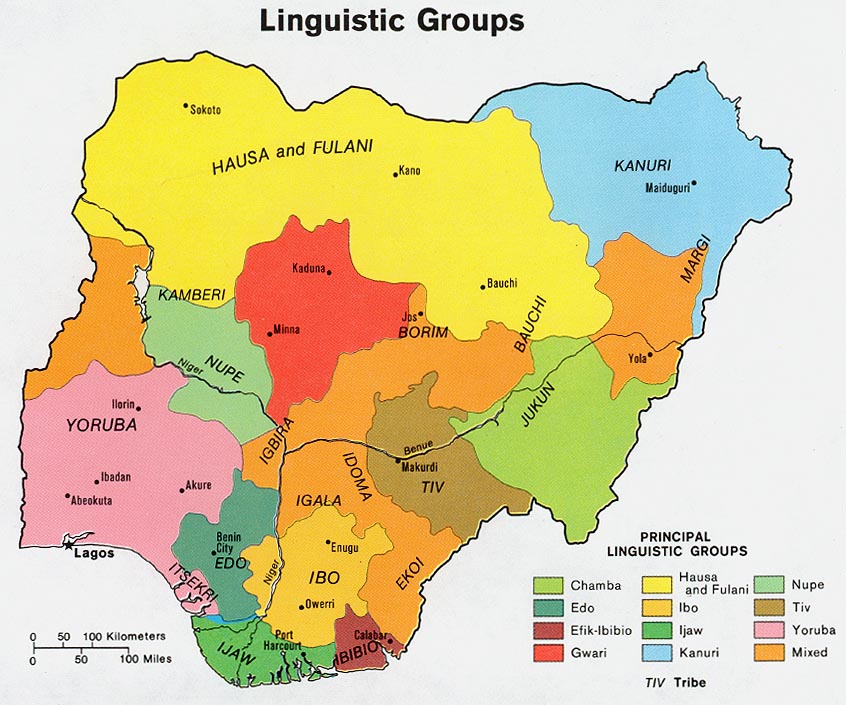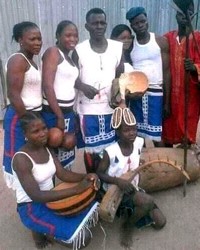

Rising above the savanna of northeastern Nigeria, the Verre Hills have sheltered their people for generations. The Verre — also known as the Duru-Verre, Vere, or by the alternate name Kobo — occupy the highlands and surrounding plains of the Yola and Fufore Local Government Areas of Adamawa State, one of the most ethnically layered states in a country famous for its diversity. Their territory sits close to the original heartland of the Adamawa Emirate, placing them squarely at the center of one of West Africa's most consequential nineteenth-century political upheavals.
The Verre language belongs to the Adamawa branch of the Niger-Congo family and is related to Chamba and other languages of the region. Dialectal variation within the community reflects the historical reality that "Verre" as a shared ethnic identity is, to some degree, a twentieth-century development — one that consolidated over time as the community found common cause in navigating the pressures of Fulani rule, colonial administration, and the demands of the modern Nigerian state. Hausa functions as a secondary language and the primary medium of trade and inter-ethnic communication across the region.
The Fulani jihad launched by Usman dan Fodio in 1804 fundamentally reshaped the world the Verre inhabited. Modibbo Adama, the founder of the Adamawa Emirate, established Yola in 1841 partly as a base for campaigns against the indigenous Bata and Verre peoples. The Verre hills offered some protection against Fulani cavalry, but the Verre of the plains fell far more directly under Fulani domination — with colonial records referring to lowland Verre as effectively under Fulani authority. This centuries-long pressure from both Fulani overlords and, later, Hausa traders introduced Islam to the community beginning in the early 1800s. Christian missionaries arrived much later, with the first mission contact occurring in the 1920s.
The Verre live in nuclear or extended family compounds, typically built of mud brick and enclosed by protective walls — a design that echoes both the practical demands of the savanna environment and older traditions of securing households against outside threat. Slash-and-burn agriculture forms the backbone of the economy. Maize and cassava are the primary crops, grown for household consumption and local market sale alike. The wider agricultural setting of Adamawa State also supports millet, guinea corn, groundnuts, yams, and cotton, and the Verre have acquired cattle-raising skills alongside their Fulani neighbors, adding livestock to their economic repertoire.
Society is organized along patrilineal clan lines, with family elders commanding authority over land, marriage arrangements, and community decisions. Disputes and social obligations are negotiated through these clan structures, which define kinship networks, inheritance patterns, and communal responsibilities. Markets serve as vital points of social and economic exchange, drawing Verre into contact with Hausa, Fulani, Chamba, and other neighboring peoples. The Boko Haram insurgency that has destabilized much of northeastern Nigeria has affected Adamawa State significantly, compounding existing poverty, limiting access to services, and adding a layer of insecurity to daily life that weighs heavily on rural communities throughout the region.
Traditional ethnic religion commands the allegiance of a strong majority of the Verre. Theirs is a spiritually animated world in which the dead remain active — ancestral spirits are understood to inhabit an unseen realm below the ground, from which they continue to watch over, bless, or punish the living according to whether proper customs and obligations have been honored. Ancestor veneration is not a peripheral practice but a central organizing force of spiritual life, binding clans to their deceased forebears through offerings, rites, and the observance of inherited taboos. Witchcraft beliefs also play a role, and disputes — particularly over illness and misfortune — are understood in part through the lens of spiritual causation. The Verre do not simply look to the spirit world for guidance; they count on it, fear it, and seek its favor in the practical matters of planting, healing, family conflict, and death.
Islam, which arrived through Fulani and Hausa trading relationships beginning in the early nineteenth century, has taken hold among a meaningful portion of the population. A smaller but present share of the Verre identify as Christian, with missionary contact dating to the 1920s. The evangelical community, while existing, is modest. The Jesus Film is available in Verre, and Global Recordings Network has produced audio gospel materials in the language — useful tools in an environment where oral communication often carries more weight than the written word. Scripture portions were published in Verre in 2013, but neither the New Testament nor a complete Bible has been translated, leaving the church with only fragments of God's Word in the language that reaches the heart most directly.
Adamawa State carries one of the lowest human development rankings in Nigeria, burdened by the cumulative effects of insurgency, poverty, and limited investment in public infrastructure. The Verre, like other rural communities in the state, face inadequate healthcare facilities and shortages of trained medical personnel. Preventable diseases, maternal mortality, and limited emergency care options take a persistent toll on community wellbeing. Educational access is constrained by poverty and distance, particularly for girls, whose schooling is deprioritized in many families. Clean water and sanitation infrastructure is poor across much of the rural Adamawa landscape. The ongoing security crisis tied to Boko Haram activity and Fulani-farmer conflicts poses a direct threat to safety, freedom of movement, and the economic stability that sustains ordinary life. Nigeria's persecution ranking underscores the real dangers facing Christians in this environment.
Most urgently, the church among the Verre needs the full Word of God. A community whose majority still trusts in ancestor spirits rather than the Lord Jesus Christ needs more than audio recordings and a handful of translated passages — it needs the complete Scripture that can plant faith, correct error, and sustain a church across generations.
Ask the Lord of heaven to make Himself known among the Verre, drawing men and women away from the spirit world and into a living relationship with Jesus Christ, the only one with authority over life, death, and every unseen power. Pray for the completion of a full Bible translation in the Verre language — for skilled translators, faithful mother-tongue co-workers, and the financial and organizational support to see this critical work through to completion. Ask God to protect and strengthen the small evangelical community among the Verre, and to raise up faithful local teachers who will proclaim the whole counsel of Scripture without compromise in the face of both traditional religious pressure and Islamic influence. Pray for healthcare workers, educators, and peace workers willing to serve the Verre in the insecurity of Adamawa State, bearing witness through tangible acts of love to a God who heals and restores.
Scripture Prayers for the Verre in Nigeria.
https://www.vestiges-journal.info/2021/Verre/HTML/1_1_1_history.htm
http://www.101lasttribes.com/tribes/verre.html
https://en.wikipedia.org/wiki/Adamawa_State
https://en.wikipedia.org/wiki/Adamawa_Emirate
https://www.britannica.com/place/Yola
https://www.ethnologue.com/language/ver/
https://allafrica.com/stories/200911190399.html
| Profile Source: Joshua Project |