


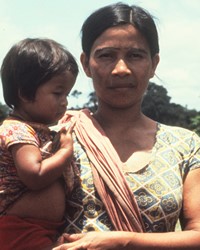

The Lowland Napo Quichua (also called Napo Kichwa, Lowland Quichua, or Runa Shimi) are an indigenous Quechua-speaking group living primarily in the Amazonian lowlands of Ecuador, with communities also in Peru and Colombia. They inhabit areas along the Napo River and its tributaries, including regions in Loreto and Madre de Dios. Historically, they are descendants of the Inca Empire's expansion into the Amazon basin, which introduced the Quechua language to these regions. Before the Inca influence, their ancestors spoke other languages, now nearly extinct, due to linguistic assimilation during the Inca and later Spanish colonial periods. Spanish colonization brought severe disruption—disease, forced labor, and cultural suppression—yet the Napo Quichua retained many traditional practices and adapted Quechua as their primary language.
The Lowland Napo Quichua live in small riverine communities surrounded by dense rainforest. Their economy is based on subsistence agriculture, fishing, and gathering forest products. Families cultivate crops such as manioc (cassava), maize, plantains, peanuts, and sweet potatoes in chagras (cleared garden plots). Hunting and fishing supplement their diet, and wayusa tea is a traditional beverage consumed daily.
Family life is communal, with extended families sharing responsibilities. Social organization emphasizes reciprocity and cooperation, and marriage often strengthens ties between clans. Celebrations include traditional music, dance, and rituals tied to agricultural cycles and spiritual beliefs. Food staples include cassava bread, fish, and tropical fruits. While some younger members engage with urban markets or education, most communities maintain a lifestyle closely connected to the forest.
The primary religious orientation of the Lowland Napo Quichua is ethnoreligion—a blend of animistic traditions and syncretized Catholic practices. Their worldview centers on harmony with nature and reverence for spiritual beings associated with rivers, forests, and mountains. Pachamama (Mother Earth) is honored as a life-giving force, and rituals often involve offerings, chants, and the use of plants like tobacco and wayusa. While Christianity has a presence, many beliefs remain deeply rooted in indigenous cosmology, and biblical understanding is often minimal.
The Lowland Napo Quichua face challenges in education, healthcare, and cultural preservation. Geographic isolation limits access to medical services and clean water. Economic vulnerability persists due to dependence on subsistence farming and limited market integration. Spiritually, there is a need for clear teaching of the gospel and discipleship that respects their cultural identity. Language revitalization is also important, as younger generations increasingly adopt Spanish, risking the erosion of Quichua traditions.
Pray for the Lowland Napo Quichua to experience the transforming love of Jesus Christ and grow in faith.
Ask God to raise up culturally sensitive workers who can share the gospel and disciple believers.
Pray for those who already identify as Christians to become strong in their faith and join the mission force to reach other indigenous groups in South America.
Intercede for improved healthcare, clean water, and educational opportunities in their communities.
Pray for the preservation of their language and cultural heritage in ways that honor Christ.
Scripture Prayers for the Quichua, Lowland Napo in Peru.
PeopleGroups.org – Napo Lowland Quichua
Wikipedia – Quijos-Quichua
Encyclopedia.com – Amazonian Quechua Religions
| Profile Source: Joshua Project |



