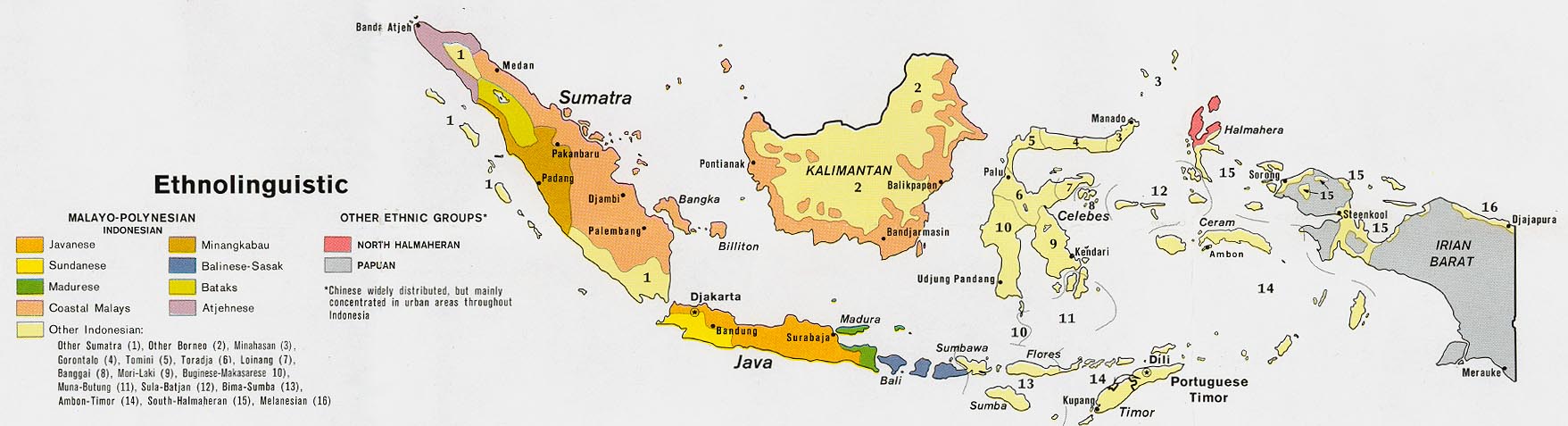
Konda in Indonesia are a Papuan people of Southwest Papua, especially associated with Konda District in South Sorong Regency on the south side of the Bird's Head Peninsula. Reliable outside linguistic sources identify Konda as a recognized Papuan language of this area, and one current reference notes that some researchers prefer the name Yaben for the language in certain local contexts because in the village of Konda it is spoken by the Yaben people rather than by another resident group. That helps explain why public sources sometimes connect the name Konda with Yaben or Ogit. What can be said with confidence is that Konda in Indonesia belong to the indigenous Papuan world of the South Bird's Head region, where identity is often closely tied to district, village, and language.
Their history is best understood within the wider South Sorong lowland and coastal zone, where small Papuan peoples have preserved their identity through village life, kinship, and language continuity rather than through large centralized institutions. A recent academic source on ethnicity and language mapping in West Papua notes that the Konda language is indicated as spoken by the people of Konda Subdistrict, confirming that this is not merely a place-name but a real ethnolinguistic community tied to a specific territory.
Their language is Konda, a Papuan language also referred to in some sources as Yaben or Ogit. A current linguistic summary places it in Konda District of South Sorong Regency, mentions scattered villages such as Wamargege, Simora, Demen, Sisir, and Konda, and classifies it within the South Bird's Head grouping. It also notes that the language is considered endangered. In practical terms, their language likely remains most important in home and village life, while Indonesian or Papuan Malay may be more common in government, school, or broader regional contact.
Konda in Indonesia live in the South Sorong area of Southwest Papua, in a region of lowland forest, rivers, tidal waters, and access to coastal resources rather than steep interior highlands. The most useful outside ethnographic clue here is a field-based study of the Konda and Yaben tribes in West Papua, which notes that many Konda people work as shrimp fishermen, going out to sea for several days and then returning to the village. That is unusually specific and valuable because it points to a real livelihood pattern rather than forcing a generic Papuan description. It suggests a people whose lives are shaped by fishing, coastal movement, and periodic absence from the village for work.
That same source indicates that Konda communities are village-based and interact closely with neighboring peoples such as the Yaben, including through intermarriage. This fits the broader South Sorong pattern of small indigenous communities living in close proximity, where daily life is shaped by family ties, local travel, subsistence work, and shared social space. In such settings, households often depend on a mix of fishing, small-scale cultivation, gathering, and local exchange, even when one activity such as shrimp fishing becomes especially prominent.
Konda in Indonesia are identified primarily with Christianity, but that should be handled carefully. In many Papuan settings, Christian identity can be real and longstanding while older customary beliefs, spiritual fears, or inherited local practices continue beneath the surface. This is especially true in smaller village-based communities where traditional understandings of place, kinship, sickness, protection, and unseen powers may still influence daily life even where church presence exists.
That means Konda in Indonesia should not be treated as having no Christian exposure, but neither should outward Christian identity be assumed to mean strong biblical discipleship across the whole people. Some may be genuine believers in Jesus Christ. Others may carry Christian identity more by family, village, or mission history than by clear repentance and mature faith. Their need is not merely religious affiliation, but deep spiritual renewal, sound doctrine, and lives shaped by the authority of God's Word. Scripture portions are available in their language.
Konda in Indonesia need strong biblical discipleship in a setting where Christian identity appears present but spiritual depth should not be assumed. In village-based Papuan communities, the greatest need is often not first contact with Christian language, but clear gospel understanding, faithful teaching, and churches strengthened in truth. Where Christianity is present but mixed with shallow understanding, fear, or customary spiritual patterns, people need patient Bible-centered ministry that presses beyond labels and leads to genuine repentance, spiritual maturity, and obedience to Christ.
Their local setting also matters. Because outside fieldwork specifically notes that many Konda men work as shrimp fishermen and spend days away from the village, consistent discipleship can be harder if family and church rhythms are interrupted by work patterns. That makes strong local fellowship, faithful pastoral care, and Scripture-centered homes especially important. Ministry among them should not assume easy routine or constant access to people at home.
They also need practical strengthening in a region where village life, transport, and access to services can be uneven. Smaller indigenous communities in South Sorong may face challenges in education, medical access, transportation, and regular connection to mature biblical teaching. If their language is under pressure, as outside linguistic sources suggest, then ministry that values their language can also help deepen understanding and preserve clarity in teaching. They need strong local believers, healthy families, and faithful church leaders who can serve them for the long term.
Pray that Konda in Indonesia would grow beyond nominal or shallow Christianity into deep repentance, strong faith, and joyful obedience to Jesus Christ.
Pray that where Christian identity is mixed with fear, custom, or unclear understanding, the Lord would bring biblical clarity, spiritual renewal, and lasting transformation.
Pray for pastors, evangelists, and church leaders among the Konda to handle Scripture faithfully, teach sound doctrine clearly, and shepherd people with humility and courage.
Pray that families and villages in Konda District would become places of prayer, Scripture, repentance, and faithful discipleship.
Pray for men whose work keeps them away from home for days at a time, that the Lord would strengthen them spiritually and help local churches disciple families with wisdom and consistency.
Pray for practical help where needed in areas such as transportation, medical access, education, and regular connection to strong biblical teaching in village communities.
Scripture Prayers for the Konda in Indonesia.
https://en.wikipedia.org/wiki/Konda_language_%28Papuan%29
https://ejournal.upi.edu/index.php/JAFN/article/download/42717/pdf
https://figshare.mq.edu.au/ndownloader/files/61788769
| Profile Source: Joshua Project |