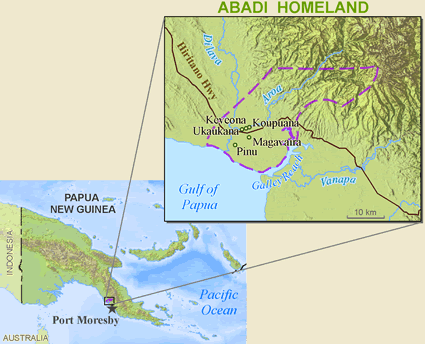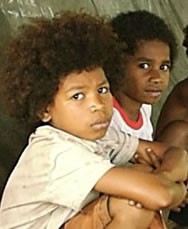

The Abadi people live in approximately 11 villages near the Hiritano Highway, NW of Port Moresby, the capital of Papua New Guinea. Their proximity to Port Moresby provides them with many economic benefits, including the lucrative business of selling their garden produce at Port Moresby markets. Some Abadi people work in the city, however strong family and social ties entice many people to remain in the villages.
The people are subsistence farmers, hunters and fisherman. There is enough food source from rivers, swamps, the ocean, and mostly the vast land mass.
Although the Abadi have preserved some traditions, they also have a number of modern conveniences, including electricity, water tanks, gas pressure lamps and a few televisions. Most Abadi houses have corrugated iron roofing. Many houses have Masonite walls, though some have walls made from "bush" materials such as bamboo. Some houses have screens and glass windows, items uncommon in rural Papua New Guinea. For cooking, many Abadi people use a metal grill over the fire, which may be raised off the ground.
The Abadi people have excellent educational opportunities. A large number of Abadi people have been to high school, and some have attended university.
The London Missionary Society evangelized the Abadi area in the late 19th century, and Christianity is the dominant religion in the Abadi area. While LMS has been around for the last 200 years, there are other similar Christian faith based churches such as Catholic and Christian Revival Centre also present in the village now. However, some people also practice traditional magic and divination. Church leaders say that many people are uninterested in church activities, preferring to spend their time playing sports. Church leaders are concerned that the languages used in church—English and Motu—are not well understood by their congregations. During a church conference in 2000, church leaders made a commitment to pray that the Bible would be translated into Abadi. It is evident that they have been praying, and that seeds of vision for Bible translation have been planted and watered among the church leaders.
Their primary need is road access; their movement between the city and other important government infrastructure is limited by the government road which had not been maintained for the last 20 years. Pastors and other clergy and church leadership need spiritual and leadership training.
Let's join them in praying that the Abadi people will receive and understand God's Word in their own language.
Pray for leadership training and biblical materials to be widely accepted.
Pray for the Holy Spirit to revive their families and churches, drawing hundreds into gospel outreach to those without hope.
Scripture Prayers for the Gabadi in Papua New Guinea.
References
| Profile Source: Joshua Project |