


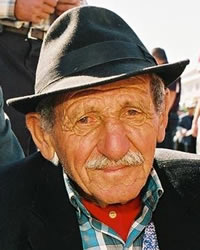

Alevi Turks are the descendants of Oghuz Turkmen tribes who migrated to Anatolia in the 11th–13th centuries, blending Shi’a devotion with pre-Islamic shamanistic roots. Historically, they were the rural "fringe" who rejected the Ottoman Caliphate's strict Sunni formalism, viewing it as Arab imperialism over Turkish culture. Today, they see themselves as the protectors of "True Turkish Islam"—a faith they claim is pure, secular, and democratic. They are staunchly Kemalist (followers of Atatürk), seeing the modern secular republic as their only shield against Sunni fundamentalism. They are concentrated in Central Anatolia (Çorum, Yozgat, Hacıbektaş) and western urban centers.
Life for the Alevi Turk is thoroughly modern and deeply integrated into the Turkish state, despite systemic discrimination. They are indistinguishable from their Sunni neighbors in language (speaking standard Turkish) but culturally distinct: they drink alcohol socially, do not fast during Ramadan, and their women do not cover. A massive secularization is occurring; for many young urban Alevi Turks, "Alevism" is becoming a political identity (social democracy/secularism) rather than a spiritual path. They are proud of their culture but often view their rituals as folklore rather than divine connection. A major development was the Istanbul Municipality officially recognizing Cemevis as places of worship in late 2024, a symbolic victory after decades of state denial.
Alevi Turkish faith is deeply rooted in the Bektashi Sufi order, centered on the veneration of Haji Bektash Veli, a 13th-century mystic they view as their patron saint. They often argue that Alevism is the "original" religion of the Turks, emphasizing that their liturgy is conducted in Turkish rather than Arabic to preserve their cultural heritage. Their theology revolves around the trinity of Hak-Muhammed-Ali (Truth-Muhammad-Ali), where Ali is viewed not just as a historical figure but as a manifestation of Divine Light. Worship takes place in Cemevis—often functioning as urban community centers—where the Semah (ritual dance) is performed to the music of the Saz, and the congregation recites Deyiş (hymns) by Turkish bards like Yunus Emre. Ultimately, the goal of their spiritual life is to become an Insan-i Kamil (Perfected Human) by passing through the "Four Gates" of spiritual discipline, moving from a "Raw" (Ham) state to being "Cooked" or mature.
The primary need for Alevi Turks is to separate their spiritual hunger from their political identity; they are often so focused on resisting "Political Islam" that they view all claims of divine truth with suspicion, conflating the Gospel with the religious oppression they oppose. Consequently, they need a discipleship model that affirms their "Turkishness" without validating Sunni legalism. Furthermore, as they migrate to cities and lose the traditional village Ocak (hearth) structure, urban youth are increasingly drifting into deism or atheism, losing the moral anchor of their tradition and requiring a new spiritual foundation that makes sense in a modern, secular context.
Pray that Alevi Turks would see Jesus as the ultimate Pir (Saint/Guide) who fulfills their desire for an Insan-i Kamil (Perfected Human).
Pray against the idol of nationalism; ask that their loyalty to the state would not block the Lordship of Christ.
Pray for the millions of youth in Istanbul and Ankara drifting into atheism, that they would find the "True Way" (Hakikat) in Jesus rather than secularism.
Pray that Dedes (leaders) would have dreams of Jesus as the true fulfiller of their mystical longing.
Scripture Prayers for the Turk, Alevi in Türkiye (Turkey).
| Profile Source: Joshua Project |



