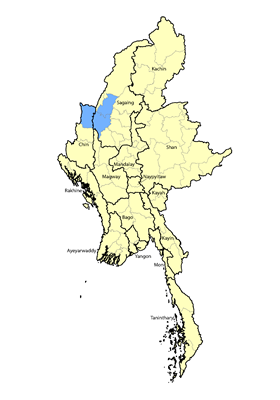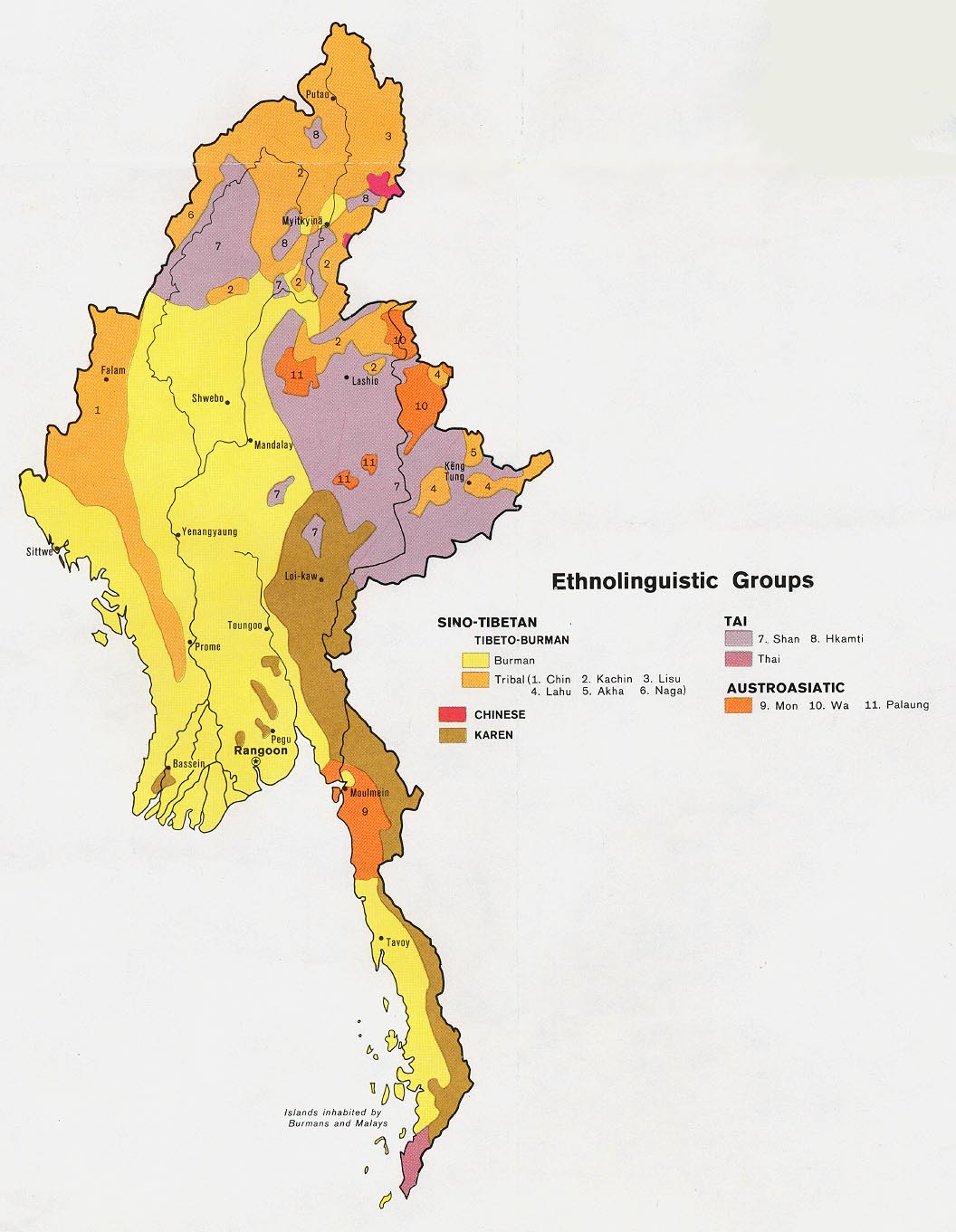

Although various sources suggest a large population of more than a quarter of a million Tedim Chin people live in Myanmar, this number includes 16 tribes or language groups that have been profiled separately in Operation Myanmar. Tedim people also live in northeast India, but a similar situation exists there, with the Indian government recognizing several different Tedim-related tribes, including the Sokte, Zomi, Vaiphei, and Paite. Thousands of Tedim people are also found among the Chin diaspora now residing in as many as 37 countries, with most living in Malaysia, the United States, Australia, and Thailand.
It is difficult to classify Tedim Chin people in Myanmar because Tedim is a geographic location rather than a specific ethnic group, resulting in many distinct tribes in the area often being placed under the label of Tedim Chin. The complex structure of the Tedim Chin classification is seen in the fact that Tedim contains a staggering 237 different clans.4 Although most are just family units, some have evolved into distinct people groups speaking their own language or dialect.
Tedim is part of the Northern Chin branch of the Tibeto-Burman family, related to languages like Paite and Thado. Almost all Tedim people can also speak the national language, Burmese. The Tedim language was reduced to writing about a century ago, and they also have their own alphabet, which is used for liturgical purposes by members of the Paucinhau cult.
The Tedim area was established around 1600 by a Guite prince named Gui Mang II. The name Tedim (meaning "twinkling" or "shiny") was derived from a pool in the hills that twinkled in the sunlight. Tedim remained a nondescript village until 1924, when the British chose it to serve as their administrative base in northern Chin State.
In the past, the Tedim Chin mummified their deceased chiefs by charring the corpses and placing them on a platform near the village entrance, in a type of spiritual sacrifice to ensure a bountiful harvest. The British found the Tedim to be fierce people who owned slaves and regularly raided other communities, but over time a mutual trust was formed, and the colonial government used the Tedim to govern the region.
Despite the Burmese government's efforts to convert the Tedim and other Chin groups to Buddhism, "Buddhist monks, unlike Christian missionaries, did not easily win followers. For example, the worship of Buddha figures reminded the Chin people of their offerings to spirits, and the Burmese did not translate the teachings of Buddha into the Chin language." Today, approximately 85 percent of the Tedim Chin are Christians, although the influence of the syncretic Paucinhau cult, which blends traditional Animism and Christianity, has clouded the faith of many Tedim people since the gospel was first proclaimed among them in 1899.
American Baptist missionary Arthur Carson was the first preacher among the Tedim Chin at the end of the 19th century. Carson died in 1908 and was replaced by Herbert Cope, who served in Tedim for 30 years. Cope translated and published the Tedim Chin New Testament in 1935, and by the time he died in 1938, the Tedim church consisted of 4,000 baptized members.9 Many powerful testimonies of revival occurred in the Tedim area from the 1970s to the 1990s, sweeping thousands of people into the Kingdom of God. Today, hundreds of vibrant Tedim Chin churches exist in Myanmar and wherever they have migrated around the world.
Pray for Tedim Chin elders and family leaders to open the door to evangelism and discipleship.
Pray for Tedim Chin disciples who are zealous to spread the fragrance of Christ to their community and to others.
Pray that traditional barriers to the gospel would be broken down.
Scripture Prayers for the Chin, Tedim in Myanmar (Burma).
Asia Harvest, Copyrighted 2026 © Used with permission
| Profile Source: Joshua Project |
| Other PDF Profile |