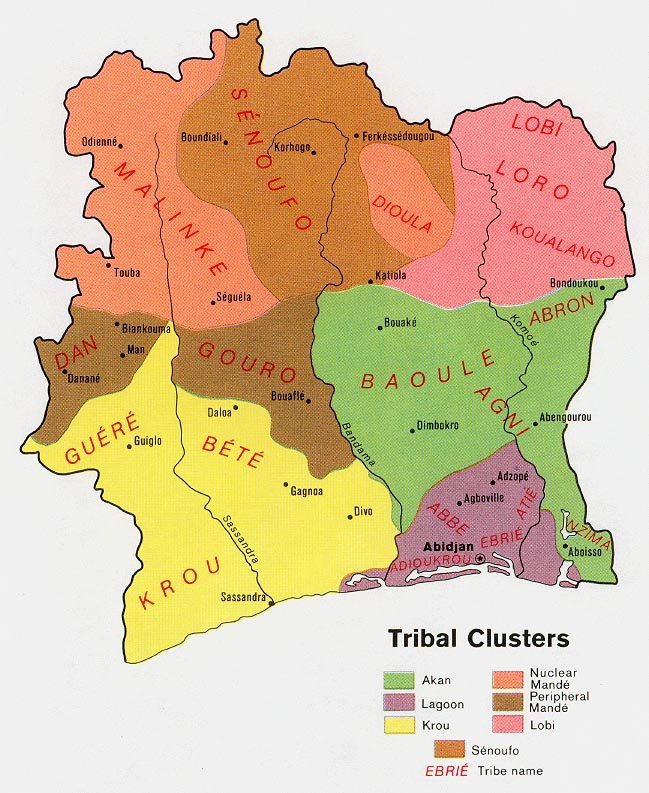
The Kwadia are an Indigenous people of Côte d'Ivoire, located primarily in the Bas-Sassandra District of the country. They belong to the wider Kru people cluster, a grouping known for deep cultural continuity across southwestern Côte d'Ivoire. Their traditional language is Kodia, which remains their primary language in daily life and is an important marker of their ethnic identity.
Generations of Kwadia families have lived in forested and agricultural regions of the southwest, maintaining cultural practices tied to community cooperation, farming rhythms, and respect for the land. Although modern influences continue to increase through trade, migration, and national development, the Kwadia still preserve many aspects of their heritage through language, tradition, and local social structures.
The Kwadia live in rural communities where farming, small-scale commerce, and seasonal labor form the foundation of daily life. Many households grow staple crops, gather forest products, or raise small livestock. Work often takes place within extended family units, strengthening kinship ties and reinforcing a cooperative way of life.
Meals commonly reflect local agricultural products, including grains, root vegetables, and fresh produce, often complemented by locally caught or raised sources of protein. Families generally share responsibilities, with older members offering guidance, wisdom, and leadership in community matters.
Celebrations often center around the agricultural calendar, family events, and community gatherings. Music, dance, and storytelling remain important cultural elements that strengthen identity and belonging. Though modernization influences clothing, school life, and commerce, the rhythms of traditional community life remain strong in Kwadia villages.
Christianity is the primary religious identity among the Kwadia. Many participate in church activities, and Christian teaching influences family life and community expectations. At the same time, some individuals still acknowledge elements of older ethnic religious practices, which may include respect for ancestors or rituals linked to the natural world.
While these traditions hold cultural significance, it is important that the Kwadia place their full trust in the God of the Bible rather than in local spirits or traditional intermediaries.
Reliable access to health care remains a pressing need in rural parts of Bas-Sassandra. Clinics, trained medical workers, and access to medicine can make a significant difference in the health outcomes of families. Education is also an essential area of growth. Children and youth benefit from greater access to schools, trained teachers, and materials that equip them for future opportunities.
Spiritually, continued development of Scripture in Kodia is important, especially since translation efforts have begun but are not yet complete. Churches would benefit from discipleship resources that help believers grow strong in their faith and apply biblical truth in their daily lives. Economic opportunities and infrastructure development—such as roads, communication, and water sources—would further strengthen the long-term well-being of Kwadia communities.
Pray for reliable health care, including access to clinics, medicine, and trained workers.
Ask the Lord to strengthen educational opportunities so children and young adults can flourish.
Pray that Kwadia believers will deepen their walk with Christ and remain faithful in areas where traditional practices exert influence.
Lift up the churches among the Kwadia, asking God to raise up laborers who will share the gospel with less?reached peoples.
Scripture Prayers for the Kwadia in Côte d'Ivoire.
| Profile Source: Joshua Project |