


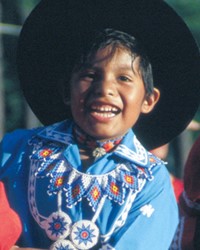

The Choctaw are a Native American people originally from the southeastern United States, especially present-day Mississippi, Alabama, and Louisiana. Their language, Choctaw, is part of the Muskogean language family. It was historically spoken widely among the people, though its use declined due to assimilation policies and education systems that discouraged Native languages.
Today, revitalization efforts are ongoing, including language classes, immersion programs, and digital resources. The Choctaw were among the first tribes to be forcibly relocated under the Indian Removal Act of 1830, resulting in the "Trail of Tears," during which many died. A significant portion of the Choctaw Nation resettled in present-day Oklahoma, while others remained in Mississippi, forming what is now the Mississippi Band of Choctaw Indians. Despite the hardships of removal and colonization, the Choctaw have preserved much of their cultural heritage.
Modern Choctaw communities are spread across several states, with the largest concentrations in Oklahoma and Mississippi. Many live on or near tribal lands and are involved in tribal government, education, healthcare, and economic development initiatives.
The Choctaw Nation of Oklahoma and the Mississippi Band of Choctaw Indians operate schools, health centers, and successful businesses, including gaming and manufacturing enterprises. Cultural events such as stickball games, dances, and festivals help preserve traditions and strengthen community ties. However, some Choctaw individuals still face challenges such as poverty, access to healthcare, and educational disparities, especially in rural areas. The Choctaw continue to emphasize self-determination, cultural preservation, and intergenerational support.
Prior to European contact, the Choctaw practiced a traditional belief system rooted in a close relationship with the land, respect for the spirits, and community-centered ceremonies. Over time, Christianity became widespread among the Choctaw due to missionary efforts in the 18th and 19th centuries, especially through Protestant denominations like Methodist and Baptist.
Today, many Choctaw identify as Christians and are active in their churches. In some communities, Christianity is blended with aspects of traditional worldview, including respect for nature and spiritual balance. Churches play a central role in many Choctaw communities, offering not only spiritual guidance but also social support and community engagement.
The Choctaw people need a complete Bible faithfully translated in their heart language. The Choctaw also needs more discipleship and outreach resources available for distribution and growth in their churches and communities. There is a great need for believers among the Choctaw to boldly and compassionately proclaim the gospel to those involved in ethnic religion and the non-religious alike. There is also a need for the Words of Life recordings in Choctaw to be utilized to evangelize the lost among them.
Practically, some communities experience high rates of unemployment, substance abuse, and health issues such as diabetes. Improved access to education, health services, and economic opportunity remains essential.
Pray for the hurting Choctaw people suffering from unemployment, substance abuse, mental health issues, and health issues such as diabetes. Pray for the faithful translation of the complete Bible and evangelism materials in the Choctaw language. Pray that the true Choctaw Christians would wholeheartedly embrace the Great Commission, preach the gospel, and shine the light of Christ in their communities. Pray that Choctaw churches will be strengthened by the work of the Holy Spirit.
Scripture Prayers for the Choctaw in United States.
Choctaw Nation of Oklahoma – www.choctawnation.com
Mississippi Band of Choctaw Indians – www.choctaw.org
Ethnologue, Choctaw Language
U.S. Bureau of Indian Affairs
"A History of the Choctaw, Chickasaw, and Natchez Indians" by Horatio Cushman
| Profile Source: Joshua Project |



