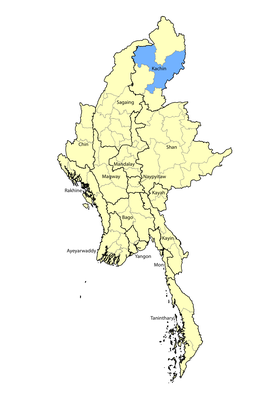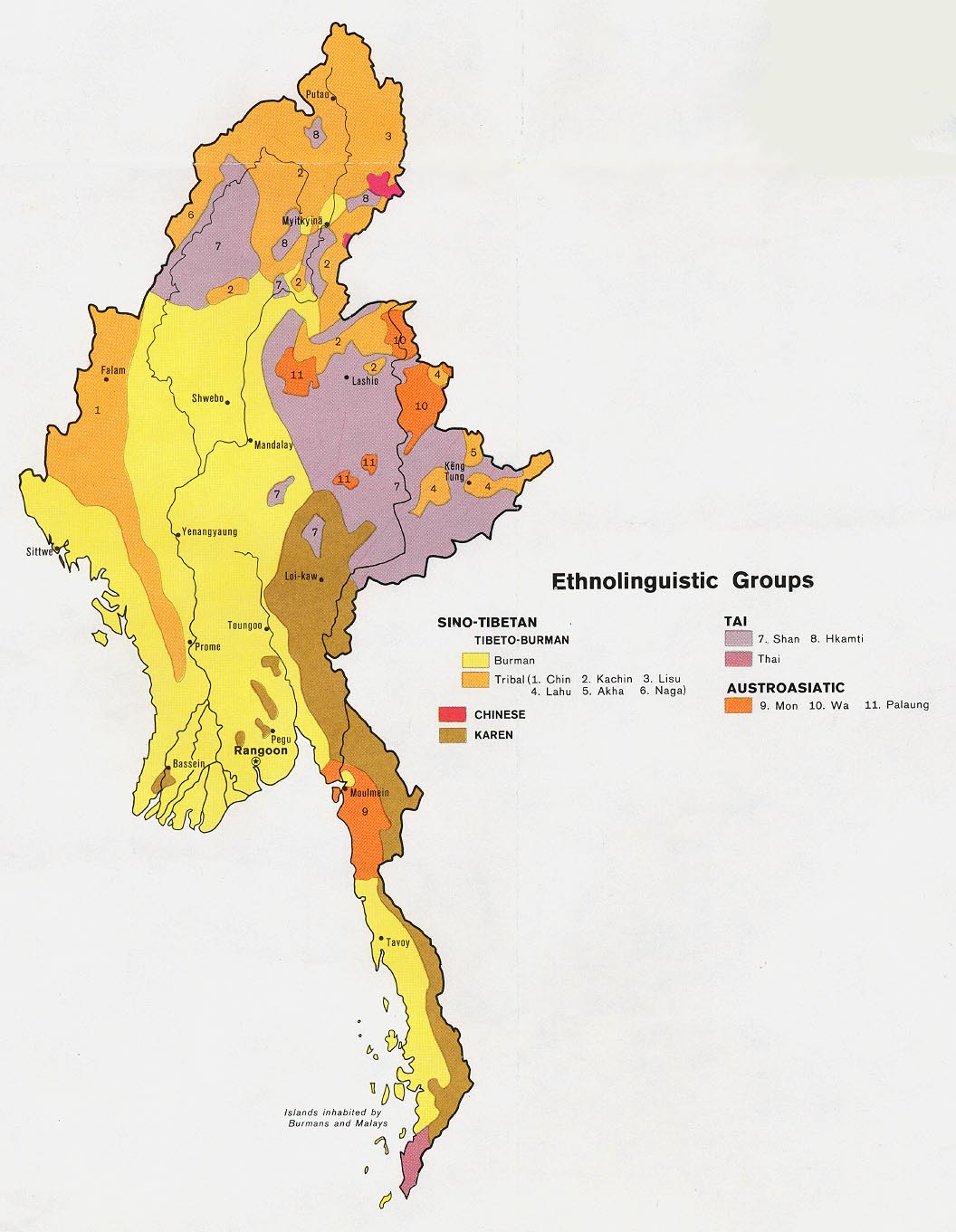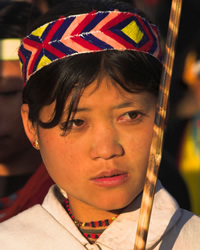

The Shangti are one of the smallest people groups in Myanmar, residing primarily in and around the town of Shinbwiyan in Tanai District, Kachin State, with Tarung as one of their main villages. Shinbwiyan, once a key location on the Stilwell Road built during World War II, has become a popular destination for Tangshang groups due to its accessibility and fertile land. The Shangti's migration history and linguistic ties underscore their unique identity within Myanmar's diverse ethnic landscape. A small number of Shangti also live further west in the Pangsau area of Sagaing Region, from which most of the Kachin State community originally migrated.
Culturally, the Shangti are part of the larger Naga ethnicity, which encompasses dozens of distinct tribes and languages across northeast India and western Myanmar. The Shangti speak a dialect closely related to other Tangshang varieties such as Gaqchan, Khalak, Lakki, and Lungkhi.
Shangti homes are typically constructed from bamboo and wood, with thatched or tin roofs, and are clustered together to foster community and mutual support. Daily life centers on family and subsistence agriculture, with most families cultivating rice, maize, millet, and vegetables, and raising livestock such as chickens and pigs. Community life is close-knit and cooperative, with neighbors assisting each other during planting and harvest seasons. Traditional festivals and celebrations, often tied to the agricultural calendar, feature communal meals, music, and dance, providing opportunities for socializing and reinforcing cultural identity. Storytelling and oral traditions are passed down during these gatherings, helping to preserve the Shangti language and heritage. Due to the region's remoteness, employment outside of agriculture is rare, so most Shangti rely on their land and community, maintaining a simple yet resilient way of life rooted in tradition and shared values.
For centuries, the Shangti practiced animism, maintaining an elaborate sacrificial system to appease various spirits, believing that neglect could bring disaster upon the community. Unlike some neighboring Tangshang tribes that held large-scale ceremonies with buffalo sacrifices, Shangti rituals were smaller. The Shangti people typically sacrificed chickens and consumed liquor, especially during the pue vi festival after the harvest in December. In the 1960s and 1970s, many Tangshang tribes, including the Shangti, began to embrace Christianity, often influenced by Kachin Jingpo Christians in the area. Baptist and Catholic churches are particularly numerous among the Kachin. Despite a desire expressed by several tribes, including the Shangti, for a common Bible translation, progress has stalled, and western translation ministries have shifted focus away from smaller groups. If the Shangti are to have Scripture in their native language, it will likely require local initiative.
The Shangti people have significant spiritual needs, especially access to the gospel in their own language and opportunities for discipleship and fellowship. Living in remote villages with limited exposure to Scripture or Christian teaching, it is challenging for them to learn about Jesus or grow in faith. Culturally relevant outreach and ongoing encouragement are essential for nurturing believers and helping the message of Christ take root. Physically, the Shangti often face challenges such as limited healthcare, clean water, and educational opportunities. Their reliance on subsistence farming leaves them vulnerable to food shortages and poverty. Practical support through medical care, clean water initiatives, and agricultural training can help meet these needs and serve as a tangible expression of Christ's love.
Pray that the Lord would provide translated scriptures and other Christian teaching resources in the native language of the Shangtai people.
Pray that the Lord would give the Shangtai people a deep desire to share the gospel of Jesus Christ with neighboring ethnic communities, communicating his love in ways that are culturally meaningful and relevant.
Pray that the Holy Spirit would create an unquenchable thirst for God in the lives of the Shangti people, compelling them to pursue salvation in Jesus no matter the obstacles.
Pray that the Shangti people will be blessed with quality educational resources, reliable healthcare, and meaningful work. Through these blessings, pray that they will be drawn to the love of Jesus Christ.
Scripture Prayers for the Shangti in Myanmar (Burma).
Asia Harvest
1 See https://en.wikipedia.org/wiki/Ledo_Road
2 Graduate Institute of Applied Linguistics, "Fifty-Five Dialects and Growing: Literacy and Comprehension of Vernacular Literature among the Tangshang Naga in Myanmar," (thesis, name withheld, June 2013), p. 99.
3 J. D. Saul, The Naga of Burma: Their Festivals, Customs, and Way of Life (Bangkok: Orchid Press, 2005), p. 100.
4 Saul, The Naga of Burma, p. 178.
| Profile Source: Joshua Project |
| Other PDF Profile |