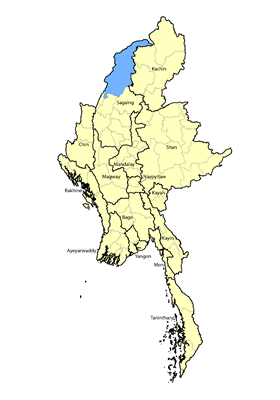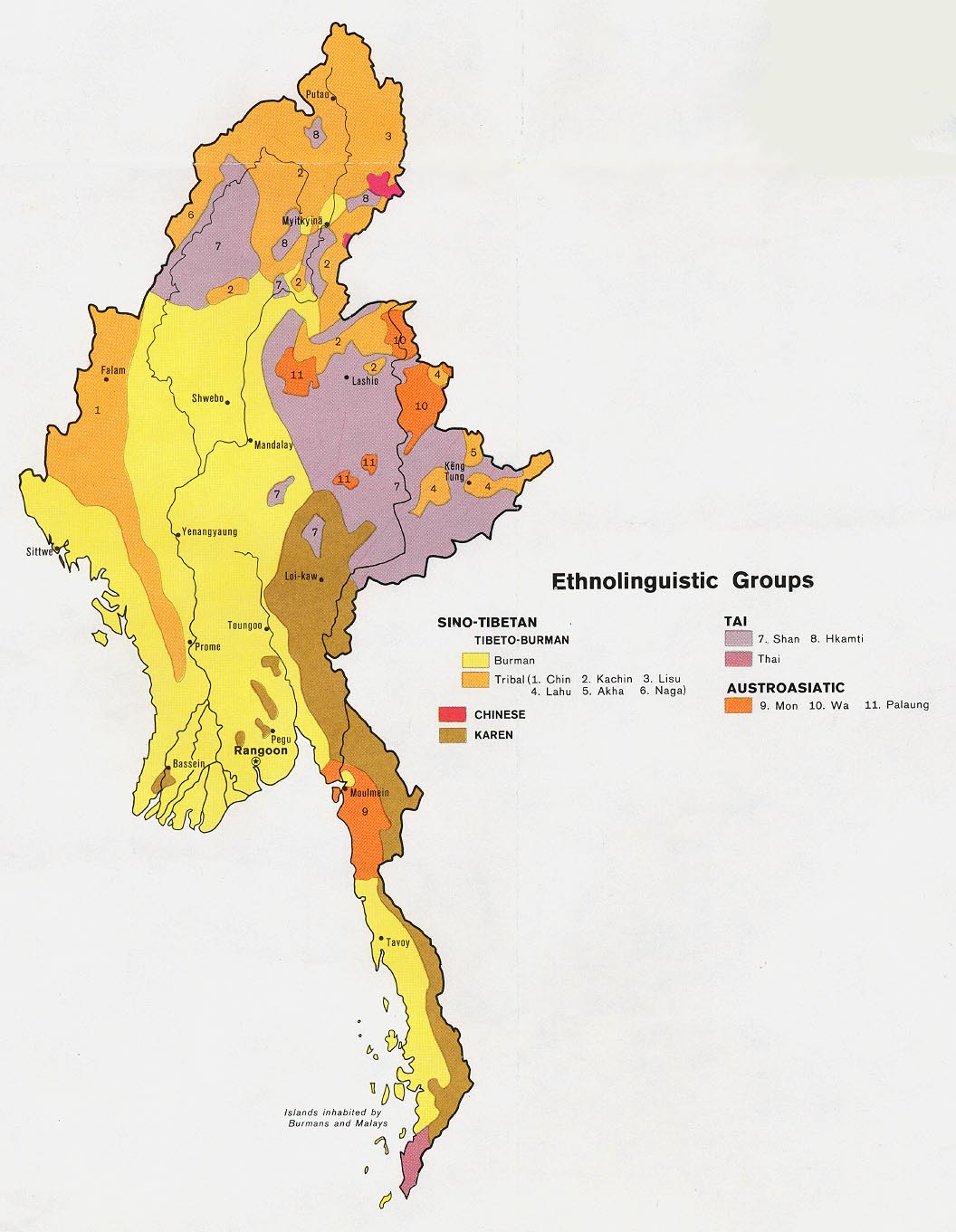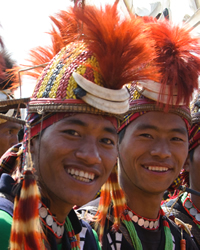

Unlike other groups in this remote region of Myanmar that are known by multiple names, Raqnu is the name of both this tribe's village and their group. More broadly, they are part of the Tangshang cluster of groups that outsiders have mistakenly thought are a single ethnolinguistic people. In reality, the label represents over 50 different tribes and dialect groups, of which the Raqnu are just one.
After surveying 80 Raqnu people in 2012, linguists ascertained that their language shares only a 58 percent lexical similarity with Shecyu. Consequently, the Raqnu will need a much more closely related translation to be able to comprehend the Bible. Of the dozens of vernaculars spoken in this small area of western Myanmar, Raqnu is reportedly most closely related to the Asen and Kotlum varieties.
In the early 1930s, the British superintendent in charge of the Naga Hills, Terence Dewar, wrote about quarrels between the Raqnu and Drancyi tribes that had led to bloodshed. Life was brutally violent in the border areas. One tribe or clan that was presumed to have faded into extinction by being absorbed into other groups was the Aangsa, although in 2012 a Raqnu person said that "a few Aangsa still live in our village, but they no longer claim to be Aangsa. They had to flee from their enemies to Raqnu village and have become Raqnu people now. Other clans became extinct because of enemy invasion."
Many communities in this isolated part of Myanmar are in transition as people attempt to better their lives and escape the distress of war. A local scholar explained: "Rural people in this part of the country often move to the townships for education, healthcare, and other opportunities. Some communities try to solve the issue of accommodation for villagers, but they face capital shortage…. Customs differ from village to village, making the oral-only traditions tricky to take root as the new generations are overwhelmed by the Burmese media and education system."
Countless generations of Raqnu families slavishly worshipped and lived in fear of the spirit world, but after God visited neighboring Nagaland with a mighty revival in the 1960s and 1970s, the gospel gradually spread across the border and impacted tribes in western Myanmar, including the Raqnu. Animism was denounced and discarded, and a complete transformation of their community unfolded as people repented of their sins and were given a new heart and mind by Jesus Christ.
Today all Raqnu people are Baptists, although they must try to comprehend the teachings of the Bible in languages not their own, as no Scripture has ever been translated into Raqnu or a closely related dialect.
Pray that the Raqnu people will become part of God's plan to bring every tribe and tongue into his kingdom.
Pray for a radical spiritual transformation in their families, churches, and communities.
Pray for the Holy Spirit to use Raqnu Christians to do miraculous things, drawing others to Christ.
Intercede for freedom from fear of spirits and for hearts open to the hope found in Christ.
Scripture Prayers for the Raqnu in Myanmar (Burma).
Asia Harvest, Copyrighted 2026 © Used with permission
| Profile Source: Joshua Project |
| Other PDF Profile |