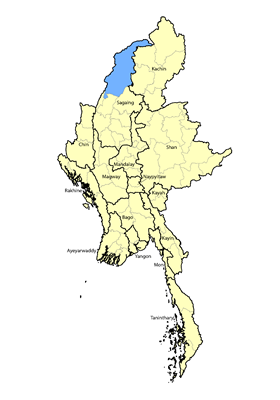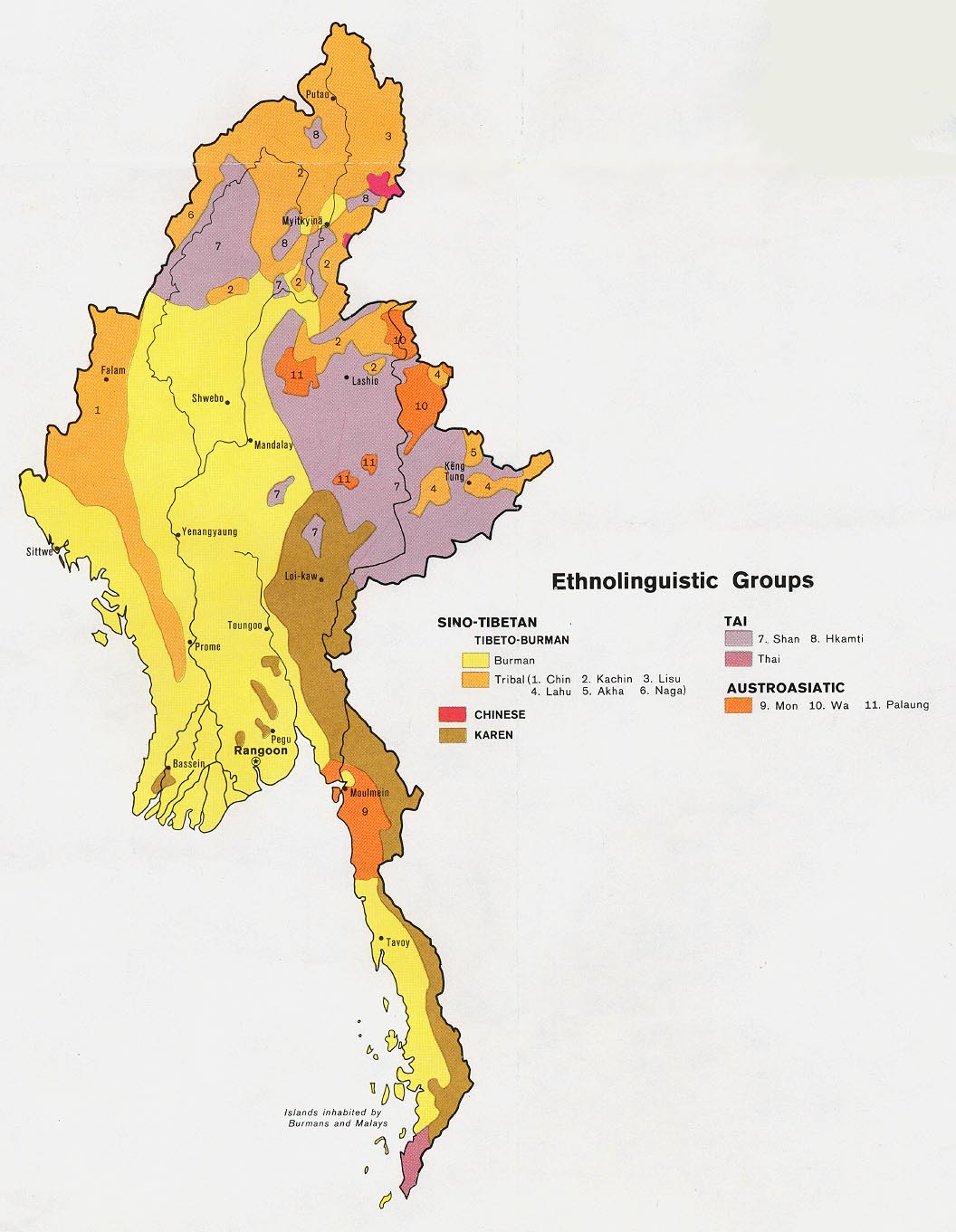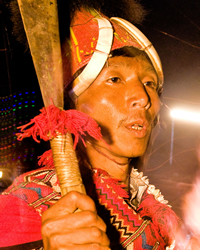

The Haqcyum (pronounced "Hachum") are one of many small Tangshang-related tribes located in or near the small town of Pangsau in western Myanamar's mountainous Sagaing Region. The town of Pangsau, which sits below the pass that forms the border between Myanmar and India, is one of the most ethnically diverse places in Asia, with dozens of tribes crammed into a small area. Although in English their names may seem almost unpronounceable, seven different Tangshang tribes in Myanmar have names starting with "Haq." In addition to the Haqcyum, they are the Haqcyeng, Haqkhu, Haqkhun, Haqman, Haqpo, and Haqsik. Because each of these tribes views itself as distinct and speaks its own language or dialect, they have been profiled separately in Operation Myanmar.
In 2012, linguists traveled to Lahe and surveyed 940 Haqcyum people. After compiling word lists of their key vocabulary, they found that Haqcyum is most closely related to Haqman and Yangno, but is more distant from, and unintelligible with, the more than 50 other varieties of Tangshang spoken in Myanmar.
Although their linguistic links suggest the Haqman, Yangno, and Haqcyum were once a single group, due to the lack of a written language no one is sure where this group originated. One source says that the tribes in this area "have been isolated for centuries due to poor communications in their rugged land. This, together with inter-village and inter-group feuds, made them self-reliant and not dependent on trade, although they will exchange cloth, baskets, and carved goods for special items they cannot find in their homelands."
Many customs practiced by Tangshang cultural groups had their root in the animistic beliefs that formed their worldview. For example, several prenatal rituals were observed to ease childbirth and ensure a healthy child. Among some tribes, "piles of rice are laid out and a chicken and pig are sacrificed. The pig's blood is sprinkled on a post that is erected to the left of the entrance of the house, while its head is hung above the bed of the pregnant woman."
Although almost 90 percent of Haqcyum people today are professing Christians, nominal Christianity is rife in this part of Myanmar, where parents must declare the religion of their children at birth. Because Animism is not seen as an established religion and Buddhism is viewed as the religion of the oppressive Burmese, thousands of people choose to list Christianity as their religion.
Although many people enjoy a personal relationship with Jesus Christ, efforts to disciple them are greatly complicated by the absence of Scripture available in a language the Haqcyum are familiar with and which resonates with their hearts. As a result, many believers rely on messages shared by their pastor and visiting preachers. One senior linguist has estimated that 12 to 15 different Bible translations are required just to begin to cover the needs of the Tangshang-related groups in Myanmar. Even with that many translations, however, flexibility would need to be shown by tribes to adjust some of their vocabulary to that of larger language groups. Any initiative to force these tribes to use the Bibles of larger Tangshang groups is doomed to fail and sure to produce ethnic tension, similar to what has happened among the Tangsa Christians across the border in northeast India.
Pray for Haqcyum elders and family leaders to open the door to evangelism and discipleship.
Pray for Haqcyum disciples who are zealous to spread the fragrance of Christ to their community and to others in Myanmar.
Pray that traditional barriers to the gospel would be broken down.
Pray for the Holy Spirit to bless Haqcyum families with the realization that they need a sin-free Savior who offers abundant life.
Scripture Prayers for the Haqcyum in Myanmar (Burma).
Asia Harvest, Copyrighted 2026 © Used with permission
| Profile Source: Joshua Project |
| Other PDF Profile |