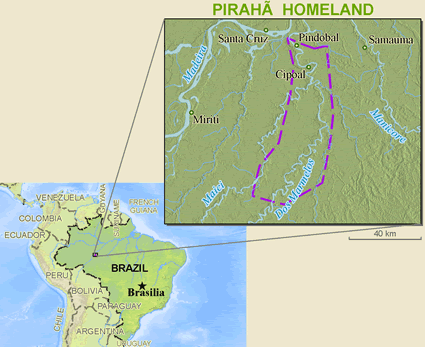
The Mura are an Indigenous people living in the central and eastern region of Brazil's Amazonas state, primarily along the Amazon, Madeira, and Purus river systems. For centuries they were known as highly mobile river people, navigating complex networks of waterways and floodplains with exceptional skill. Historically, they spoke languages from the Mura language family, but over time Portuguese became the dominant language, and much of their original linguistic diversity was lost.
The Mura played a significant role in the colonial history of the Amazon. They resisted Portuguese expansion for many decades and were widely feared for their ability to move quickly and strike unexpectedly along the rivers. Prolonged conflict, disease, forced settlement, and pressure from neighboring peoples eventually weakened their independence. Over time, the Mura were absorbed into wider regional society, though they retained a strong sense of identity tied to river life and shared ancestry.
Today, the Mura live in a mix of small riverside communities and nearby towns, often moving between rural and urban settings. Fishing remains a central activity, supplemented by small-scale farming, hunting, and gathering. Manioc, fish, and seasonal forest products are staples of their daily diet. Canoes and small motorized boats continue to be important for transportation and livelihood.
Family life is closely connected to the rhythms of the river. Households tend to be flexible, shaped by seasonal work and access to resources. Social life often centers on church gatherings, family celebrations, and shared meals rather than large traditional festivals. While many aspects of traditional material culture have faded, the Mura maintain a strong sense of community and belonging through kinship and shared history.
The Mura are almost entirely Christian, with Roman Catholic and Evangelical expressions present throughout their communities. Churches are well established, and Christian identity is widely accepted as part of everyday life. Prayer, church attendance, and Christian language are commonly integrated into family routines and public gatherings.
At the same time, elements of traditional religion continue beneath the surface. Beliefs related to forest and river spirits, spiritual causation of illness, and the lingering influence of shamanistic ideas have not completely disappeared. In practice, some Mura blend Christian faith with older spiritual assumptions, particularly around healing, protection, and misfortune. While Jesus Christ is widely acknowledged, full biblical discipleship and a clear break from traditional spiritual frameworks remain areas of importance for continued growth.
The primary needs of the Mura are physical and social rather than spiritual access. Medical care remains a challenge, especially for those living in remote river communities where clinics and trained personnel are difficult to reach. Preventable diseases, maternal health concerns, and clean water access continue to affect daily life.
Education and economic stability also vary widely. While some Mura families have adapted well to urban environments, others struggle with marginalization and limited opportunity. Strengthening healthcare delivery, sanitation, and community-led development efforts would greatly benefit the Mura and support the wellbeing of their churches and families.
Pray that Mura believers would grow deeper in biblical understanding and live out a faith fully rooted in Jesus Christ alone.
Ask God to help the Mura church discern and set aside remaining traditional spiritual beliefs that conflict with the gospel.
Pray for improved medical care, clean water, and physical health so Mura communities can thrive.
Pray that the Mura churches would shine as steady witnesses of Christ through faithful daily living.
Scripture Prayers for the Mura in Brazil.
https://joshuaproject.net/people_groups/20089/BR
https://en.wikipedia.org/wiki/Mura_people
https://pib.socioambiental.org/en/Povo:Mura
https://www.britannica.com/topic/Mura
| Profile Source: Joshua Project |