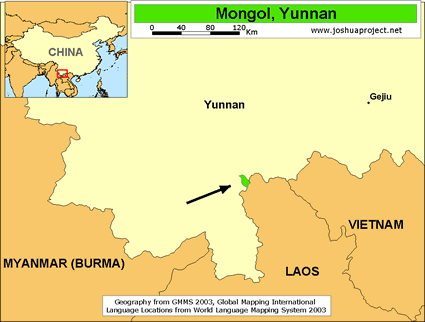

The Mongolian empire gained control over southwest China in 1252 when they overthrew the ancient Nanzhao Kingdom in Dali. They ruled Yunnan for 129 years, extracting annual taxes and tribute which were sent north to fill the coffers of the Yuan Dynasty rulers. In 1381, the Ming Dynasty defeated the Yuan forces in the region. The Mongol cavalry stationed there were unable to return to the northern steppes. To survive, they adopted new names, intermarried with the Yi people, and gradually became part of local society, now known as the Katsos. They still identify with the Mongol Empire and deliberately separate themselves and refuse to intermarry with people from other nationalities. Most live around Jihulu Lake.
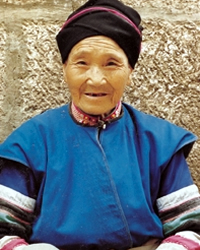
The Katso women's dress is said to resemble the uniform of the original Mongol soldiers. During the hotter part of the year, they wear cloth instead of fur and cut off the sleeves.
In the early 1980s, village elders sent a delegation to Inner Mongolia to learn about Mongolian culture. They immediately adopted customs similar to Mongols in the north. Wrestling became their favorite sport when they saw how popular it was with other Mongols.
The religion of the Katso is a mixture of Buddhism and Daoism. Posters of fierce Daoist deities hang on the doors and gates of their homes to ward off evil spirits. They also retain elements of animism while venerating deities such as Guanyin and Guan Yu. The most representative site is the Temple of the Three Saints, where Genghis Khan, his descendant Möngke Khan, and Kublai Khan are enshrined, along with a stone stele recording the history of their migration. Each year, during the Ancestor Remembrance Festival in the sixth lunar month, community members gather at the temple to honor their ancestors, remember the hardships of settling in Yunnan, and remind future generations of their origins.
There is no Christian church among the Katso. The few efforts to take the gospel to them have been met with stubborn resistance and opposition from village leaders and local police who are eager to preserve the Mongolian traditions they had neglected for centuries and who are careful to shun all change to their society. In the 1980s, a Mongolian Christian from northern China visited this village, hoping he would be able to influence the Katso to become Christians. He too was rejected by the locals. The Katso people need the spiritual hunger it takes to seek and find Jesus Christ no matter what the cost.
Pray for the Holy Spirit to bless Katso elders and family leaders with the spiritual hunger it takes to open their hearts to Jesus Christ.
Pray that God will send culturally-sensitive missionaries who will show them the way to the cross.
Pray for a flourishing movement to Christ in the near future.
Pray for the Katso people to be blessed with peace, joy and spiritual prosperity as they follow Jesus Christ.
Scripture Prayers for the Katso in China.
Operation China, Asia Harvest, Copyrighted © Used with permission.
Mission Pathway prayer guide, May 2026
| Profile Source: Joshua Project |