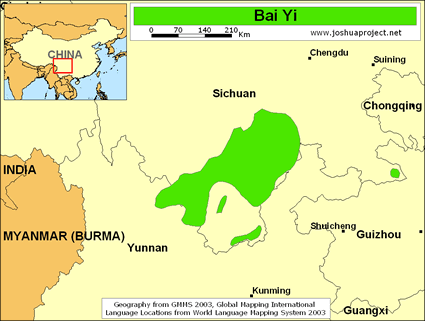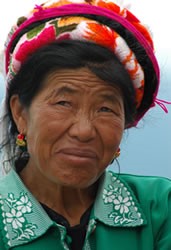

The Bai Yi are a subgroup of the larger Yi nationality living primarily in Yunnan Province in southwestern China. Although officially classified within the Yi ethnic category by the Chinese government, the Bai Yi maintain their own local identity, customs, and speech patterns. Their language belongs to the Tibeto-Burman branch of the Sino-Tibetan language family and is related to other Yi languages spoken throughout Yunnan and neighboring provinces.
Like many Yi-related peoples, the Bai Yi have historically lived in mountainous regions where geographic isolation helped preserve distinct traditions and village identities. Their history has largely been passed down through oral tradition rather than written records. Clan relationships, ancestral customs, and traditional religion have remained influential within community life for generations.
The Yi peoples as a whole have a long and complex history in southwest China stretching back many centuries. Over time, imperial Chinese expansion, migration, and modernization brought increasing outside influence into Yi regions, yet many rural communities retained strong ethnic identity and local traditions. Christian witness among many Yi subgroups has historically been limited, and the Bai Yi remain one of the lesser-reached communities within this broader ethnic family.
Most Bai Yi communities live in rural mountain areas where agriculture shapes daily life. Families commonly grow crops suited to the highland environment, including corn, rice, potatoes, vegetables, and other staple foods. Livestock raising also contributes to household survival and local trade. Daily work is often physically demanding because of steep terrain and limited mechanization in remote areas.
Extended family ties and clan loyalty remain important parts of social structure. Village life is closely connected to seasonal farming cycles, traditional festivals, and community cooperation. Elders are often respected as keepers of tradition and oral history. In some areas, traditional Yi clothing may still be worn during festivals and important ceremonies, especially among older generations.
Food commonly includes rice, corn, vegetables, chili peppers, preserved foods, and locally raised meat. Music, storytelling, dance, and festival gatherings remain important expressions of cultural identity. Traditional holidays often include singing, communal meals, and ceremonial observances connected to ancestors and local beliefs.
Modernization has increasingly affected Bai Yi communities. Younger generations may leave villages seeking work in towns and cities, creating social and economic changes within rural families. The growing use of Mandarin Chinese in schools and commerce has also contributed to pressure on traditional language and customs.
The Bai Yi primarily follow traditional ethnic religion mixed with animistic beliefs, ancestor reverence, and elements of Chinese folk religion. Spiritual life is often centered around maintaining harmony with ancestral spirits and unseen supernatural forces believed to influence health, crops, protection, and daily life.
Traditional religious practices may include sacrifices, ritual ceremonies, divination, and the work of ritual specialists who attempt to communicate with spiritual powers. Fear of harmful spirits and the need for ritual protection remain influential in many communities. Among some Yi groups, religious ceremonies are closely tied to festivals, agricultural cycles, and family events.
Elements of Buddhism, Daoism, or Chinese folk practices may also be present alongside older ethnic traditions. Religious identity is often deeply connected to ethnic and family identity, which can make conversion to Christianity socially difficult.
Very few known believers are reported among the Bai Yi, and many have never heard a clear explanation of the gospel in their own language and cultural setting.
The Bai Yi need greater access to the gospel through culturally understandable evangelism, Scripture resources, and long-term discipleship. Many have little or no understanding of Jesus Christ or the message of salvation found in the Bible. Faithful Christian workers willing to build relationships and learn local culture are greatly needed.
Practical challenges also affect many Bai Yi communities, including poverty in rural areas, limited educational opportunities, healthcare access, and economic pressures that encourage migration away from traditional villages. Younger generations often face tension between preserving ethnic identity and adapting to modern Chinese society.
The Bai Yi would benefit from oral Bible resources, Scripture translation efforts where needed, compassionate medical and educational ministries, and mature believers willing to serve patiently among them. There is also a need for Chinese Christians from nearby regions to carry the gospel faithfully into Bai Yi communities.
Pray that the Bai Yi people would hear the gospel clearly and come to place their faith in Jesus Christ alone for salvation.
Pray that God would raise up faithful Christian workers who are willing to serve among the Bai Yi with wisdom, humility, and perseverance.
Pray that the Bai Yi would be adopted through the People Group Adoption program so they receive sustained prayer, ongoing gospel engagement, and future discipleship efforts.
Pray that any believers among the Yi peoples of southwest China would grow strong in biblical faith and boldly share the truth of Christ with neighboring ethnic communities.
Scripture Prayers for the Bai Yi in China.
https://en.wikipedia.org/wiki/Yi_people
https://en.wikipedia.org/wiki/Yi_languages
https://peoplegroups.org/
https://asianminorityprofiles.org/yunnan-minorities/
| Profile Source: Joshua Project |