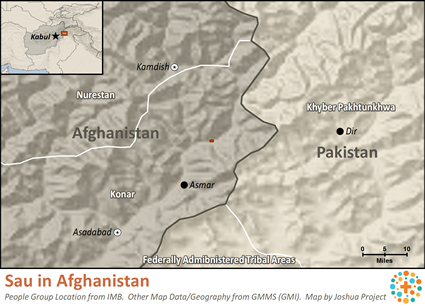
The Sau are a small, little-known people living in remote mountain valleys of northeastern Afghanistan. Their identity has developed over many generations through shared lineage, territory, and oral tradition. As with many ethnic groups in Afghanistan, their history is preserved not through written documents but through stories passed down from elders who recount migrations, conflicts, and alliances with neighboring groups. The Sau have long relied on their rugged environment for protection and continuity, and their culture reflects centuries of adaptation to an isolated, often harsh landscape. Their language and customs set them apart from surrounding peoples, giving them a distinct sense of identity.
Sau households are typically extended families living under one roof or in clusters of nearby homes. Men take responsibility for agriculture, herding, and trade with neighboring villages, while women manage the home, prepare food, raise children, and tend small livestock. Many Sau families farm terraced fields of wheat, barley, and vegetables, supplementing their diet with milk products and meat when available. Daily life is labor-intensive, shaped by the seasons and by the demands of mountain farming.
Celebrations often revolve around major life events such as births, weddings, and the harvest season. These gatherings bring the community together for storytelling, traditional songs, and meals featuring bread baked in clay ovens, rice dishes, and stews flavored with local herbs. Hospitality remains a central virtue, and guests are honored with the best food the household can offer.
The Sau people are entirely Sunni Muslim. Islam is intertwined with family life, moral expectations, and communal values. While a small number of individuals may have had limited exposure to the gospel, the Sau as a whole have not yet embraced a transforming relationship with Christ.
Opportunities to improve education and medical care would bless Sau families, especially in villages far from service centers. Mothers and children face ongoing health challenges due to limited resources, and many communities experience economic pressure from unpredictable harvests. The Sau also benefit when peaceful relationships can be established among neighboring groups, since regional tensions often disrupt daily life.
Spiritual blessing is equally important. Access to the message of Christ is extremely limited, and few Sau people have ever met a follower of Jesus. Communities that remain cut off from the gospel do not yet know that Christ can bring hope, healing, and peace into their homes. The presence of dedicated workers would help them encounter God's love in ways they can understand.
Pray for Sau families who struggle with limited healthcare, difficult winters, and economic uncertainty, asking God to provide protection, stability, and dependable harvests.
Lift up parents who work tirelessly to raise and educate their children in an environment with few resources.
Ask the Lord to prepare Sau hearts to hear and respond to the good news of Jesus Christ. Intercede for workers who will bring Scripture, prayer, and personal testimony into Sau communities in a way that honors local culture.
Pray that one day Sau believers will join the global mission force and carry Christ's love to surrounding peoples.
Scripture Prayers for the Sau in Afghanistan.
Ethnographic notes, regional cultural studies, and publicly available descriptions of Afghan highland peoples.
| Profile Source: Joshua Project |