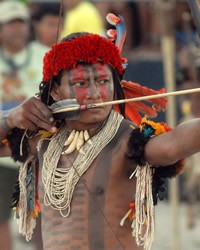

The Rikbaktsa are an Indigenous people living in the northwestern region of the state of Mato Grosso in Brazil, especially along the Juruena River basin in the Amazon rainforest. Their name means "the human beings," and they are also known regionally as "Canoeiros" because of their skill in navigating rivers by canoe. Historically, the Rikbaktsa lived across a vast area of forest territory, sustaining themselves through hunting, fishing, gathering, and small-scale agriculture.
The twentieth century brought devastating changes to the Rikbaktsa people. During the expansion of rubber extraction, logging, missionary activity, and colonization in the Amazon, they suffered violence, disease, land invasion, and forced cultural disruption. By the 1960s and 1970s, their population had declined drastically, with some reports estimating that nearly 75% of the population was lost after outside contact. Despite these hardships, the Rikbaktsa survived and gradually rebuilt their communities while continuing to defend their land and identity.
Today, the Rikbaktsa are recognized for their persistence in protecting their territory, traditions, and community life. They have organized educational and political initiatives to strengthen Indigenous leadership and preserve their culture for younger generations. From an evangelical perspective, the Rikbaktsa demonstrate resilience, communal strength, and spiritual openness. As Indigenous believers grow in Christ, they have the potential to become a powerful Gospel witness among neighboring Indigenous groups throughout the Amazon region.
Most Rikbaktsa communities live within three recognized Indigenous territories: Erikbaktsa, Japuíra, and Escondido, located in the Amazon forest of Mato Grosso. Daily life remains deeply connected to the rhythms of nature. Hunting, fishing, gathering fruits and forest resources, and cultivating crops such as cassava, corn, beans, bananas, and rice continue to be important parts of survival and cultural identity. Community cooperation and family relationships are highly valued in Rikbaktsa society.
The Rikbaktsa continue balancing traditional life with increasing interaction with Brazilian society. Indigenous schools now exist in many villages, and younger generations often learn both the Rikbaktsa language and Portuguese. Some Indigenous leaders work actively in environmental protection, healthcare, education, and political advocacy. However, outside pressures such as deforestation, illegal resource extraction, cultural assimilation, and economic instability continue threatening their communities and way of life.
Modern influences have also created social changes among younger people, who must navigate between traditional Indigenous identity and outside Brazilian culture. Even so, rituals, music, storytelling, and communal celebrations remain central to Rikbaktsa life. Evangelical believers among them have opportunities to demonstrate how faith in Christ can strengthen family relationships, forgiveness, servant leadership, and community unity while respecting what is honorable in their culture.
Traditionally, the Rikbaktsa practice an animistic worldview in which spiritual forces are closely connected to nature, animals, sickness, and daily life. Oral storytelling, rituals, ceremonies, and traditional medicine remain important elements of their spiritual system. They believe that spiritual balance affects health, protection, and relationships within the community. Certain animals, rituals, and taboos carry spiritual significance, and shamans traditionally served as mediators between the visible and spiritual worlds.
The Rikbaktsa traditionally believe in forms of reincarnation connected to moral behavior, where the conduct of a person's life may affect future existence. Rituals surrounding agriculture, hunting, and community celebrations also continue playing a major role in social and spiritual life. At the same time, contact with Christianity over several decades has led some Rikbaktsa people to identify as Christians, and small evangelical communities have emerged among them.
The Rikbaktsa possess a deep awareness of community responsibility, and respect for creation. Yet many still need clear biblical teaching centered on salvation through Jesus Christ alone rather than spiritual fear, ritual obligation, or syncretistic beliefs. Indigenous Christian believers who understand Rikbaktsa language and culture are especially important for helping communities grow in mature discipleship and biblical understanding.
The Rikbaktsa need continued protection of their land rights, cultural identity, and language preservation. Deforestation, mining interests, illegal logging, and outside economic pressures threaten Indigenous territories throughout the Amazon region. Healthcare access, education, and leadership development remain major concerns, especially in remote villages. Young people need encouragement to preserve their heritage while also preparing for modern challenges.
Many Rikbaktsa communities depend on subsistence farming, hunting, fishing, and limited local trade. Sustainable economic opportunities that respect the rainforest and Indigenous culture are necessary for long-term community stability. Environmental destruction not only threatens their economy but also disrupts the ecological balance central to their way of life.
These people need strong Indigenous churches rooted in Scripture and led by mature local believers. Continued discipleship, Bible teaching in understandable forms, and Christ-centered leadership development are essential. Evangelical Rikbaktsa believers have great potential to become a gospel force among neighboring Amazonian peoples, sharing the hope of Christ through their own language, testimony, and cultural understanding.
Spiritually, the Rikbaktsa need strong Indigenous churches rooted in Scripture and led by mature local believers. Continued discipleship, Bible teaching in understandable forms, and Christ-centered leadership development are essential. Evangelical Rikbaktsa believers have great potential to become a gospel force among neighboring Amazonian peoples, sharing the hope of Christ through their own language, testimony, and cultural understanding.
Pray that Rikbaktsa evangelical believers would grow in biblical maturity and become strong Christian leaders within their communities.
Pray that Indigenous churches among the Rikbaktsa would faithfully disciple younger generations and help them remain rooted both in Christ and in healthy cultural identity.
Pray that Rikbaktsa believers would become a gospel witness to neighboring Indigenous peoples throughout the Amazon region.
Pray for wisdom, courage, and unity among Indigenous leaders defending their land, communities, and future generations from exploitation and environmental destruction.
Pray that the gospel would bring healing, reconciliation, freedom from spiritual fear, and lasting hope to Rikbaktsa families and villages.
Scripture Prayers for the Rikbaktsa in Brazil.
https://pib.socioambiental.org/en/Povo%3ARikbaktsa
https://peoplegroups.org/people_groups/pg017085/
https://en.wikipedia.org/wiki/Rikbaktsa
| Profile Source: Joshua Project |