


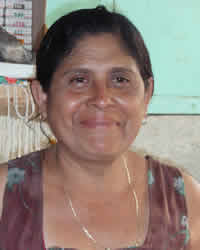

Lacandon in Mexico are an Indigenous Maya people of Chiapas, especially associated with the Lacandon Jungle (Selva Lacandona) near the borderlands of Guatemala. They are one of the most widely recognized surviving Maya peoples of the tropical lowlands and are often known by the self-designation Hach Winik, meaning "true people." Reliable outside sources place their historic and present communities primarily in the forested zones of eastern Chiapas, with the best-known settlements including Najá, Mensabäk (Metzabok), and Lacanjá Chan Sayab. Britannica also notes the major distinction between Northern Lacandon and Southern Lacandon communities.
Their history is marked by survival through isolation. Reliable outside documentation describes the modern Lacandon as descendants of Yucatec-speaking Maya refugees who withdrew into the Chiapas rainforest during and after the colonial era, preserving a distinct identity through relative separation from Spanish and later Mexican control. Care is needed here, because the historic Lakandon Ch?ol of the conquest period were a different Ch?ol-speaking people and should not be confused with the modern Lacandon. The modern Lacandon retained a unique Maya identity in the forest long after many surrounding communities had been more fully absorbed into colonial systems.
Their language is Lacandon, also called Jach t?aan or Hach t?an, a Yucatecan Mayan language spoken in Chiapas. Reliable linguistic sources identify it as closely related to Yucatec Maya, while remaining its own recognized language. There are northern and southern varieties, and the language is especially tied to communities such as Nahá, Metzabok, Betel, and Lacanjá Chansayab. Many also speak Spanish, but their language remains a central marker of identity. For a Bible-believing audience, this matters greatly: when truth is clearly understood in their language, discipleship is strengthened and not reduced to borrowed religious familiarity.
Lacandon in Mexico live in the rainforest environment of eastern Chiapas, especially in and around the Selva Lacandona, a region of rivers, tropical forest, wildlife, and fertile but vulnerable land. Britannica describes them as living in a richly watered tropical rainforest well supplied with fish, game, and fertile soil. Their communities are small and village-based rather than urban, and the best-known settlements remain tied to the forest edge and protected areas near places such as Najá, Metzabok, and Lacanjá Chan Sayab.
Their traditional livelihood has long centered on forest-based swidden farming. Outside sources consistently describe them as growing corn, beans, squash, and tomatoes together in mixed plots, with additional fruits and vegetables cultivated in separate gardens. Specialized language-and-culture documentation also highlights their detailed knowledge of the rainforest and a highly developed agricultural system adapted to jungle conditions. In practical terms, this means daily life has historically been shaped by small-scale farming, forest knowledge, fishing, hunting, and close family cooperation rather than by large-scale commercial agriculture.
Lacandon in Mexico are identified primarily with ethnic religion, though some also identify with forms of Christianity. This must be handled carefully. Reliable outside documentation on the Lacandon cultural heritage specifically notes that the Northern Lacandon preserved much of the ancient Maya religion and customs well into the twentieth century, even after many missionary efforts. At the same time, other sources indicate that some Southern Lacandon communities moved away from older religious patterns earlier, and broader public summaries also note Protestant and some Catholic influence among parts of the people. That means this is not a simple one-line religious picture.
Their traditional spiritual life has been deeply shaped by older Maya religious belief, including reverence for spiritual beings, ritual practice, offerings, and inherited sacred understandings tied to land, household, and wellbeing. Even where Christian language is present, that should not be confused with widespread biblical discipleship. Some may have real exposure to the gospel. Others may still be shaped more by inherited ritual, syncretism, or cultural religion than by repentance and living faith in Jesus Christ. They need the clear proclamation that Jesus Christ is Lord over every fear, every spirit, every tradition, and every human heart. Scripture portions are available in their language.
Lacandon in Mexico need clear, faithful gospel witness that takes their identity seriously without romanticizing their traditional religion. Because they are often described as culturally distinctive and historically isolated, outsiders can easily make two opposite mistakes: treating them as merely a cultural curiosity, or assuming that any Christian contact means they are already well discipled. Neither is safe. They need believers who love them enough to speak plainly, open the Scriptures carefully, and present Jesus Christ not as a foreign cultural replacement, but as the true Savior and Lord for every people.
They also need patient discipleship in a changing world. Multiple outside sources note that their isolation has been reduced by roads, logging, colonization, migration from other groups into the region, and environmental pressure on the rainforest. That means the Lacandon are not simply facing spiritual needs in a vacuum; they are also facing cultural disruption, land pressure, and the loss of older ways of life. In that kind of setting, faithful ministry must help people move not only from traditional belief or nominal religion into biblical faith, but also through the upheaval that comes when a small people are drawn more deeply into the national economy and outside systems.
Because they are a small and locally concentrated people, they can be easily overlooked. They need strong local believers, mature shepherds, Scripture-centered homes, and fellowships rooted deeply in God's Word. Practical needs should also be prayed for carefully and without exaggeration. In rainforest communities under pressure from deforestation and outside intrusion, access to stable livelihood, transportation, medical care, education, and enduring biblical teaching can all affect long-term spiritual health.
Pray that Lacandon in Mexico would hear a clear and faithful witness to Jesus Christ and come to trust him as Savior and Lord.
Pray that ancient religious fears, inherited ritual obligations, and every form of spiritual bondage would be broken by the power of Christ.
Pray that where Christian language exists without clear biblical faith, the Lord would bring repentance, gospel clarity, and true conversion.
Pray for families in communities such as Najá, Mensabäk, and Lacanjá Chan Sayab, that homes would become places of Scripture, prayer, and faithful discipleship.
Pray for pastors, evangelists, and church leaders who serve among the Lacandon to handle God's word faithfully, love the people sincerely, and resist both compromise and romanticism.
Pray for practical help where needed in areas such as transportation, medical access, education, and stable provision in rainforest communities facing outside pressure and environmental change.
Scripture Prayers for the Lacandon in Mexico.
https://www.britannica.com/topic/Lacandon
https://dobes.mpi.nl/projects/lacandon/people/?lang=en
https://web.uvic.ca/lacandon/
https://en.wikipedia.org/wiki/Lacandon_language
https://es.wikipedia.org/wiki/Idioma_lacand%C3%B3n
https://en.wikipedia.org/wiki/Lacandon_people
| Profile Source: Joshua Project |



