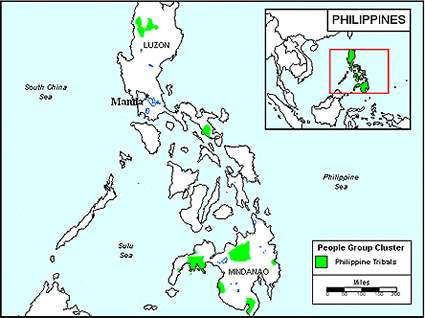
Northern Kankanaey in Philippines are an Indigenous Cordilleran people of northern Luzon, especially associated with the western part of Mountain Province. The editor-provided comma-separated name must be corrected under your rule, so this profile properly uses Northern Kankanaey in Philippines throughout. Reliable outside sources identify the Northern Kankanaey, also called Applai, as the Kankanaey communities centered especially in Sagada and Besao, with related communities extending into nearby parts of western Mountain Province and adjoining upland areas. They are part of the wider Igorot ethnolinguistic world but remain a distinct subgroup with their own recognized speech form and cultural patterns.
Their history is tied to the high Cordillera mountains, where communities preserved their identity through village life, terraced farming, customary law, and kinship networks rather than through centralized states. Outside sources describe the Northern Kankanaey as one of the older upland populations of western Mountain Province, with long-established settlements in places like Sagada and Besao. Their social institutions, especially the dap-ay and the authority of elders, reflect a deeply rooted mountain community structure that has endured even as Christianity, schooling, migration, and tourism have changed parts of the region.
Their language is Northern Kankanaey, recognized externally as a distinct language from broader Kankanaey. It is spoken mainly in western Mountain Province and nearby parts of southern Abra and southeastern Ilocos Sur. Many also use Ilocano and Filipino in wider public life, but their language remains important in local identity, oral tradition, and community memory.
Northern Kankanaey in Philippines live in the rugged highlands of the Cordillera, especially in Sagada and Besao in western Mountain Province. These are steep, cool upland areas marked by ridges, forested watersheds, terraced fields, and mountain roads rather than lowland plains. Outside sources consistently place the Northern Kankanaey in this western Mountain Province setting, and one cultural source specifically notes Besao's dependence on mountain water sources and traditional watershed management. That fits a people whose daily life is deeply shaped by altitude, land stewardship, and careful use of limited agricultural resources.
Their daily life has long centered on agriculture, especially rice terraces, root crops, and small-scale upland farming. Outside sources describe the Northern Kankanaey as rice terrace farmers who also grow camote (sweet potato) and practice other forms of mountain agriculture, alongside hunting, fishing, food gathering, barter, and cottage industry. In places like Besao, water is described as being valued as highly as land because rice cultivation depends on mountain-fed irrigation systems. This is a people shaped by hard terrain, shared labor, and community cooperation.
Their communities have traditionally been organized around strong kinship and village institutions. Outside sources describe the dap-ay as a central social, political, and ceremonial space, with the council of elders guiding decision-making. Traditional houses, granaries, and communal structures reflect a highly organized upland culture rather than an isolated or primitive one.
Northern Kankanaey in Philippines are identified primarily with Christianity, but that must be handled carefully. In the wider Mountain Province setting, Christianity is now strong, and outside sources note that places such as Besao were significantly shaped by Episcopalian and other Christian influence beginning in the early twentieth century. At the same time, the older Northern Kankanaey religious framework historically centered on ancestor spirits, nature spirits, omens, and ritual practices tied to sickness, harvest, travel, and family wellbeing. In some places, traces of those older beliefs and customs can still remain beneath a Christian identity, especially among older generations or in cultural practice.
That means Northern Kankanaey in Philippines should not be treated as a people with no Christian exposure, but neither should outward Christian identity be assumed to mean deep biblical discipleship across the whole people. Some may truly know Jesus Christ. Others may be shaped more by inherited church tradition, cultural Christianity, or residual folk beliefs than by clear repentance and strong grounding in Scripture. Their need is not merely more religion, but genuine conversion where needed, freedom from syncretism, and lives increasingly shaped by the authority of God's word. Scripture portions are available in their language.
Northern Kankanaey in Philippines need strong biblical discipleship in a setting where Christian identity is present but spiritual depth should not be assumed. In communities where Christianity has been known for generations, the greatest danger is often not open rejection of the gospel but cultural Christianity, mixed belief, and religious familiarity without deep submission to Christ. They need pastors, teachers, and mature believers who will preach repentance, the new birth, and the authority of Scripture clearly rather than assuming church background equals spiritual life.
They also need discipleship that speaks to the tension between older inherited customs and biblical faith. In places where ancestral memory, ritual tradition, and communal identity remain strong, people can continue certain practices out of family loyalty or fear even while calling themselves Christian. Believers need careful biblical teaching so they can distinguish between cultural heritage that can be appreciated and spiritual practices that must be rejected. They need the confidence that Jesus Christ is Lord over fear, death, ancestry, blessing, and every unseen power.
Their mountain setting can also create practical challenges. Upland communities can face pressures related to watershed decline, deforestation, transportation, migration of younger generations, and access to consistent biblical teaching in smaller villages. Outside sources on Besao specifically mention depleted water supplies and environmental strain on traditionally managed watersheds. Prayer for practical stability is appropriate when joined to a desire for strong homes, enduring local churches, and leaders who remain faithful in mountain communities rather than drifting toward shallow religion or spiritual compromise.
Pray that Northern Kankanaey in Philippines would grow beyond nominal or inherited Christianity into deep repentance, strong faith, and joyful obedience to Jesus Christ.
Pray that where Christian identity is mixed with ancestral fear, older ritual assumptions, or cultural religion, the Lord would bring biblical clarity, conviction of sin, and lasting transformation.
Pray for pastors, evangelists, and church leaders in Sagada, Besao, and nearby upland communities to handle Scripture faithfully, teach sound doctrine clearly, and shepherd people with humility and courage.
Pray that families in mountain villages would become places of prayer, Scripture, repentance, and faithful discipleship across generations.
Pray that younger people who leave for school or work would not drift spiritually, but would remain grounded in Christ and, where God wills, return as strong believers and leaders.
Pray for practical help where needed in areas such as water stewardship, transportation, education, and regular access to mature biblical teaching in upland communities.
Scripture Prayers for the Kankanay, Northern in Philippines.
https://en.wikipedia.org/wiki/Kankanaey_people
https://en.wikipedia.org/wiki/Kankanaey_language
https://en.wikipedia.org/wiki/Igorot_people
https://www.culturalsurvival.org/publications/cultural-survival-quarterly/traditional-water-management-practices-kankanaey
https://en.wikipedia.org/wiki/Besao
| Profile Source: Joshua Project |