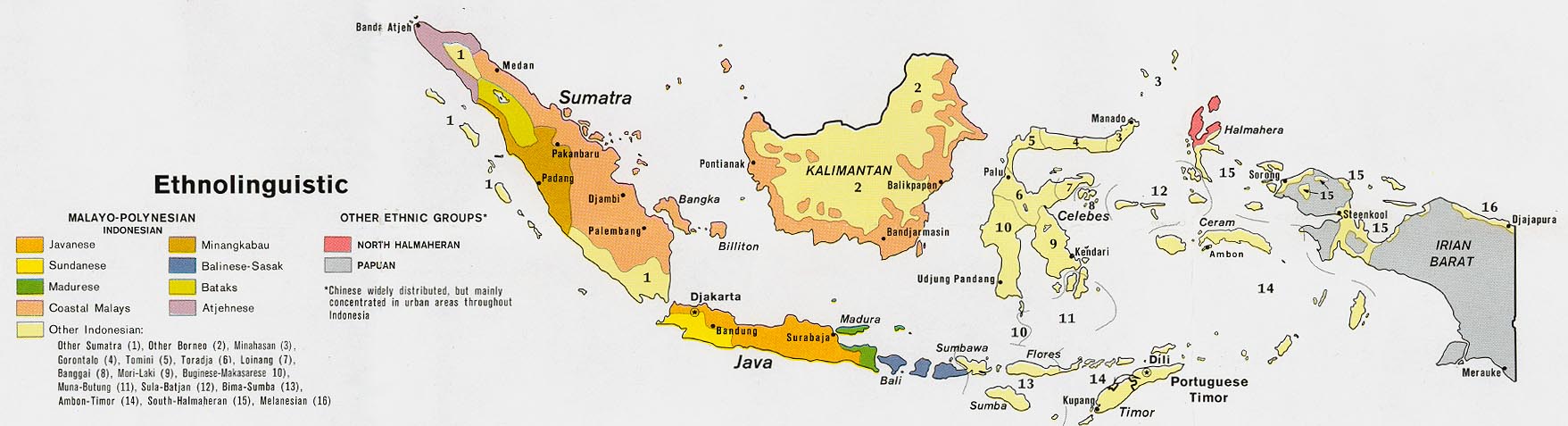
The Dekwambre Amberbaken people live in the Amberbaken district of West Papua, Indonesia. They speak a language from the Papuan language family, which is distinct from the Austronesian languages spoken in coastal areas. Historically, the Dekwambre Amberbaken have lived in the mountainous and forested regions of the Bird's Head Peninsula, relying on hunting, gathering, and small-scale gardening for survival. Their culture is deeply tied to the land, with traditions passed down orally through generations. Contact with outsiders was limited until the 20th century, when missionaries and traders began to influence their way of life. Despite these changes, the Dekwambre Amberbaken have maintained many traditional customs alongside newer practices.
Life for the Dekwambre Amberbaken revolves around subsistence farming and forest resources. Families cultivate crops such as sweet potatoes, taro, and bananas, while hunting and fishing supplement their diet. Sago is an important staple food, processed collectively by family groups. Homes are typically built from wood and palm leaves, and villages are small and scattered across rugged terrain. Family life is organized around extended kinship networks, and cooperation is essential for farming and community projects. Celebrations include traditional ceremonies tied to harvest cycles and Christian holidays, which have become significant in recent decades. Music, dance, and storytelling remain central to cultural expression.
The Dekwambre Amberbaken people are primarily Christian, with Protestant traditions being the most common. Churches serve as important centers for worship and community life. While Christianity is the dominant faith, elements of animism and ancestral practices persist, especially in rural areas. Fear of spirits and reliance on traditional rituals for protection still influence some aspects of daily life. There is a need for deeper understanding of the gospel and for discipleship that helps believers grow in faith and live out biblical truth.
The Dekwambre Amberbaken face both physical and spiritual challenges. Access to healthcare and education is limited in remote villages, and economic opportunities are scarce outside of subsistence farming. Infrastructure such as clean water systems and reliable transportation is underdeveloped, making life difficult for many families. Spiritually, while many identify as Christians, there is a need for strong teaching rooted in scripture to help believers grow in faith and resist syncretistic practices. Resources such as Bible translations, audio Scripture, and trained local leaders are essential for equipping the community to live out and share the gospel.
Pray for improved healthcare and educational opportunities for Dekwambre Amberbaken families.
Pray for the translation and distribution of Scripture in local languages and for its use in homes and churches.
Intercede for local Christian leaders to be equipped for discipleship and evangelism, so that faith in Christ grows strong and clear in their communities, and for others as well.
Ask God to provide clean water and sustainable economic solutions for isolated villages.
Scripture Prayers for the Amberbaken, Dekwambre in Indonesia.
Amberbaken District – Wikipedia
Papuan Languages Overview – Ethnologue
| Profile Source: Joshua Project |