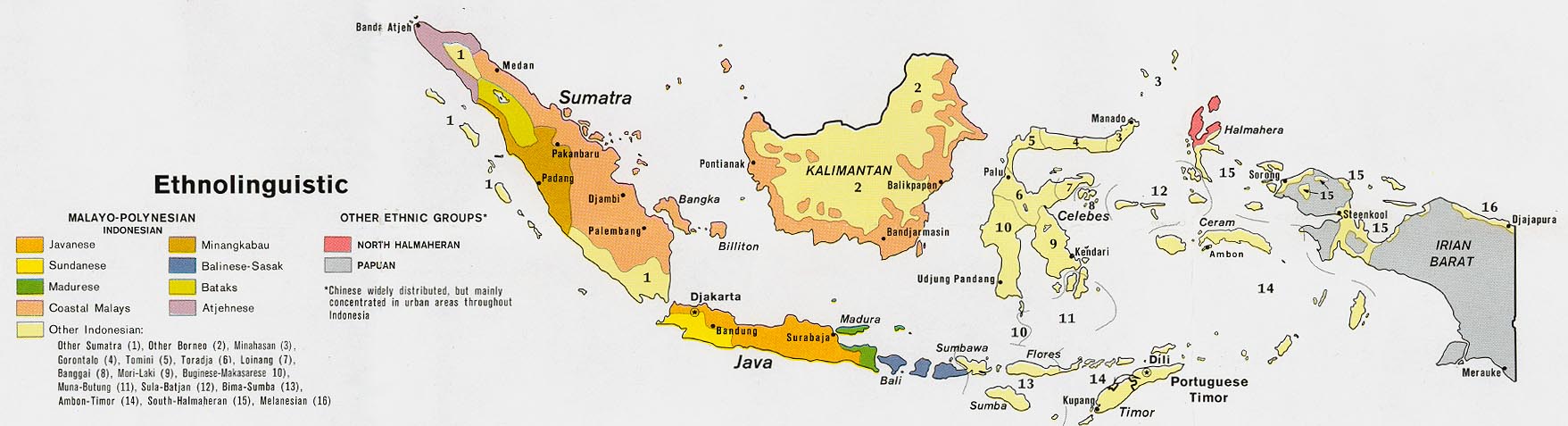

The Ekagi, also known as the Ekari, are an indigenous people of Papua, Indonesia. They live primarily in the highlands around Lake Paniai, a fertile region that has sustained them for centuries. Historically, the Ekagi were semi-isolated, practicing subsistence farming and maintaining clan-based social structures. Contact with outsiders increased during the Dutch colonial period and later under Indonesian governance, which introduced new systems of education, religion, and administration. Despite these influences, the Ekagi have preserved much of their cultural identity, including their language and traditional practices.
The Ekagi live in villages surrounded by gardens and forested hills. Work is centered on agriculture, with sweet potatoes serving as the staple crop. Men often hunt or fish, while women cultivate gardens and care for children. Pigs are highly valued, both as a source of food and as a symbol of wealth, often exchanged during ceremonies. Family dynamics are communal, with extended kinship networks guiding decisions and maintaining harmony.
Celebrations revolve around harvests, marriages, and clan alliances, where traditional dances, songs, and feasts are central. Food is prepared using earth ovens, and meals often include sweet potatoes, taro, bananas, and pork. While modernization has introduced schools and limited trade, daily life remains deeply tied to traditional rhythms.
The Ekagi identify primarily with Christianity, with a significant portion professing faith in Christ. However, many still blend Christian practices with traditional animistic beliefs, including reverence for ancestral spirits and nature. Churches exist in their villages, but discipleship is often shallow, and syncretism remains common. Spiritual maturity and mission-mindedness are still developing.
The Ekagi people face both spiritual and physical challenges. Spiritually, they need deeper discipleship so that their faith in Christ becomes central rather than mixed with traditional practices. Physical needs include access to education, healthcare, and sustainable economic opportunities. Isolation and limited infrastructure have left many villages without adequate services, and literacy rates remain low. Greater engagement with Scripture in their heart language would strengthen their faith and empower them to share the gospel with neighboring groups.
Pray that Ekagi believers will grow in spiritual maturity and become part of the mission force reaching other groups in Papua.
Pray asking the Lord to provide translation of scripture and ministry resources in the Ekari language so that the gospel can be clearly understood.
Pray for physical needs such as improved healthcare, education, and agricultural development, which would bless families and reduce poverty.
Pray for unity among believers, that they may overcome syncretism and stand firm in Christ.
Scripture Prayers for the Ekagi in Indonesia.
Ekagi of Indonesia (PGID: PG022913), PeopleGroups.org.
"Ekari people," Wikipedia.
"Kapauku (Ekagi) – Orientation / Culture and Society," Encyclopedia.com and eHRAF / Human Relations Area Files.
His Feet International: Unreached People Group
| Profile Source: Joshua Project |