


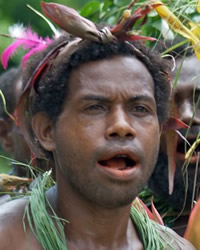

The Lote people live in East New Britain Province of Papua New Guinea, especially in the Pomio District along the southeast coast and inland near Cape Dampier. Their homeland includes coastal villages and forested interior areas shaped by generations of settlement along rivers, beaches, and ridges. The Lote language, an Austronesian language formerly known as Uvol, is spoken throughout the region and reflects long-standing cultural connections among communities in this part of New Britain.
The Lote people typically live in small coastal and inland villages where daily life depends on gardening, fishing, and gathering forest resources. Families cultivate staple crops such as taro, sweet potatoes, bananas, and local greens in garden plots that often lie along forest edges. The sea provides fish and shellfish, while rivers and reef areas contribute additional food sources.
Village life centers on cooperation among extended families, with shared responsibilities in building homes, preparing food, hosting community gatherings, and maintaining gardens. Traditional knowledge of weather patterns, tides, forest plants, and local materials continues to guide everyday decisions. Although exposure to modern transportation, schooling, and trade has increased over time, the Lote people remain closely connected to the rhythms of the land and sea.
Christianity is the primary religious identity among the Lote people, and church life plays a central role in worship, teaching, and community activities.
Before Christian influence became widespread, traditional beliefs often included respect for spiritual forces connected to the natural world, as well as stories and customs tied to ancestors or local places. These earlier systems varied among villages and are best described modestly. Today, Christian teaching provides the main spiritual framework for most families, shaping moral values, community decisions, and hopes for the future.
Because many Lote communities are in remote coastal and inland areas, they may experience limited access to services such as healthcare, transportation, and educational resources. Support for literacy, including locally appropriate materials, may help strengthen learning opportunities. Sustainable gardening practices, preservation of traditional knowledge, and community development efforts can also contribute to long-term well-being.
Spiritually, the continued nourishment of believers through Scripture engagement, discipleship, and encouragement for local church leaders remains important for strong and healthy churches.
Pray for the Lote people to grow in their understanding of God's word and to walk faithfully with Christ.
Pray for strong families that reflect unity, grace, and love in their homes and communities.
Pray for church leaders to send their congregants to communities without a gospel witness in other parts of Asia.
Pray for young people to find hope and purpose in Christ and to develop a desire to serve their communities.
Pray that the light of the gospel will shine clearly throughout the villages of Cape Dampier and surrounding areas.
Scripture Prayers for the Lote in Papua New Guinea.
| Profile Source: Joshua Project |



