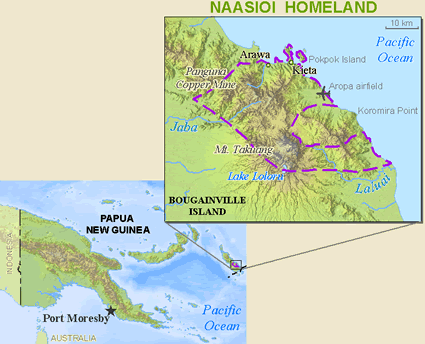
The Nasioi, often identified by outsiders as Kieta, are an indigenous Melanesian people of the southeastern part of Bougainville Island in Papua New Guinea. Their traditional lands extend from the coastal area around Kieta Harbour inland across valleys and into the central mountains of Kieta District, giving them access to diverse ecological zones from sea level up to nearly 900 meters above sea level. This varied landscape helped shape long-standing settlement and exchange patterns before modern changes. The name "Nasioi" is primarily a linguistic designation; within their own communities people may identify with local village or clan names.
Their language, known as Naasioi, Kieta, or sometimes Aunge, belongs to the South Bougainville branch of Papuan languages. Several dialects exist, and many younger people also speak Tok Pisin and English in addition to their mother tongue. Written materials, including religious literature and translations of Scripture, have been developed in the Naasioi language.
Nasioi communities are predominantly rural, with village clusters spread across coastal plains, valleys, and mountainous terrain. Daily life traditionally centers on subsistence agriculture, where families cultivate root crops such as taro and sweet potatoes, raise pigs, and gather food from gardens and forests. Cocoa has become an increasingly significant cash crop in parts of Bougainville, including among Nasioi farmers, adding a source of income alongside subsistence work. Extended families and clans form the core of social structure, and elders and local leaders play important roles in guiding village affairs. Sociocultural life includes music, storytelling, dance, and communal gatherings that reinforce identity and memory across generations.
Christianity is the primary faith among the Nasioi today, and it plays a central role in many communities' spiritual and social life. Congregations gather for worship, prayer, and teaching, and church involvement is a major source of fellowship for families. The New Testament has been translated into the Naasioi language, making Scripture accessible in the heart language of the people and supporting personal and communal engagement with God's word.
Traditional beliefs about spirits and connection to land and ancestors historically shaped how communities understood wellbeing and relationships with the unseen world. Elements of these cultural values often continue in ways that reinforce family responsibility and respect for elders, even as Christian faith influences contemporary life.
Although Christianity is established among the Nasioi and Scripture is available in their language, ongoing discipleship remains important. Local church leaders benefit from further opportunities for biblical training and teaching resources that deepen understanding of God's Word and help believers apply scripture in daily life.
Additional Bible teaching materials, leadership development tools, and access to audio Scripture or study guides in the Naasioi language can strengthen the spiritual growth of families and congregations. These resources also equip believers to encourage one another and to share the message of Christ with neighboring peoples throughout Bougainville.
Pray that Nasioi believers will grow in humility, understanding, and love for scripture as they follow Jesus faithfully.
Pray for pastors, teachers, and church leaders who will shepherd their communities with wisdom, compassion, and biblical insight.
Pray that the Naasioi New Testament and related teaching resources will be widely used, well understood, and treasured in homes and churches.
Pray for strong spiritual unity and vision among the churches of the Nasioi people, that they may bear witness to Christ's love across Asia.
Scripture Prayers for the Nasioi, Kieta in Papua New Guinea.
https://en.wikipedia.org/wiki/Naasioi_language
https://www.omniglot.com/writing/naasioi.htm
https://www.everyculture.com/Oceania/Nasioi-Orientation.html
https://ioa.factsanddetails.com/article/entry-993.html
| Profile Source: Joshua Project |