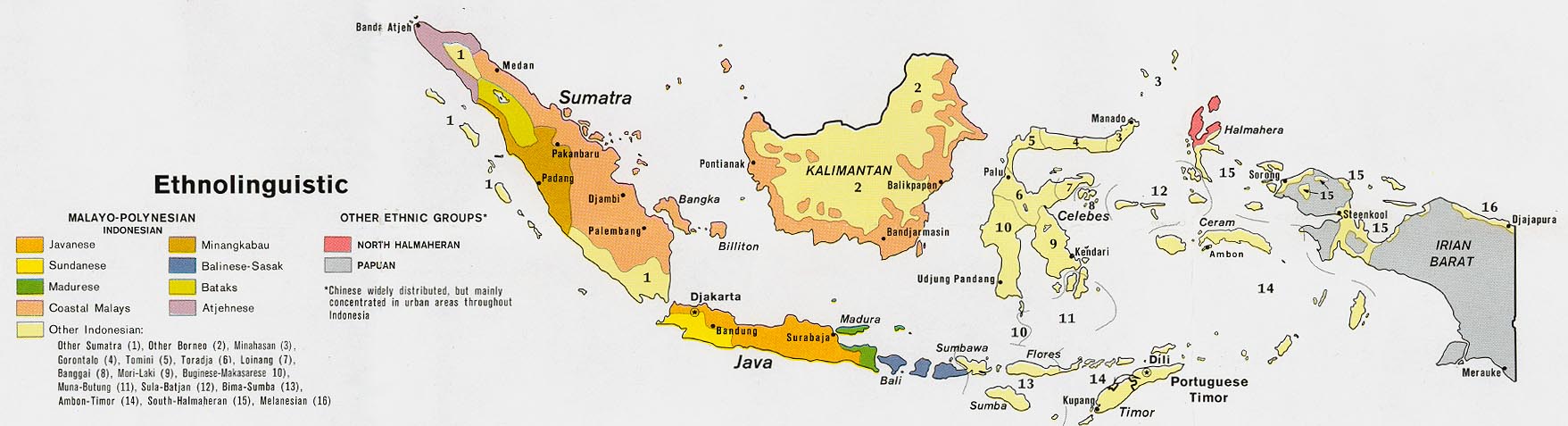
Mahakam Kenyah in Indonesia are a distinct Kenyah subgroup of the Dayak peoples of inland East Kalimantan and North Kalimantan. Their name points to the Mahakam River and the wider Upper Mahakam interior, where Kenyah communities have long lived alongside other Dayak groups such as Bahau, Kayan, and Aoheng. Internal location data for this people group places them in scattered highland and foothill areas of Kalimantan Timur and Kalimantan Utara, including the Mahakam, Bahau, Belayan, Segah, Kelai, and Telen river systems, along with interior villages such as Long Setulang, Long Uli, and Long Belua. That strongly fits the wider historical pattern of Kenyah identity being tied to river systems, upriver migration, and clustered longhouse settlements rather than centralized states.
The Mahakam Kenyah are best understood within the broader Kenyah world of central and northern Borneo. Reliable outside sources describe the Kenyah as one of the indigenous Austronesian-speaking peoples of interior Borneo, especially in the Mahakam and Apau Kayan regions. Their history has long been shaped by migration along river corridors, shifting settlement, and the preservation of identity through extended family networks, customary leadership, and shared ceremonial life. In the Upper Mahakam region in particular, recent cultural research confirms that Kenyah remain one of the dominant Dayak sub-groups in Mahakam Ulu, showing that they continue to be a significant and enduring part of that interior cultural landscape.
Their language is best understood as part of the Kenyah language group, which outside linguistic sources describe as a cluster of closely related Austronesian languages spoken across Borneo rather than a single uniform speech form. Internal classification for this people group identifies their main language as Kenyah, Mainstream, which fits that broader linguistic picture. In practice, Mahakam Kenyah in Indonesia likely use their Kenyah speech in family and village settings while also using Indonesian in schooling, government, trade, and wider church life. In remote interior settings, this kind of bilingual life is common and can affect how deeply biblical teaching is understood if discipleship is not grounded well in their language.
Mahakam Kenyah in Indonesia live in the inland river world of eastern Borneo, especially in the Upper Mahakam and nearby interior river basins. Their daily life is best understood in relation to river systems, forested uplands, and village settlements that are often more accessible by river than by road. The Mahakam River and its tributaries have historically functioned as routes of travel, trade, fishing, and social connection, and the internal location listing for this people group confirms a widespread across river areas and interior villages rather than a single urban center.
As a Kenyah subgroup, their traditional social life is closely associated with longhouses, settled village communities, and swidden agriculture. Reliable outside sources on the wider Kenyah describe them as historically living in longhouses that served not only as dwellings but also as centers of family life, leadership, hospitality, and community order. These communities have traditionally depended on a mix of rice cultivation, fishing, hunting, forest gathering, and small-scale local trade. Even where some households now live in separate homes or maintain closer ties to towns, longhouse culture remains an important marker of identity and memory among many Kenyah communities.
Mahakam Kenyah in Indonesia are identified primarily with Christianity, and the internal source specifically lists Christianity as their largest religion. That means they should not be treated as a people with no exposure to the gospel. At the same time, the internal source also shows that they are a people in need of stronger biblical depth rather than assuming a thoroughly mature church situation. This is exactly the kind of setting where many may identify as Christian while still needing deeper repentance, stronger grounding in Scripture, and greater spiritual renewal.
The wider Kenyah world helps clarify this. Outside sources note that many Kenyah communities in Borneo are now predominantly Christian, but they also recognize that older customary religious patterns such as Bungan and other traditional beliefs have been part of Kenyah spiritual life. That means some among Mahakam Kenyah in Indonesia may be genuine believers in Jesus Christ, while others may carry Christian identity more by family history, community tradition, or church association than by clear biblical discipleship. In some cases, older spiritual assumptions, ritual habits, or fear-based customary patterns may continue beneath a Christian surface. Scripture portions are available in their language.
Mahakam Kenyah in Indonesia need strong biblical discipleship in a setting where Christian identity is present but spiritual maturity should not be assumed. Where a people group has visible church background and a broad Christian label, the danger is often not open rejection of Christ but shallow Christianity, weak doctrinal grounding, and churches that may lack consistent, Scripture-centered teaching. They need pastors, teachers, and mature believers who can patiently strengthen local fellowships in truth, holiness, repentance, and endurance.
Their interior river setting also matters. Because they are spread across multiple river systems and highland or foothill settlements in East Kalimantan and North Kalimantan, regular pastoral care, leadership training, and consistent connection to mature biblical teaching can be difficult. In upriver communities, distance and transportation can slow down discipleship and make outside support irregular. That means strong local leadership is especially important if churches are to remain faithful over time rather than drifting into nominal religion or weak teaching.
They also need discipleship that reaches homes, families, and village communities, not only isolated individuals. In close-knit Dayak settings, faith is lived in a strongly communal context. If older customary beliefs, spiritual fears, or inherited ritual assumptions remain beneath the surface, believers need careful biblical teaching so they can understand the lordship of Christ over fear, suffering, sickness, ancestral pressure, and every spiritual power. Practical needs such as transportation, medical access, educational opportunity, and regular connection to strong biblical fellowship may also affect church health in the interior and should be prayed for carefully without exaggeration.
Pray that Mahakam Kenyah in Indonesia would grow beyond nominal or shallow Christianity into deep repentance, strong faith, and joyful obedience to Jesus Christ.
Pray for pastors, evangelists, and church leaders among Mahakam Kenyah in Indonesia to handle Scripture faithfully, teach sound doctrine clearly, and shepherd people with humility and courage.
Pray that where Christian identity is mixed with fear, custom, or weak understanding, the Lord would bring biblical clarity, spiritual renewal, and lasting transformation.
Pray that families and village communities along the Mahakam and related interior rivers would be strengthened by God's Word, so that homes become places of prayer, discipleship, and faithful witness.
Pray for strong local fellowships in remote upriver communities, and that believers would remain steadfast even where distance and travel make consistent support difficult.
Pray for practical help where needed in areas such as transportation, medical access, education, and regular connection to mature biblical teaching in interior river settlements.
Scripture Prayers for the Kenyah, Mahakam in Indonesia.
https://en.wikipedia.org/wiki/Kenyah_people
https://en.wikipedia.org/wiki/Kenyah_languages
https://en.wikipedia.org/wiki/Apo_Kayan_people
https://journal.privietlab.org/download.php?id=9057
https://www.eva.mpg.de/linguistics/past-research-resources/jakarta-field-station/documentation-of-kenyah/
| Profile Source: Joshua Project |