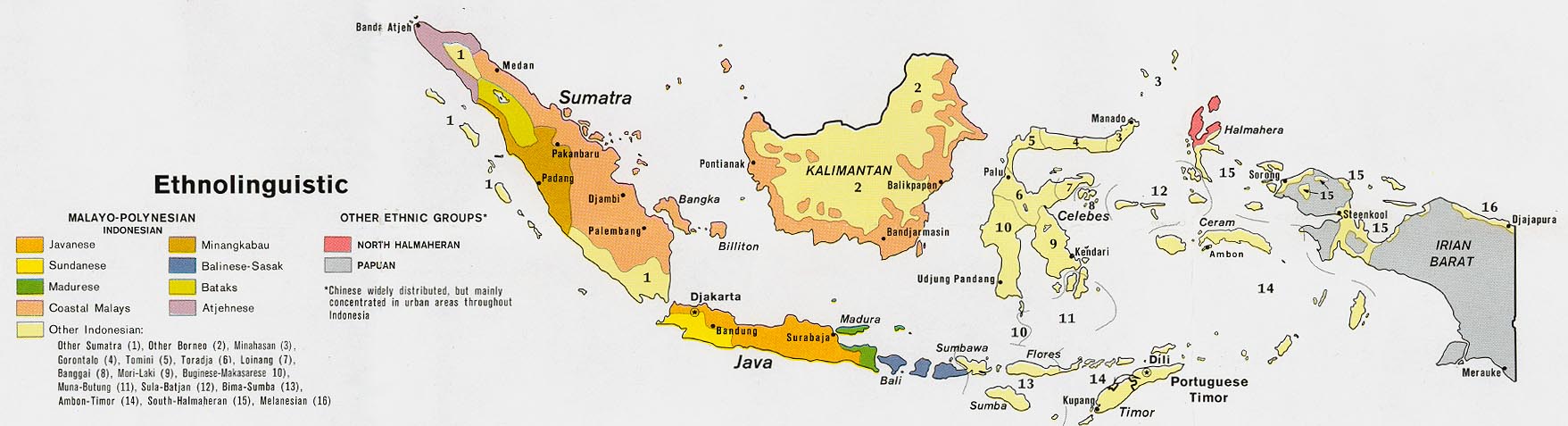
The Auye are an indigenous people of the highlands of Central Papua, Indonesia. Their traditional homeland is in the region of the Paniai Lakes, living along the upper Siriwo River and surrounding hills, where rainforest and mountain streams shape daily life. Their language, also called Auye (or Auwje), belongs to the Papuan Trans-New Guinea family, specifically the "Wissel Lakes" (Paniai Lakes) grouping.
For generations the Auye have lived as small, close-knit communities where survival depended on knowledge of forest ecology, river paths, and seasonal patterns of rainfall and game. Outside contact was minimal for much of their history, allowing them to carry forward their own customs, oral tradition, and worldview. In the 20th century, increasing contact with Indonesian governance, educational services, and Christian mission efforts began to change their villages, language use, and cultural influences. Over time, many Auye communities have become more sedentary, though their identity remains deeply rooted in the land, forest, and lake region that God has given them.
Life among the Auye remains closely tied to the highlands and natural rhythms of Central Papua. Families rely on subsistence living: hunting small forest game, gathering edible plants, fishing in streams, and cultivating gardens near their villages. Root crops, tubers, wild greens, river fish, and wildlife supplement their diet. Eating and survival depend on intimate knowledge of the forest, seasons, and ancestral lands.
Family and community structure tends to be communal and interdependent. Extended family groups often share responsibilities: older members teach younger ones how to hunt, gather, plant gardens, and navigate both the forest and social relationships. Elders carry wisdom and memory, preserving oral history and passing on traditions to children. Children learn by observing hunting, gathering, and daily chores, growing up steeped in the rhythms of village life.
Celebrations and communal gatherings still mark important events — births, marriages, funerals, and seasonal milestones. These are often occasions for storytelling, traditional songs, shared meals, and collective labor when needed, strengthening social bonds and cultural identity. As outside influence increases, some Auye also participate in broader community events linked to schooling, church, or interaction with neighboring groups, yet many retain a strong sense of local identity rooted in their ancestral homeland.
Because the region is remote and infrastructure is limited, many Auye continue living with minimal amenities; their life remains simple, shaped by environment, community, and what the land provides. Their connection to nature remains vital, as does their dependence on each other for physical survival and social coherence.
Among the Auye, Christianity is the primary religious affiliation today. This represents a significant shift from earlier generations, when traditional beliefs—the spiritual legacy of their ancestors, respect for forest and nature, and animistic understanding of the unseen realm—were predominant.
Even now, many Auye Christians carry with them a cultural memory shaped by traditional spirituality, and in some communities this blend of old beliefs with new faith continues. For some, Christian teaching has brought hope, a sense of new identity, and a hope beyond earthly life. For others, remnants of ancestral worldviews—belief in spirits connected to forest, ancestors, and nature—still influence how they view misfortune, healing, and community. In places where churches are established and teaching is offered, believers often express a desire for deeper understanding of Scripture, community discipleship, and a faith rooted not just in ritual, but in daily life transformed by Christ.
The Auye face significant physical needs due to their remote location and limited infrastructure. Access to clean water, reliable sanitation, basic healthcare, and emergency medical care is still a challenge for many villages. Because access to larger towns may require long travel through difficult terrain, maternal and child health, infectious disease prevention, and nutritional support are of high concern.
Education is also sparse and uneven. Many children attend only basic village-level instruction, and opportunities for secondary schooling or vocational training are minimal. This limits future economic prospects and makes it difficult for young Auye to move beyond subsistence living if they choose to.
Economically, sustainable sources of income beyond subsistence are rare. The local environment provides food and forest products, but there are few stable opportunities for trade, wage labor, or crafts that market beyond the area. This makes long-term improvement of livelihoods difficult, especially in a changing world where outside pressures may threaten forest and land—even as younger generations may be drawn to outside towns.
Spiritually, while the Auye have begun to embrace Christianity, many communities lack strong, culturally grounded local leadership, deep discipleship, and teaching resources in their own language. Without those, there is a risk that faith may remain shallow or fragile, especially under social stress or cultural change.
Pray that Auye believers will grow deeply in their walk with Christ, gaining understanding of God's Word and living in transformed ways that shine with Christ's love among their communities.
Pray for God to raise up local Auye leaders — pastors, teachers, disciplers — who love both the forested homeland and the gospel, and who can shepherd the church with wisdom, integrity, and cultural sensitivity.
Pray for provision of basic needs: that communities would have access to clean water, sustainable food sources, and healthcare so children and families can thrive physically and not be hindered by preventable suffering.
Pray for the Auye language and cultural heritage to be honored and preserved — that younger generations will value their identity, learn from their elders, and integrate Christian faith with respect for their ancestral roots in a way that leads to healthy, sustainable communities.
Scripture Prayers for the Auye in Indonesia.
https://en.wikipedia.org/wiki/Auye-Dao_language
https://www.endangeredlanguages.com/lang/1351/Auye
https://everything.explained.today/Central_Irian_Jaya/
| Profile Source: Joshua Project |