


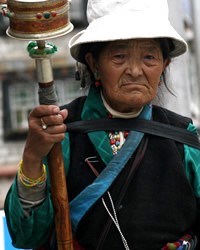

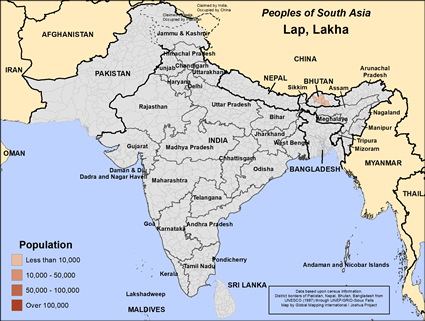
The Lap, also called Lakha or Lakhapa, are a small indigenous people group living in the mountainous regions of central Bhutan, particularly in the Wangdue Phodrang and Trongsa districts. Their language, Lakha, belongs to the Sino-Tibetan language family and is closely connected to the isolated highland culture in which they have lived for generations. The name "Lakha" is often understood to mean "language of the mountain pass," reflecting their long association with remote Himalayan terrain.
The Lap have historically lived in difficult mountain environments where survival depended on livestock, seasonal movement, and close-knit family cooperation. Their communities remained relatively isolated for much of their history because of Bhutan's rugged geography and limited transportation access. Like many Himalayan peoples, their traditions were shaped by Tibetan cultural influence, high-altitude pastoral life, and strong religious identity tied to Buddhism and older spiritual beliefs.
The Lap are traditionally yak herders who live in harsh mountain regions with cold winters and short growing seasons. Yaks are central to their way of life, providing transportation, milk, butter, wool, meat, and materials used in daily living. Families often move seasonally between grazing areas in order to care for their herds and survive the changing mountain climate.
Agriculture is difficult because of the altitude and terrain, so families attempt to grow enough grain and vegetables to supplement what they receive from their animals and trade. In some areas, highland peoples in Bhutan barter animal products for rice, salt, and other supplies from lower valleys. Homes are adapted to the cold climate and mountain conditions, and village life depends heavily on cooperation among relatives and neighbors.
Family and clan relationships are important within Lap society. Daily life revolves around livestock care, gathering supplies, preparing food, and surviving the challenges of mountain living. Economic opportunities are limited in remote Himalayan regions, and some younger people may leave for work or education in towns and cities. Isolation, difficult travel conditions, and harsh winters can make healthcare and education harder to access.
The Lap primarily follow Tibetan Buddhism, especially forms of Vajrayana Buddhism common throughout Bhutan. Their religious life includes devotion to Buddhist teachings, rituals performed by monks or lamas, prayer ceremonies, sacred festivals, and reverence for monasteries and holy sites.
At the same time, many Lap also retain older animistic and shamanistic beliefs connected to the Bon tradition and folk religion. Fear of spirits, local deities, curses, and unseen supernatural forces can strongly influence daily life. Ritual specialists may be consulted for protection, healing, blessing, or guidance in dealing with spiritual problems. Sacred mountains, natural sites, and ancestral traditions often hold spiritual significance.
Most Lap have never heard a clear biblical explanation of the gospel. Very few Christians are known among them, and there are almost no Christian resources available in their own language. Many have never encountered biblical teaching about Jesus Christ as Savior and Lord.
The Lap need faithful access to the gospel through Scripture, audio resources, discipleship, and compassionate Christian witness presented in ways understandable to an oral culture. Because many communicate primarily through spoken tradition, audio recordings and personal storytelling are especially important for gospel ministry.
Practical needs include healthcare access, education, transportation, and economic support in isolated mountain regions. Harsh winters, geographic isolation, and limited infrastructure make daily life difficult. Families dependent on livestock also face challenges from severe weather, predators, and environmental changes affecting grazing land.
There is also a need for spiritually mature believers willing to live among Himalayan peoples with humility, patience, and long-term commitment. Local discipleship and Scripture access in the Lakha language are greatly needed for any future church growth.
Pray that the Lap people will hear a clear and understandable presentation of the gospel in their own language.
Pray that God will raise up compassionate Christian workers who are willing to serve faithfully among the isolated mountain communities of the Lap.
Pray that the Lap people will be adopted through the People Group Adoption program so that ongoing prayer and future gospel engagement will continue among them.
Pray that God will provide audio Scripture resources and faithful discipleship tools that can communicate biblical truth effectively among the Lap people.
Scripture Prayers for the Lap, Lakha in Bhutan.
https://en.wikipedia.org/wiki/Layap
https://factsanddetails.com/south-asia/Bhutan/People_Bhutan/entry-7905.html
https://en.wikipedia.org/wiki/Ngalop_people
https://en.wikipedia.org/wiki/Kheng_people
| Profile Source: Joshua Project |


