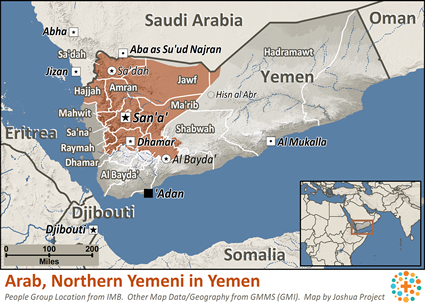

The Northern Yemeni Arabs are the dominant Arab population of northern Yemen, especially in the highlands surrounding Sana'a, Saada, Amran, and nearby tribal regions. They are Arabic-speaking peoples with deep historical roots connected to ancient South Arabian civilizations and tribal confederations that have shaped Yemen for centuries. Tribal identity remains highly influential, and major tribal groupings such as Hashid and Bakil have historically played central roles in politics, warfare, and social organization.
Northern Yemen was historically governed for long periods by Zaydi Islamic rulers, a branch of Shia Islam that became deeply connected to the culture and political identity of the northern highlands. Even after the fall of the Zaydi imamate in the twentieth century, tribal loyalties and religious identity continued to shape the region. Modern Yemen has experienced prolonged instability, civil war, economic collapse, and outside intervention, all of which have deeply affected northern Yemeni society.
The Northern Yemeni Arabs are known for strong family structures, tribal honor codes, hospitality traditions, poetry, and an enduring connection to Islamic heritage. Their society has historically valued courage, loyalty, mediation, and communal responsibility. Despite modernization in some urban centers, many northern communities still maintain deeply traditional lifestyles shaped by tribal customs and religious authority.
Life among the Northern Yemeni Arabs varies between crowded cities, mountain villages, and desert tribal regions. In rural areas many families depend on farming, livestock, trade, or small local businesses. Terraced agriculture has long been important in the mountain highlands, where families cultivate crops suited to steep terrain and dry climates. In urban areas such as Sana'a, families may work in commerce, transportation, education, government, or skilled trades.
Extended family and tribal relationships are central to daily life. Loyalty to tribe and family often shapes marriage decisions, conflict resolution, business relationships, and personal identity. Hospitality is highly valued, and gatherings over tea or coffee are common social traditions. Poetry, oral storytelling, and communal discussion remain respected cultural practices, especially in tribal settings.
Years of war and political instability have severely affected everyday life. Many northern Yemenis face economic hardship, food insecurity, damaged infrastructure, and disrupted healthcare systems. Families often endure displacement, unemployment, and uncertainty caused by continuing conflict and political division. Despite these pressures, community solidarity and tribal networks frequently provide support during times of crisis.
The Northern Yemeni Arabs are overwhelmingly Muslim, with large numbers following Zaydi Shia Islam while others follow Sunni traditions. Islam shapes nearly every area of life, including family structure, law, social expectations, religious education, and public morality. Northern Yemen has historically been one of the strongholds of Zaydism, a branch of Shia Islam deeply connected to the region's tribal and political identity.
Religious devotion is strong throughout northern Yemen. Mosque attendance, prayer, fasting during Ramadan, recitation of the Qur'an, and religious festivals are central parts of community life. Tribal customs and Islamic practice are often closely intertwined. In some areas, folk beliefs involving spirits, curses, blessings, sacred lineages, or supernatural protection may also influence religious thinking and daily decisions.
Very few Northern Yemeni Arabs have heard a clear biblical presentation of the gospel. Strong Islamic identity, social pressure, and political instability create major barriers to open exploration of Christianity. They need to hear that forgiveness of sins and reconciliation with God come through Jesus Christ alone rather than through religious identity, ritual observance, or human effort.
The Northern Yemeni Arabs are among the least reached Arab peoples in the world. Ongoing conflict, insecurity, tribal dynamics, and strict social pressure make gospel outreach extremely difficult in many areas. There is a great need for faithful Christian workers who can communicate biblical truth wisely, respectfully, and courageously in the midst of hardship.
Practical needs are immense. Many communities struggle with poverty, hunger, damaged infrastructure, limited healthcare, lack of clean water, and disrupted education because of years of war and political instability. Families often carry deep emotional burdens from violence, displacement, and economic collapse.
There is also a need for Scripture resources, media outreach, discipleship materials, and mature believers able to support those who secretly place their faith in Christ. Because open conversion from Islam can bring severe consequences, believers often need wisdom, protection, and discreet fellowship opportunities. Compassionate humanitarian service combined with faithful gospel witness can help demonstrate the love of Christ in a nation marked by suffering and uncertainty.
Pray that the Northern Yemeni Arabs will hear a clear presentation of the gospel and come to trust in Jesus Christ for salvation.
Pray that God will protect and strengthen believers and Christian workers serving among the Northern Yemeni Arabs during times of conflict and instability.
Pray that the Northern Yemeni Arabs will be adopted through the People Group Adoption program so that churches and believers will commit to sustained prayer and future gospel outreach among them.
Pray that any existing believers among the Northern Yemeni Arabs will grow strong in biblical truth and boldly share the hope of Christ with their families and communities.
Scripture Prayers for the Arab, Northern Yemeni in Yemen.
https://peoplegroups.org/people_groups/pg012284/
https://en.wikipedia.org/wiki/Islam_in_Yemen
https://en.wikipedia.org/wiki/Tribes_of_Yemen
https://en.wikipedia.org/wiki/Culture_of_Yemen
https://ehrafworldcultures.yale.edu/cultures/ml01/summary
| Profile Source: Joshua Project |