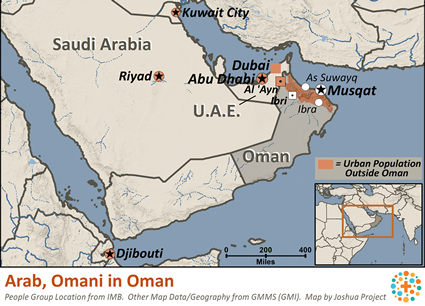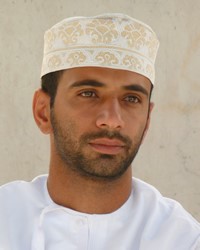

Omani Arabs are unique among Arab peoples for their long history of maritime trade, cultural openness, and strong tribal heritage, combined with a reputation for stability and hospitality. Oman's location along major Indian Ocean trade routes helped shape a society that has interacted with East Africa, India, and Persia for centuries. This has contributed to a balanced identity that values tradition while remaining outward-looking and adaptable.
Like other Arab peoples, they have their own Arabic dialect. To communicate with other Arabs, most master Egyptian Arabic, which is widely used in media outlets.
The work life of Omani Arabs reflects both traditional livelihoods and modern economic development. Historically, many Omanis were involved in seafaring, fishing, and trade, often traveling across the Indian Ocean. Coastal communities developed strong maritime skills, and fishing remains an important occupation in some areas today.
In rural regions, especially in the interior, many Omanis have traditionally worked as farmers and herders, cultivating crops such as dates and raising livestock. Agriculture often depends on careful water management, using ancient irrigation systems that require cooperation and long-term planning within communities.
In modern times, Oman's economy has expanded significantly due to the oil industry, government employment, and growing sectors such as business, tourism, and services. Many Omani Arabs now work in offices, education, administration, or private enterprises, especially in urban centers. However, family connections still play an important role in employment, and there is a strong emphasis on responsibility, diligence, and honor in one's work.
Women increasingly participate in education and professional fields, although traditional family roles remain highly valued. Overall, work life blends modern opportunities with a deep respect for heritage and community responsibility.
Recreation among Omani Arabs is closely tied to family, tradition, and social relationships. Leisure is often not separated from community life but is experienced through shared activities and gatherings. Visiting relatives, hosting guests, and spending time with family are central forms of relaxation, reflecting a strong culture of hospitality.
Traditional pastimes include storytelling, poetry, and music, which have long been valued as ways of preserving history and expressing identity. Cultural performances and festivals often feature traditional dances and songs, especially during celebrations such as weddings or national holidays.
Outdoor activities also play a role in recreation. In rural and coastal areas, people may enjoy fishing, desert outings, or time spent in the mountains. In urban settings, modern entertainment—such as sports, shopping, and cafés—has become more common, especially among younger generations.
Men often gather socially in informal settings to drink coffee, talk, and discuss daily life, while family-centered events bring together extended relatives. Religious observances and holidays also provide important times of rest, celebration, and community connection.
Omani Arabs were among the first people in the Middle East to accept Islam; they are staunch in their beliefs. Most Omani belong to the Ibadi sect of Islam, one of the religion's oldest and most traditional branches. Ibadi principles of puritanism (including reverence for the text of the Koran) and idealism have greatly influenced Arabs in neighboring countries as well. Family ties and religious traditions are strong.
Omani Arabs are averse to change in general, especially when they think it could threaten cultural traditions. The Omani Arabs are strongly committed to Islam. To follow Jesus in this environment would be difficult, as it would break their traditions of "puritanism."
Pray that a strong movement to Jesus would bring whole Omani families and communities into a rich experience of God's blessings.
Pray for the Lord to send dreams and visions to Omani Arab family leaders, opening entire clans to the grace of God.
Pray for the few followers of Christ among the Omani Arabs to find each other and fellowship together.
Pray they would be faithful witnesses to the goodness of Christ to their family and friends.
References
Scripture Prayers for the Arab, Omani in Oman.
| Profile Source: Joshua Project |