Dhanuk Dhankar in India
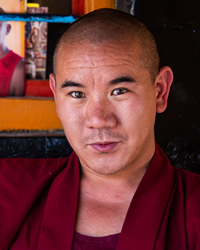
Photo Source:
Rakeshtoons - Wikimedia
Creative Commons
|
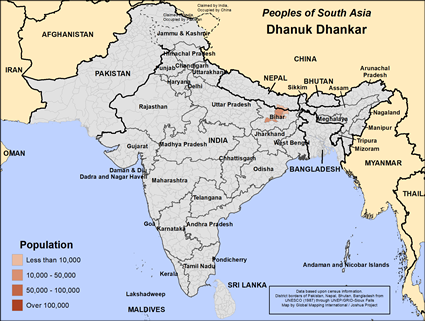
Map Source:
People Group data: Omid. Map geography: UNESCO / GMI. Map Design: Joshua Project
|

| People Name: | Dhanuk Dhankar |
| Country: | India |
| 10/40 Window: | Yes |
| Population: | 78,000 |
| World Population: | 85,000 |
| Primary Language: | Hindi |
| Primary Religion: | Hinduism |
| Christian Adherents: | 0.00 % |
| Evangelicals: | 0.00 % |
| Scripture: | Complete Bible |
| Ministry Resources: | Yes |
| Jesus Film: | Yes |
| Audio Recordings: | Yes |
| People Cluster: | South Asia Hindu - other |
| Affinity Bloc: | South Asian Peoples |
| Progress Level: |

|
Introduction / History
The Dhankar Dhanuk people are found mainly in northern India, including parts of Uttar Pradesh and neighboring regions. They are connected to the broader Dhanuk community, a group historically associated with agricultural labor, village service occupations, and other forms of manual work. Their language is generally Hindi or regional dialects connected to the areas where they live. Over generations, the Dhankar Dhanuk have adapted to changing economic and social conditions while continuing to maintain a distinct community identity.
Historically, many Dhanuk communities occupied lower social positions within the traditional caste structure of Indian society. This often limited educational and economic opportunities and contributed to cycles of poverty that still affect many families today. Despite these hardships, the Dhankar Dhanuk have preserved strong family networks and local customs that continue to shape community life. Their history reflects resilience, adaptation, and close ties to village-based culture in northern India.
What Are Their Lives Like?
Many Dhankar Dhanuk families live in villages where agriculture remains central to daily life. Men commonly work as farm laborers, small farmers, construction workers, or wage earners, while women often help with household responsibilities, agricultural tasks, and care for children and elderly family members. Some younger people have migrated to towns and cities in search of more stable employment opportunities.
Family relationships are highly valued, and extended families frequently maintain close contact even when separated by work or migration. Marriages are generally arranged within the community, and social life often centers around festivals, weddings, religious observances, and local gatherings. Daily meals usually include wheat or rice, lentils, vegetables, and simple regional foods common in northern India.
Access to education and healthcare can vary greatly depending on location. In poorer rural areas, many families continue to face difficult living conditions, unstable income, and limited access to modern infrastructure. Even so, community bonds remain strong, and many Dhankar Dhanuk take pride in their traditions and perseverance through hardship.
What Are Their Beliefs?
The Dhankar Dhanuk are primarily Hindu and participate in the religious traditions commonly practiced in northern India. Worship may include devotion to Hindu gods and goddesses, observance of regional festivals, household rituals, and ceremonies connected to family life and important seasons of the year.
Alongside mainstream Hindu practices, folk beliefs and superstitions may also influence religious life. Some families may seek spiritual protection through rituals, charms, local shrines, or guidance from religious figures during times of sickness, uncertainty, or hardship. Religious identity is often deeply connected to family heritage and community tradition.
Very few Dhankar Dhanuk identify as Christian, and many have had little opportunity to hear the gospel clearly explained in a culturally understandable way. In many places, there is little visible Christian witness among them.
What Are Their Needs?
The Dhankar Dhanuk people face both practical and spiritual challenges. Economic hardship, limited educational opportunities, poor healthcare access, and unstable employment continue to affect many families, especially in rural communities. Some also experience social discrimination connected to caste identity, which can further limit advancement and opportunity.
Spiritually, many Dhankar Dhanuk have little access to biblical teaching, Christian discipleship, or churches equipped to reach them in their own language and cultural setting. There is a great need for faithful believers who are willing to serve among them with patience, compassion, and long-term commitment.
Practical assistance in areas such as literacy, education, healthcare, vocational training, and family support can also help open doors for meaningful relationships and gospel witness. Local Christians in nearby regions need encouragement and boldness to share the message of Christ with the Dhankar Dhanuk community.
Prayer Points
Pray that the Dhankar Dhanuk people would encounter the truth of the gospel and come to understand the saving grace of Jesus Christ.
Pray for Christian workers to serve among the Dhankar Dhanuk with humility, wisdom, compassion, and perseverance.
Pray that the Dhankar Dhanuk people would be adopted through the People Group Adoption program so that ongoing prayer, discipleship, outreach, and future gospel engagement would continue among them.
Pray that believers in nearby churches would grow in faith and actively share the gospel with the Dhankar Dhanuk and surrounding communities.