Mamasani in Iran
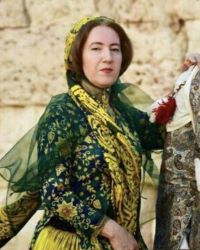
Photo Source:
Shadegan - Wikimedia
Creative Commons
|
Send Joshua Project a map of this people group.
|

| People Name: | Mamasani |
| Country: | Iran |
| 10/40 Window: | Yes |
| Population: | 140,000 |
| World Population: | 140,000 |
| Primary Language: | Luri, Southern |
| Primary Religion: | Islam |
| Christian Adherents: | 0.00 % |
| Evangelicals: | 0.00 % |
| Scripture: | Portions |
| Ministry Resources: | Yes |
| Jesus Film: | No |
| Audio Recordings: | Yes |
| People Cluster: | Luri-Bakhtiari |
| Affinity Bloc: | Persian-Median |
| Progress Level: |

|
Introduction / History
The Mamasani are a subgroup of the Luri peoples of Iran, an ethnic group with deep historical roots in the Zagros Mountains region. They are primarily found in western Iran, especially in Kohgiluyeh va Buyer Ahmad Province, as well as parts of Fars, Khuzestan, and Bushehr provinces. Their language is a dialect of Southern Luri, which belongs to the Indo-European language family.
Historically, the Mamasani have lived as nomadic or semi-nomadic pastoralists for many generations, moving seasonally across the rugged terrain in search of pasture and water for their herds. Their identity is closely tied to tribal structures, kinship networks, and a heritage of migration that has shaped their social and economic life.
What Are Their Lives Like?
Many Mamasani continue a semi-nomadic lifestyle, although some have become more settled in villages or towns. Those who maintain traditional patterns migrate seasonally between highland and lowland areas, carefully following established routes that allow their livestock—primarily sheep and goats—to graze on available vegetation. This movement is essential for survival in a region where water and pasture can be scarce and unpredictable.
Family and tribal relationships are central to daily life. Extended families often travel and live together, sharing responsibilities such as herding, food preparation, and caring for children. Elders are respected for their wisdom and often play a guiding role in decisions affecting the group.
Livelihoods are closely tied to the land. In addition to herding, some Mamasani engage in agriculture where settlement allows, cultivating crops suited to the climate. Others supplement their income through traditional crafts, particularly rug and textile weaving, which reflects long-standing artistic skills and cultural expression.
Daily life requires resilience and adaptability. Harsh weather, limited infrastructure, and geographic isolation can make access to services difficult. Despite these challenges, Mamasani communities often display strong hospitality, communal cooperation, and a deep connection to their environment.
What Are Their Beliefs?
The Mamasani are entirely Muslim, and Islam shapes their worldview, practices, and community life. Religious observances, including prayer and adherence to Islamic teachings, are important aspects of daily living.
In tribal and rural settings, Islamic belief is often practiced alongside deeply rooted cultural traditions that influence how faith is expressed. These traditions may shape community norms, leadership structures, and responses to life events. As with many groups in the region, religious identity is closely tied to heritage and social belonging.
What Are Their Needs?
The Mamasani have significant spiritual and practical needs. Spiritually, they have little to no access to the message of Jesus Christ in a way that is understandable within their language and cultural context. There are very few, if any, believers among them, and it will be very difficult for the gospel to reach their communities.
Practically, their semi-nomadic lifestyle and remote living conditions can limit access to education, healthcare, and consistent economic opportunities. Clean water, medical services, and schooling may be difficult to obtain, especially for those who continue to migrate seasonally.
Efforts that combine compassionate service with culturally appropriate communication of the gospel would help address both their physical needs and their need for the hope found in Christ.
Prayer Points
Pray that this people group would be adopted through the People Group Adoption program, leading to sustained prayer and long-term gospel engagement.
Pray that followers of Christ would be called and sent to lovingly and faithfully share the gospel with the Mamasani.
Pray that a deep spiritual hunger would awaken among the Mamasani, drawing them to seek and follow Jesus Christ no matter what the cost.
Pray for improved access to essential resources such as healthcare, education, and clean water for families throughout their migration routes and settlements.