Jewish, Gorsky-Kavkazi (Mountain Jewish) in Russia
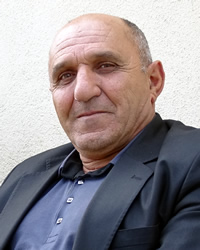
Photo Source:
Adam Jones - Flickr
Creative Commons
|
Send Joshua Project a map of this people group.
|
| People Name: | Jewish, Gorsky-Kavkazi (Mountain Jewish) |
| Country: | Russia |
| 10/40 Window: | No |
| Population: | 8,000 |
| World Population: | 113,200 |
| Primary Language: | Judeo-Tat |
| Primary Religion: | Judaism |
| Christian Adherents: | 0.00 % |
| Evangelicals: | 0.00 % |
| Scripture: | Portions |
| Ministry Resources: | No |
| Jesus Film: | Yes |
| Audio Recordings: | No |
| People Cluster: | Jewish, Sephardic Mizrahi |
| Affinity Bloc: | Jewish |
| Progress Level: |

|
Introduction / History
The Mountain Jews are also known as Caucasus Jews or Persian Jews. They originally were taken to Persia from Israel following the destruction of Solomon's Temple, in 587 BC when they were conquered by the Assyrians. Over 2,000 years ago they faced ongoing persecution in Persia. This forced them to migrate to Azerbaijan where they adopted the Muslim Tat language. Using the Tat language, they developed what became a distinct Jewish dialect called Judeo-Tat or Judeo-Persian.
Many of them became farmers and peacefully lived in the small, isolated villages located close to the Black and Caspian Seas. Living in their remote villages allowed them to maintain their Jewish culture and religious beliefs according to the teaching found in the Jewish scriptures of the Old Testament.
Most are now in Israel, but a couple thousand remain in Azerbaijan and nearby Russia.
What Are Their Lives Like?
The Mountain Jewish community in Russia, found mainly in the North Caucasus regions such as Dagestan and Kabardino-Balkaria, has traditionally maintained a lifestyle shaped by both their ancient heritage and their surrounding environment. Their work life has historically included a combination of agriculture, trade, and skilled crafts. In earlier generations, many Mountain Jews were farmers and gardeners, cultivating grain, vineyards, and other crops, while others were engaged in trades such as leatherworking and merchant activity. In more recent times, they have expanded into a variety of occupations, including small business, transportation, and professional work, especially among those who have moved into towns and cities. Despite these changes, their reputation for adaptability and economic resourcefulness continues to characterize their work life.
Recreation among the Mountain Jewish people in Russia is closely tied to community relationships and cultural traditions. Social gatherings are an important part of daily life, and people often come together for meals, conversation, and shared celebrations. Weddings and other festive occasions are especially significant and are marked by elaborate feasts, music, dancing, and communal participation. These events provide opportunities for enjoyment while also strengthening ties within the community. Traditional music, dance, and storytelling remain important expressions of cultural identity, and even in modern settings, these forms of recreation continue to be valued.
Family life among the Mountain Jews is strongly centered on the extended family and long-established customs. Families are often large, and it is common for multiple generations to live together or maintain very close relationships. The household typically functions under the authority of the eldest male, while women play a central role in managing the home and maintaining daily family life. Marriage is highly valued and is often arranged or guided by family members, with significant attention given to preserving community identity. Traditional wedding customs, including gift-giving, ceremonial practices, and community-wide celebrations, remain important aspects of family life.
What Are Their Beliefs?
The religious beliefs of the Mountain Jewish community in Russia are rooted in Judaism, but they are expressed in ways that reflect a distinctive historical and cultural development. Their form of Judaism follows the Law of Moses and rabbinic tradition, yet it has been shaped by centuries of relative isolation in the Caucasus region. This isolation has allowed them to preserve unique customs, language, and patterns of worship that differ from other Jewish communities.
One distinctive feature of their religious life is the strong role of community leadership in maintaining religious order. Rabbis have traditionally served not only as spiritual leaders but also as authorities who influence everyday behavior and social relationships within the community. Religious practice is closely connected to family life, with many aspects of daily living guided by Jewish law, including dietary restrictions and observance of holy days.
Another unique aspect is the way their Judaism has been preserved alongside elements of surrounding cultures while still maintaining a clear boundary of identity. Their language, Judeo-Tat, incorporates Hebrew elements and serves as an important marker of both religious and cultural continuity. Although they share core beliefs with other Jewish groups, their long history in the Caucasus has resulted in a form of religious expression that is both traditional and distinctly their own.
What Are Their Needs?
Resistance to outreach has closed the Mountain Jews off from being willing to listen to the gospel. They need caring and patient Christ followers to befriend them so they will be open to hearing how Jesus the Messiah will bless their lives and families.
Prayer Points
Pray that Mountain Jewish people in Russia will be willing to view the JESUS Film and listen to Bible Broadcasts with open hearts and minds.
Pray that God will work on the hearts of Russian believers to establish friendships with these Mountain Jewish people.
Pray for these Jewish people to have the spiritual hunger it takes to put Jesus first in their lives no matter what the social cost.