Agarabi in Papua New Guinea
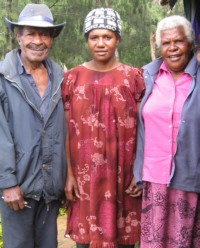
Photo Source:
Anonymous
|
Send Joshua Project a map of this people group.
|
| People Name: | Agarabi |
| Country: | Papua New Guinea |
| 10/40 Window: | No |
| Population: | 56,000 |
| World Population: | 56,000 |
| Primary Language: | Agarabi |
| Primary Religion: | Christianity |
| Christian Adherents: | 98.00 % |
| Evangelicals: | 31.00 % |
| Scripture: | New Testament |
| Ministry Resources: | Yes |
| Jesus Film: | Yes |
| Audio Recordings: | Yes |
| People Cluster: | New Guinea |
| Affinity Bloc: | Pacific Islanders |
| Progress Level: |

|
Introduction / History
The Agarabi in Papua New Guinea are a highlands people of Eastern Highlands Province, especially in Kainantu District. Reliable language and ethnographic sources place them in the Kainantu area, and one archaeological study specifically describes the Agarabi as occupying land between the north bank of the Upper Ramu River and the Bena Bena people to the south. That is helpful because it places them in a clearly defined part of the eastern highlands rather than treating them as a vague regional label. They belong to the wider cultural world of the Papua New Guinea highlands, where communities developed through long-standing clan ties, gardening systems, ceremonial exchange, and local conflict patterns before sustained outside administration.
Their history is also tied to the broader colonial-era changes that reshaped the Eastern Highlands. Scholarly work on the region specifically names the Agarabi among the northern Kainantu-area peoples who came under Australian colonial "pacification" in the earlier phase of highlands administration. Later ethnographic work on the Agarabi also points to major social changes in the decades after direct contact, especially in conflict patterns, law, and economic life. This means the Agarabi are not merely a language label; they are a historically documented highlands people whose traditional life was significantly altered by colonial rule, mission activity, and the spread of cash-crop economies.
What Are Their Lives Like?
The Agarabi in Papua New Guinea live in a rugged highlands setting where village life, clan ties, and access to garden land remain central. Their homeland in Kainantu District places them in one of the key gateway zones of the Eastern Highlands, along the wider highlands corridor that connects mountain communities to trade and transport routes. Even where roads and town access have increased, highlands life in this region is still shaped by kinship, local land rights, and community obligations. Their communities are not primarily coastal or urban; they are rooted in the upland social world of villages, gardens, and local exchange.
Reliable outside research gives unusually specific cultural detail. A recent archaeological study notes that the Agarabi are known for pottery production in the Eastern Highlands, which is significant because pottery is not equally prominent across all highlands groups. Older anthropological work also specifically links the Agarabi with economic change, showing that their society has been shaped by the transition from older subsistence patterns into wider participation in cash, trade, and new forms of dispute and social pressure. In the Eastern Highlands more broadly, village agriculture and cash cropping became increasingly important in the twentieth century, and the Agarabi appear to fit that broader pattern of gardening-based life interacting with market forces and modern change.
Their language is Agarabi, also called Bare in some sources. Reliable language sources identify it as a Kainantu language of the Trans–New Guinea family, spoken in Agarabi Rural LLG in Eastern Highlands Province. Ethnologue describes it as a stable indigenous language that is used as a first language by all generations, which is important because it suggests their language remains strong in community life rather than being only a fading identity marker. In Papua New Guinea's highly multilingual setting, many people may also use Tok Pisin or other broader languages in trade and public life, but their language remains a major marker of identity and local continuity.
What Are Their Beliefs?
The Agarabi in Papua New Guinea are traditionally identified as Christian. In the Papua New Guinea highlands, Christian identity is often deeply woven into village life, family life, and public community patterns. Yet in places where Christianity has long been present, outward Christian identity does not automatically mean that every household is grounded in true repentance, assurance in Christ, and a living faith shaped by Scripture. There can still be a need for spiritual renewal, deeper discipleship, and a clear grasp of the gospel of Jesus Christ.
Outside scholarly work on the Agarabi specifically discusses sorcery and social change, which matters here because it shows that older spiritual fear and belief in harmful unseen power have been real features of the community's moral and social world. That does not mean those patterns define every person today, but it does mean it is wise to recognize that in a highlands setting, Christian profession can sometimes exist alongside lingering fear, accusation, or inherited assumptions about spiritual power. Where that happens, the need is not for more religious familiarity, but for strong biblical teaching and freedom in Christ. Scripture is available in their language.
What Are Their Needs?
The Agarabi in Papua New Guinea need strong biblical discipleship in a setting where Christianity is already familiar. Their greatest need is often not first exposure to Christian language, but spiritual depth. They need pastors, elders, evangelists, and faithful believers who will teach the Word of God clearly, helping people move from inherited church identity into genuine, enduring faith in Jesus Christ.
They also need healthy local churches that strengthen families and raise up mature leaders from within the community. Because the Agarabi live in a highlands village setting where clan ties and local reputation matter, discipleship must be steady, relational, and grounded in both the home and the church. Fathers, mothers, and grandparents need wisdom to pass on a real love for Christ rather than relying on outward Christian identity. Children and young adults need to see that following Christ is more than belonging to a community that calls itself Christian.
There are also practical needs that fit their setting. In a mountainous district where village life, road access, and service access can vary, transportation, education, medical care, and economic stability can all affect family life and the consistency of church fellowship. Because the Agarabi have experienced major economic and social change, wise local leadership is especially important so that the pressures of money, conflict, and modern influence do not weaken spiritual maturity. Prayer is needed for resilient families, strong local churches, and a gospel witness that remains deeply rooted in the community.
Prayer Points
Pray that the Agarabi in Papua New Guinea would move beyond inherited Christian identity and come to true repentance, living faith, and joyful obedience to Jesus Christ.
Pray for pastors, elders, and faithful disciplers to teach God's Word clearly and to shepherd Agarabi communities with courage, humility, and biblical conviction.
Pray for believers among the Agarabi in Papua New Guinea to stand firmly on Scripture and reject spiritual fear, accusation, and shallow or merely cultural Christianity.
Pray for fathers, mothers, and grandparents to lead their households in truth, helping children and young adults grow in genuine faith and spiritual maturity.
Pray for practical help where needed in transportation, education, medical care, and daily provision, and pray that strong local fellowship would help families remain rooted in Christ through the pressures of economic and social change.