Hkahku in Myanmar (Burma)
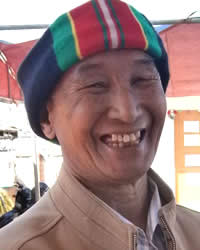
Photo Source:
Asia Harvest-Operation Myanmar
|
Send Joshua Project a map of this people group.
|
| People Name: | Hkahku |
| Country: | Myanmar (Burma) |
| 10/40 Window: | Yes |
| Population: | 4,000 |
| World Population: | 4,000 |
| Primary Language: | Jingpho |
| Primary Religion: | Christianity |
| Christian Adherents: | 60.00 % |
| Evangelicals: | 30.00 % |
| Scripture: | Complete Bible |
| Ministry Resources: | Yes |
| Jesus Film: | Yes |
| Audio Recordings: | Yes |
| People Cluster: | Kuki-Chin-Mizo (Zo) |
| Affinity Bloc: | Tibetan-Himalayan Peoples |
| Progress Level: |

|
Introduction / History
Members of the Hkahku people group live in northern Myanmar's Kachin State near the Chinese border. Their exact population and locations are uncertain today because most Hkahku have assimilated to the Kachin Jingpo group. However, a 1997 book stated that "the Hkahku inhabit the Mali Hka and N'Mai Hka valley areas…practicing shifting cultivation in the forests and on mountains." These locations lie within Sumprabum Township in Putao District, in the northernmost part of Kachin State nicknamed the "Northern Triangle." The Hkahku share their area with members of the Rawang, Lisu, and other ethnic groups. Herman Tegenfeldt, who wrote the definitive history of the Kachin Baptist Church in 1974, noted: "The Jingpo of the Hukawng Valley and of the area stretching north of Myitkyina are referred to as Hkahkus. In dialect and dress, they are different from the Jingpos of the south."
The name Hkahku means "up-river people." Historically, they were an offshoot of the larger Kachin Jingpo group that developed their own identity and dialect due to geographical separation. The Hkahku have long been acknowledged by the Myanmar government as one of the nation's 135 ethnic groups.
The Hkahku dialect was formerly known as Northern Kachin, but over the past century, the differences between it and standard Jingpo have gradually eroded. Today, linguists consider Hkahku to be one of seven dialects of Jingpo, although they still exist as a people group with their own clothing and sense of identity. Other Kachin Jingpo dialect groups that were documented during the British colonial era, but which have now been linguistically absorbed include the Htingmai, Mungchi, N'hkum, and Shatam.
The town of Sumprabum, which means "jungle grass mountain" in Jingpo, is strategically located on the Bhamo to Myitkyina Road and, as such, has been a much-desired strategic possession for both sides in the Myanmar civil war. The Kachin Independence Army seized control of the town when they overran the Burmese junta's 46th Infantry Battalion base in May 2024, but an announcement by the Chinese government in 2025 that they would assist the junta in the war has led to fears that Chinese airstrikes and more powerful weapons will tip the balance of power back to the Burmese military.
What Are Their Lives Like?
In the past, Hkahku women loved to adorn themselves with large patlokan amber earrings, which were shaped like a bullet and protruded more than four inches (10 cm) from the women's earlobes. Although the earrings are still found throughout northern Kachin State, few women find it practical to wear them due to their size and weight.
What Are Their Beliefs?
Countless generations of Hkahku people passed into eternity as spirit-worshiping animists before a movement among them commenced in the 1930s, resulting in a trickle of people coming to faith in Jesus Christ. The trickle soon grew to a steady flow, however, with the Baptists considering their most important breakthroughs in the 1930s to be "the opening of the Bible School and the beginning of the Hkahku work. Many people were brought into the church, and an indigenous leadership emerged."
What Are Their Needs?
Although many Kachin Jingpo churches reported a decline during the 1940s due to the deprivations of war, the Hkahku areas saw "increased growth where the initial planting of the gospel in the pre-war years began to show definitive results during the tumultuous and difficult war. Strong Christian leaders, including a number of chiefs, had much to do with continuing substantial growth." God continues to be esteemed by most Hkahku people today. They use the Jingpo Bible in their meetings, and a remnant of zealous believers among this blessed tribe have endured decades of hardship, war, and attacks on their faith.
Prayer Points
Pray that the Hkahku people will become part of God's plan to bring every tribe and tongue into his kingdom.
Pray for a radical spiritual transformation in their families, churches, and communities.
Pray for the Holy Spirit to use Hkahku Christians to do miraculous things, drawing others to Christ.
Intercede for freedom from fear of spirits and for hearts open to the hope found in Christ.