Vet in Myanmar (Burma)
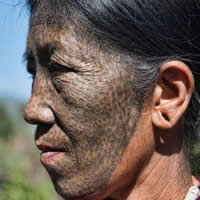
Photo Source:
Asia Harvest-Operation Myanmar
|
Send Joshua Project a map of this people group.
|
| People Name: | Vet |
| Country: | Myanmar (Burma) |
| 10/40 Window: | Yes |
| Population: | 1,200 |
| World Population: | 1,200 |
| Primary Language: | Chin, Daai |
| Primary Religion: | Christianity |
| Christian Adherents: | 60.00 % |
| Evangelicals: | 30.00 % |
| Scripture: | New Testament |
| Ministry Resources: | Yes |
| Jesus Film: | No |
| Audio Recordings: | Yes |
| People Cluster: | Kuki-Chin-Mizo (Zo) |
| Affinity Bloc: | Tibetan-Himalayan Peoples |
| Progress Level: |

|
Introduction / History
The Vet tribe dwell in villages along the banks of the Lemro River in Myanmar's southern Chin State. Their homeland sits within Paletwa Township, about 30 miles (48 km) from the border with Rakhine State. The remote mountainous area inhabited by the Vet lies within the southern part of the Daai tribal area, just north of communities inhabited by the Songlai, Hiatuii, and Uppu tribes.
Although they possess their own customs and sense of ethnic identity, the Vet people have never previously been identified as a distinct group due to their complicated classification. Their existence has been neglected due to their being considered a subgroup of the larger Daai tribe, who number 43,000 people. As a result, the Vet have largely remained invisible to the outside world, as have their neighbors the Ng'hang, who are also considered part of the Daai. Other Daai subgroups, however, including the Matu and Daa Yindu, have been accepted as distinct ethnic groups because of their linguistic differences.
Although the Vet are a people group with their own customs, all sources agree that they speak a dialect of Daai. A Chin linguist wrote: "In 2011 we visited a Vet village (Pu Chaungwa) in the Lemro area and did a survey. The Vet are part of the Daai group, and they speak a similar dialect to the other Daai in Paletwa Township. We found a 94 percent lexical similarity between the variety spoken by the Vet and other Daai people."
For centuries the Vet and other tribes in the area lived in obscurity, cut off from the rest of the world by rugged mountain ranges and unnavigable rivers. During the British colonial era, the Vet region was part of the Arakan Hill Tract and was barely governable due to the extreme difficulty of reaching their remote villages. Due to its proximity to Myanmar's borders with Bangladesh and India, the Paletwa area has been a target of strategic importance. The Arakan Army gained a foothold in the township in 2015, which they used to launch attacks on the Burmese junta. As of 2024, the Arakan Army continued to firmly control the area, although most of the fighting in Paletwa has taken place west of the Vet area.
What Are Their Lives Like?
Vet is one of about a dozen Chin-related tribes that historically tattooed the faces of their young girls. A recent foreign visitor remarked: "The Vet tattoo has small flower-like shapes on the temples that is said to represent the strength of their people. Small variations of the tattoo can be found based on clan, village of origin, and the wealth of a girl's family. Tattooing of the legs was also common among women in the past. While nowadays the Vet mostly wear western-style clothing, many still own traditional clothing that they use for festivals and celebrations. With the availability of traditional weaving, more Vet are seen wearing the more colorful clothing of their neighbors. Originally their clothing was pure black in color."
What Are Their Beliefs?
In the past, the Vet were "animists who believed they descended from one of their spirits who had birthed their people. Sacrifices and ceremonies were common for celebrations, good harvests, wealth, and other auspicious occasions. Now, however, much of the population has converted to Christianity." Animism continues to exert a strong influence among the Vet people today, and although an estimated 60 percent of Vet people profess faith in Christ, syncretic elements that mix biblical teachings with Animism threaten to distort their faith.
What Are Their Needs?
Although the gospel was first proclaimed in Paletwa Township by missionaries in 1929, the focus was on reaching the Khumi tribe further west, and the Vet went without knowledge of Christ for a few more generations. The Daai Chin New Testament was published in 1996, and the Jesus film is now also available in Daai.
Prayer Points
Pray for spiritual renewal among Vet Christian believers and freedom from syncretism.
Pray for the Lord to bless the work of their hands as they obey biblical principles.
Pray for the Lord to bless them spiritually and physically.
Pray for the believers among them, that they will grow strong in faith and become part of the mission force, carrying the gospel to their own people and beyond.