Rawat in India
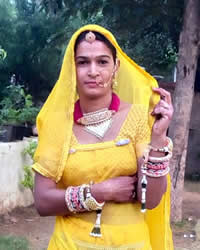
Photo Source:
Anonymous
|
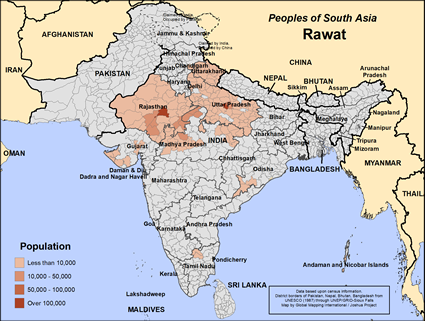
Map Source:
People Group data: Omid. Map geography: UNESCO / GMI. Map Design: Joshua Project.
|
| People Name: | Rawat |
| Country: | India |
| 10/40 Window: | Yes |
| Population: | 827,000 |
| World Population: | 827,000 |
| Primary Language: | Hindi |
| Primary Religion: | Hinduism |
| Christian Adherents: | 0.00 % |
| Evangelicals: | 0.00 % |
| Scripture: | Complete Bible |
| Ministry Resources: | Yes |
| Jesus Film: | Yes |
| Audio Recordings: | Yes |
| People Cluster: | South Asia Hindu - other |
| Affinity Bloc: | South Asian Peoples |
| Progress Level: |

|
Introduction / History
The Rawat are a diverse Hindu community found mainly in the northern and central Indian states of Rajasthan, Uttarakhand, Uttar Pradesh, Madhya Pradesh, Chhattisgarh, and neighboring regions. The title "Rawat" has historically been used in different ways across India, sometimes referring to warrior, pastoral, agricultural, or landholding groups depending on the region. Many Rawat communities trace connections to Rajput heritage, while others developed distinct regional identities over centuries through village leadership, farming, military service, and livestock care. (en.wikipedia.org)
Most Rawat communities speak Hindi or regional dialects such as Garhwali, Kumaoni, Chhattisgarhi, or Rajasthani depending on location. Historically, many Rawat families lived in rural villages where agriculture, cattle herding, and local governance shaped daily life. In hill regions of Uttarakhand especially, Rawat communities became associated with military traditions and service in regional armies. Over time, modernization and urban migration led many younger generations into government service, transportation, education, business, and labor work outside their ancestral villages.
Family honor, clan identity, and regional tradition continue to play important roles within Rawat society. Though customs vary widely between regions, many communities still maintain strong ties to ancestral land, extended family relationships, and traditional village culture.
What Are Their Lives Like?
The daily lives of the Rawat differ between mountain villages, farming regions, and urban centers. In rural areas, many families continue farming crops, raising livestock, or working in agricultural labor. Others are employed in transportation, construction, government service, military careers, teaching, or small business. Economic conditions vary significantly between households and regions, with some communities achieving stability while poorer rural families still face financial uncertainty and limited opportunity.
Family and clan relationships are highly valued. Marriages are generally arranged within accepted caste and clan boundaries, and respect for elders remains an important social expectation. Village councils or community elders may still help settle disputes and preserve social customs in some areas.
Meals commonly include rice, lentils, flatbreads, vegetables, milk products, and locally available foods. Seasonal festivals, weddings, harvest celebrations, and religious observances remain important parts of social life. In Uttarakhand and Himalayan regions, traditional songs, dances, and oral storytelling continue to preserve regional identity and family history. Younger generations increasingly pursue education and urban employment, though many still maintain strong ties to their home villages and ancestral customs.
What Are Their Beliefs?
The Rawat primarily follow Hinduism and participate in both mainstream Hindu worship and regional folk religious traditions. Worship commonly includes devotion to Shiva, Vishnu, Durga, local village deities, and family gods passed down through generations. Religious observances often include temple worship, offerings, festival celebrations, household rituals, and ceremonies connected to births, marriages, and funerals.
In many regions, folk beliefs involving ancestral spirits, astrology, ritual purity, sacred geography, and supernatural protection remain influential. Village shrines and local deities may hold special importance in rural communities, particularly in hill and tribal regions. Fear of curses, evil spirits, and unseen spiritual forces can also shape daily religious practice and worldview.
Belief in karma, rebirth, and religious duty strongly influences moral and spiritual understanding. Although Christianity is present in northern India, many Rawat families have never heard a clear biblical explanation of salvation through Jesus Christ. Jesus may be viewed simply as another holy teacher or religious figure rather than the crucified and risen Son of God who alone provides forgiveness of sins and reconciliation with God.
What Are Their Needs?
Many Rawat communities need continued access to education, healthcare, vocational opportunity, and economic stability, especially in remote rural and hill regions where infrastructure and employment opportunities may remain limited. Agricultural uncertainty, migration pressures, and uneven educational access continue to affect many families.
Spiritually, the Rawat need faithful gospel witness communicated clearly in their own languages and cultural settings. Many have never personally encountered the biblical message of repentance, grace, forgiveness, and eternal life through Jesus Christ. Strong local churches, Scripture access, discipleship, and long-term relationship-based ministry are needed so Rawat families can clearly hear and understand the gospel. Existing believers in northern India also need encouragement and training so they can faithfully reach neighboring communities with biblical truth.
Prayer Points
Pray that the Rawat people will hear a clear presentation of the gospel in their own languages and place their faith in Jesus Christ.
Pray that God will raise up mature local believers and church leaders who can disciple Rawat families and establish biblically faithful churches among them.
Pray that Rawat communities facing economic hardship, limited healthcare, educational barriers, and migration pressures will experience practical help and lasting hope.
Pray that the Rawat people will be adopted through the People Group Adoption program so that ongoing prayer, evangelism, discipleship, and church planting efforts will continue among them.