Lodha (Hindu traditions) in India
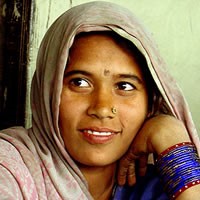
Photo Source:
Copyrighted © 2026
Anonymous All rights reserved. Used with permission |
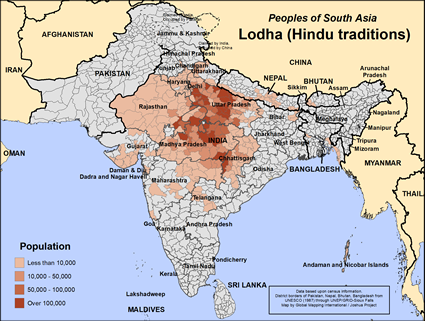
Map Source:
People Group data: Omid. Map geography: UNESCO / GMI. Map Design: Joshua Project.
|
| People Name: | Lodha (Hindu traditions) |
| Country: | India |
| 10/40 Window: | Yes |
| Population: | 7,101,000 |
| World Population: | 7,138,000 |
| Primary Language: | Hindi |
| Primary Religion: | Hinduism |
| Christian Adherents: | 0.03 % |
| Evangelicals: | 0.00 % |
| Scripture: | Complete Bible |
| Ministry Resources: | Yes |
| Jesus Film: | Yes |
| Audio Recordings: | Yes |
| People Cluster: | South Asia Hindu - other |
| Affinity Bloc: | South Asian Peoples |
| Progress Level: |

|
Introduction / History
The Lodha are a tribal and forest-dwelling community found mainly in the Indian states of West Bengal and Odisha, especially in the forested regions of West Midnapore and surrounding districts. They are recognized as a Particularly Vulnerable Tribal Group in India because of their long history of social isolation, poverty, and economic hardship. Most Lodha people speak Bengali, Odia, or local tribal dialects depending on the region. Historically, their lives were closely connected to forests, hunting, gathering, woodcutting, and small-scale subsistence activities.
During British colonial rule, the Lodha were among several tribal communities unjustly labeled under the Criminal Tribes Act of 1871. This classification created deep social stigma and long-term discrimination that continued even after the law was repealed following Indian independence. Restrictions on forest access, loss of traditional livelihood patterns, and economic marginalization further weakened many Lodha communities over generations.
Traditionally, many Lodha families lived in small forest settlements where clan ties and tribal customs shaped daily life. Over time, deforestation, land pressures, and government policies forced many communities toward agricultural labor, wage work, and village settlement. Even today, many Lodha continue to face social exclusion and economic insecurity despite gradual modernization and increased government outreach programs.
What Are Their Lives Like?
Many Lodha families depend on agricultural labor, woodcutting, forest gathering, construction work, fishing, or seasonal wage labor for survival. Some continue collecting forest products such as firewood, leaves, herbs, and wild foods for household use or local sale. Economic conditions remain difficult in many villages, especially where land ownership is limited and employment opportunities are unstable.
Housing in poorer communities may consist of mud walls, thatched roofs, bamboo structures, and locally available materials. Meals commonly include rice, vegetables, forest produce, fish, and locally available foods. In remote areas, poor sanitation, malnutrition, weak infrastructure, and limited healthcare access continue to affect daily life. Educational attainment remains low in many Lodha settlements, especially among women and children, though some younger generations are increasingly attending school and seeking employment outside traditional village life.
Family and community relationships are very important within Lodha society. Marriages are generally arranged within accepted clan boundaries, and village elders often help settle disputes and preserve customary traditions. Oral storytelling, folk music, seasonal celebrations, and tribal customs continue to shape cultural identity in many communities.
What Are Their Beliefs?
The Lodha primarily practice a mixture of Hinduism, tribal religion, and animistic beliefs. Worship commonly includes reverence for local deities, ancestral spirits, forest spirits, and regional Hindu gods and goddesses associated with protection, fertility, health, and harvests. Religious life is often deeply connected to nature, forests, and fear of unseen spiritual powers.
In many communities, rituals and offerings are performed to seek protection from sickness, evil spirits, crop failure, or misfortune. Tribal priests, shamans, or spiritual specialists may conduct ceremonies related to healing, ancestor appeasement, or seasonal festivals. Belief in karma, supernatural forces, curses, and spirit activity can strongly influence worldview and daily decisions.
Although Christianity exists in parts of West Bengal and Odisha, many Lodha still have little understanding of the biblical gospel. Jesus may be viewed simply as another spiritual figure or outsider religion rather than the crucified and risen Son of God who alone provides forgiveness of sins and reconciliation with God. In many villages there is limited access to biblical teaching, mature churches, and long-term discipleship.
What Are Their Needs?
The Lodha need improved access to education, healthcare, sanitation, stable housing, and sustainable employment opportunities. Many communities continue to struggle with poverty, social discrimination, malnutrition, limited infrastructure, and restricted economic mobility. Greater educational access for children and vocational opportunities for young adults would significantly benefit many Lodha families.
Spiritually, the Lodha need faithful gospel witness communicated clearly in Bengali and other local languages. Because many communities retain strong oral traditions, oral Bible storytelling, audio Scripture resources, and relationship-based discipleship are especially important. Mature local believers, strong churches, and long-term ministry workers are needed to patiently share biblical truth and demonstrate the love of Christ among Lodha communities. Existing believers in eastern India also need encouragement and training so they can faithfully reach tribal peoples with the gospel.
Prayer Points
Pray that the Lodha people will hear and understand the gospel clearly in their own languages and place their faith in Jesus Christ.
Pray that God will raise up mature local believers and church leaders who can disciple Lodha families and establish biblically faithful churches among them.
Pray that Lodha communities facing poverty, social discrimination, low literacy, poor healthcare, and unstable livelihoods will experience practical help and lasting hope.
Pray that the Lodha people will be adopted through the People Group Adoption program so that ongoing prayer, evangelism, discipleship, and church planting efforts will continue among them.