Naga, Khiamniungan in Myanmar (Burma)
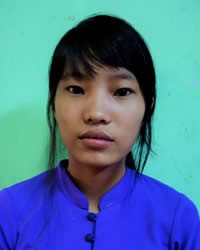
Photo Source:
Asia Harvest-Operation Myanmar
|
Send Joshua Project a map of this people group.
|
| People Name: | Naga, Khiamniungan |
| Country: | Myanmar (Burma) |
| 10/40 Window: | Yes |
| Population: | 11,000 |
| World Population: | 77,000 |
| Primary Language: | Naga, Khiamniungan |
| Primary Religion: | Christianity |
| Christian Adherents: | 88.00 % |
| Evangelicals: | 18.00 % |
| Scripture: | Complete Bible |
| Ministry Resources: | Yes |
| Jesus Film: | Yes |
| Audio Recordings: | Yes |
| People Cluster: | South Asia Tribal - Naga |
| Affinity Bloc: | South Asian Peoples |
| Progress Level: |

|
Introduction / History
Khiamniungan people inhabit about 30 villages in the three townships that compose the Naga Self-Administered Zone in Myanmar's Sagaing Region. The tribe's territory extends over a wide mountainous area straddling both sides of Myanmar's border, ranging from the Patkoi Hills to the Chindwin River. The majority of Khiamniungan people live in Nagaland, India.
Also known in Myanmar as the "Nokaw," the name Khiamniungan is a compound of three words meaning "source of great water." After countless generations spent living in poverty and violence, the Khiamniungan found peace after converting to Christ, with a 2003 book recording, "They are emerging as the most coherent group of all the Nagas, culturally, territorially, and structurally."
Some scholars consider the Khiamniungan to be a subgroup of Konyak Naga, but they speak a different language and hold to a separate ethnic identity.
Although they are geographically close, the Khiamniungan vernaculars spoken in Myanmar and India are only partially mutually intelligible due to limited cross-border contact. Khiamniungan is most closely related to Ponyo and Lainong Naga, with which it shares a 72% and 62% lexical similarity, respectively. Many Khiamniungan people can also speak English, especially in India where different Naga tribes often use English to communicate with each other.
According to a detailed Khiamniungan legend, a huge flood once deluged the earth after people ignored the warnings of a toad, but a remnant survived by ascending the Yakko mountains in today's Nagaland. The Khiamniungan were once notorious slave traders who sold the weapons they seized from kidnapped Burmese and other people. Headhunting was still extant among the Khiamniungan in Myanmar in 2007,4 and despite the British banning the practice in 1935 and the Indian government in 1960, headhunting continued in India until at least 1990, when a boundary dispute between the Khiamniungan and their Yimchungra neighbors was settled by headhunting.
What Are Their Lives Like?
Until recently, Khiamniungan women were tattooed on the face as a coming of age and on the legs at the time of marriage. The Khiamniungan also "tattooed their warriors as a badge of honor after battles…. An image of a tiger was given to a hunter who had killed one of the beasts, and the image of a man adorned those who returned from battle with the head of an enemy."
What Are Their Beliefs?
Because of their remote communities and reputation for violence, the Khiamniungan in both Myanmar and India became Christians much later than most other Naga tribes. For centuries they were bound by spiritual darkness, sacrificing to a host of demons in a futile bid to secure their blessings and protection. At harvest time, "everyone would eat at the house of the meya, the official who dealt with headhunting, and if the harvests were not good, the people would sacrifice to the skulls and paint them with chicken blood."
What Are Their Needs?
In 1947, a man named Khaming became the first known Khiamniungan Christian. By 1952, five churches with 410 members had emerged, and just three years later, there were 17 churches. The Good News of Christ's salvation flourished, and in 1967 it was said, "The Khiamniungan Church numbers more than 5,000 members, among them many former headhunters who found God's abundant pardon at the foot of the Cross." Today, nine out of ten Khiamniungan families in Myanmar profess faith in Jesus, while the 2011 Indian census revealed an astonishing 99.3% of Khiamniungan people living there were Christians. The Khiamniungan Bible was completed in 2005, and Asia Harvest printed and delivered 5,000 copies to churches in Myanmar in 2019. A Khiamniungan church reflected that "we had been praying for 52 years to receive Bibles, and 97% of congregations did not have a single copy. The Christians said this was one of the greatest days in the history of the Khiamniungan people. To God be all the Glory!"
Prayer Points
Pray for Khiamniungan Naga elders and family leaders to open the door to evangelism and discipleship.
Pray for Khiamniungan Naga disciples who are zealous to spread the fragrance of Christ to their community and to others.
Pray that traditional barriers to the gospel would be broken down.
Pray for the Holy Spirit to bless Khiamniungan Naga families with the realization that they need a sin-free Savior who offers abundant life.