Ghosi (Hindu traditions) in India

Photo Source:
Anonymous
|
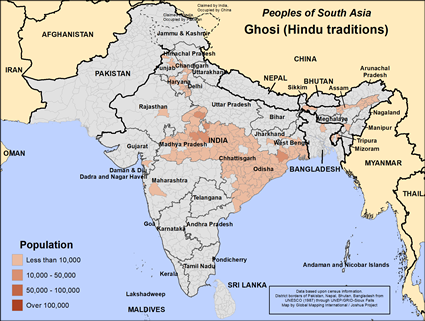
Map Source:
People Group data: Omid. Map geography: UNESCO / GMI. Map Design: Joshua Project.
|
| People Name: | Ghosi (Hindu traditions) |
| Country: | India |
| 10/40 Window: | Yes |
| Population: | 308,000 |
| World Population: | 308,000 |
| Primary Language: | Hindi |
| Primary Religion: | Hinduism |
| Christian Adherents: | 0.06 % |
| Evangelicals: | 0.00 % |
| Scripture: | Complete Bible |
| Ministry Resources: | Yes |
| Jesus Film: | Yes |
| Audio Recordings: | Yes |
| People Cluster: | South Asia Hindu - other |
| Affinity Bloc: | South Asian Peoples |
| Progress Level: |

|
Introduction / History
The Ghosi name comes from the Sanskrit word ghush, which means "to shout." The reason for this is that the Ghosi are herdsmen who are noted for shouting as they herd their cattle. The raising of cattle for their milk has been the traditional work of the Ghosi for centuries, and this continues today. They can be found in several north Indian states, most notably Uttar Pradesh, Rajasthan and West Bengal. They speak Hindi and read and write in Devanagari.
What Are Their Lives Like?
They still work mainly in agriculture, especially in animal husbandry. When the father dies, property goes to the sons; except that women can keep their ornaments. The Ghosi are endogamous, meaning they prefer marriage within their group. They allow for divorce and remarriage. Their families are generally patrilineal, with property passing from father to sons, although women retain personal items such as jewelry.
They also maintain a strong sense of community organization through a traditional council called the Jati Biradari Sabha, which settles disputes and governs internal affairs. Unlike some communities, they allow divorce and remarriage, which shows a degree of flexibility in their social customs.
Although many Ghosi continue their pastoral traditions, some have adapted to modern life by entering other occupations, while still maintaining a cultural identity rooted in rural and agricultural life
What Are Their Beliefs?
The Ghosi (Hindu traditions) are overwhelmingly Hindu in religion, and their beliefs reflect both mainstream Hinduism and their own community traditions.
A distinctive element of their identity is their claimed descent from Nanda, the foster father of the Hindu god Krishna. This connection gives their pastoral lifestyle special religious significance, because Krishna himself is closely associated with cowherding and rural life.
Like other Hindus, they participate in a religious system that includes belief in many deities, ritual worship, and traditional ceremonies tied to family and community life. Their daily practices may include prayer, offerings, and participation in festivals, often centered on deities such as Krishna and other gods connected to protection, prosperity, and fertility.
Their beliefs are also closely tied to caste and community identity, which influence marriage practices, social roles, and interactions with others. Marriage within the group, respect for elders, and observance of ritual purity are all consistent with broader Hindu customs but are strongly emphasized within the Ghosi community.
What Are Their Needs?
The Ghosi live mainly in parts of India with few Christian believers. Few will ever meet someone who lives the abundant life offered by Jesus Christ.
Prayer Points
Pray that the council leaders will put their faith in Jesus and lead others into a movement to Christ.
Pray that gospel materials will lead them to salvation.
Pray for faithful intercessors and workers.
All kinds of gospel materials exist in the Hindi language, spoken by the Ghosi. Pray for them to be downloaded on their cell phones.
References