Changgar in Pakistan
Photo Source:
Adnan Mughal - Pexels
Creative Commons
|
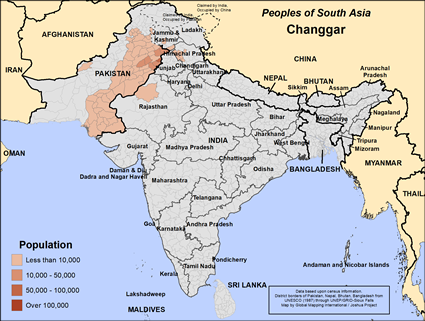
Map Source:
People Group data: Omid. Map geography: UNESCO / GMI. Map Design: Joshua Project
|
| People Name: | Changgar |
| Country: | Pakistan |
| 10/40 Window: | Yes |
| Population: | 343,000 |
| World Population: | 349,700 |
| Primary Language: | Punjabi, Western |
| Primary Religion: | Islam |
| Christian Adherents: | 0.01 % |
| Evangelicals: | 0.01 % |
| Scripture: | New Testament |
| Ministry Resources: | Yes |
| Jesus Film: | Yes |
| Audio Recordings: | Yes |
| People Cluster: | South Asia Muslim - other |
| Affinity Bloc: | South Asian Peoples |
| Progress Level: |

|
Introduction / History
The Changgar of Pakistan are a distinct Muslim community traditionally associated with a semi-nomadic and marginalized lifestyle. They are often found in rural areas, particularly in regions of Punjab and Sindh, where they have historically lived on the outskirts of villages or in temporary settlements. The Changgar have long been identified with occupations considered low-status within the broader social structure, including mat weaving, basket making, and various forms of manual labor. Some have also engaged in itinerant work, moving from place to place in search of economic opportunities.
Their social identity has been shaped by both economic hardship and social exclusion. As a result, the Changgar have often remained on the fringes of mainstream society, with limited access to education, stable employment, and social mobility. Despite these challenges, they maintain a strong sense of community, with close family ties and shared customs that help preserve their group identity. Their way of life has traditionally emphasized adaptability, as many families adjust their work and living arrangements according to seasonal opportunities and local conditions.
What Are Their Lives Like?
The Muslim Changgar people group can be found in many areas of society, equally found among the poor and the rich, the educated and illiterate, as well as landlords and religious leaders. There is no way to summarize their lifestyles. Some Changgar have become educated and work as professionals in Pakistani cities. Changgar who live in rural areas practice animal husbandry and agriculture. Men nurture herds of goats and flocks of sheep, as many families have plots of land. The Changgar trade surplus animal products and produce for cell phones and appliances. Western Punjabi is their language, and it has many gospel materials.
What Are Their Beliefs?
The Islam practiced by the Changgar reflects a blend of orthodox beliefs and local cultural expressions. While they identify as Sunni Muslims and affirm the basic tenets of Islam, their religious life is often shaped by folk practices and influences from the surrounding cultural environment.
One notable feature of their religious expression is the emphasis on practical and immediate spiritual concerns. Religious practices may focus on seeking protection, blessing, and relief from hardship in everyday life. This can include the use of amulets, prayers offered for healing or protection, and a reliance on local religious figures or spiritual leaders who are believed to have special insight or authority.
Their form of Islam may also incorporate elements of shrine veneration, which is common in parts of South Asia. Visiting the tombs of respected saints (pirs) and participating in local religious festivals can play a role in their spiritual life. These practices are often communal, reinforcing social bonds while expressing devotion.
At the same time, their access to formal religious education is often limited. As a result, their understanding of Islamic teachings may be shaped more by oral tradition and community practice than by structured study. This contributes to a form of Islam that is less formalized and more integrated with local customs and traditions.
What Are Their Needs?
With few, if any, Christ followers among this people group, the Changgar have few examples of visible Christianity in action.
Prayer Points
Pray for signs and wonders to occur among the Changgar and for great breakthroughs to take place, with a rapid multiplication of disciples and house churches to follow God's work.
Ask God to send loving and dedicated workers who will share the gospel with the Changgar.
Pray that the Lord would send dreams and visions of the risen Christ to Changgar family leaders.
References