Waima'a in Timor-Leste
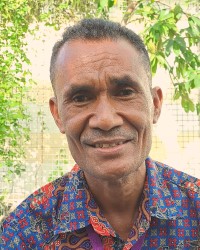
Photo Source:
Anonymous
|
Send Joshua Project a map of this people group.
|
| People Name: | Waima'a |
| Country: | Timor-Leste |
| 10/40 Window: | Yes |
| Population: | 25,000 |
| World Population: | 25,000 |
| Primary Language: | Waima'a |
| Primary Religion: | Christianity |
| Christian Adherents: | 89.00 % |
| Evangelicals: | 1.50 % |
| Scripture: | Translation Started |
| Ministry Resources: | No |
| Jesus Film: | No |
| Audio Recordings: | No |
| People Cluster: | Timor |
| Affinity Bloc: | Malay Peoples |
| Progress Level: |

|
Introduction / History
The Waima'a people, also known as the Waimaha or Waimoa, are a linguistically unique ethnic group inhabiting the north-central coast of Timor-Leste. They primarily reside within the Baucau Municipality, particularly centered in the Vemasse administrative post and the western coastal stretches of the Baucau administrative post, with some communities extending into the Manatuto Municipality. Historically, the Waima'a have been a subject of intense interest for linguists because their language represents a fascinating intersection between the Austronesian and Papuan language families, indicating a complex history of ancient migration and social integration. Unlike many of their more isolated neighbors in the interior, the Waima'a were historically positioned along critical maritime and terrestrial trade routes, which facilitated early and frequent interactions with Portuguese colonial forces and other regional traders. This strategic location has fostered a resilient cultural identity, allowing them to maintain a distinct social pocket amidst the larger Tetum and Makasae populations that surround their territory.
The Waima'a language is the central pillar of their ethnic identity; while it is technically classified as an Austronesian language, it possesses a phonology and vocabulary heavily influenced by Papuan substrates, making it sound strikingly different from the national language, Tetum.
What Are Their Lives Like?
Life for the Waima'a people is defined by the transition from the white sandy beaches of the north coast to the dramatic limestone plateaus of the interior. Most Waima'a families are deeply involved in subsistence agriculture, cultivating staples such as maize, cassava, and beans, while those living directly on the coast supplement their diet and income through small-scale fishing and salt production.
In daily life, Waima'a individuals are typically trilingual or quadrilingual, utilizing their native tongue at home, Tetum for national commerce, and often Portuguese or Indonesian depending on their age and schooling. Their social structure continues to be organized around the "Uma Lulik" or sacred house lineages, which dictate community responsibilities and social hierarchies, ensuring that cultural traditions are preserved even as the nation modernizes.
What Are Their Beliefs?
While the overwhelming majority of the Waima'a people identify as Roman Catholic, their spiritual lives are characterized by a profound and seamless syncretism with ancient indigenous traditions. This dual-belief system is anchored in the concept of "Lulik," which refers to everything that is sacred, forbidden, or ancestral. The Waima'a believe that the spirits of their ancestors remain active and influential participants in the physical world, offering protection or bringing misfortune based on how strictly the living adhere to traditional customs and taboos. Ceremonies are frequently held to honor these spirits, particularly during the critical planting and harvesting seasons or when a new family home is being constructed. Both the village church and the ancestral sacred house are considered essential spiritual centers; a Waima'a family will often seek the blessing of a Catholic priest for a wedding while simultaneously performing traditional rituals to inform and appease their ancestors, ensuring a holistic harmony between the modern faith and the spirit world.
What Are Their Needs?
The Waima'a face several pressing needs related to the infrastructure and environmental stability of their specific coastal and hilly geography. The primary coastal road that connects Vemasse and Baucau is frequently damaged by erosion and seasonal flooding, which hampers the transport of agricultural goods and can dangerously limit access to the regional hospital in Baucau during emergencies. There is a critical need for improved irrigation systems and water management, as the north coast is prone to prolonged dry seasons that can lead to significant crop failure and water shortages for both humans and livestock. Economically, the youth in Waima'a communities suffer from high unemployment rates, which has led to a "brain drain" as many young people migrate to the capital, Dili, or overseas in search of viable work. Furthermore, while primary education is available, there is a lack of localized vocational training and high-quality secondary schooling, which prevents the younger generation from acquiring the skills necessary to modernize their farming practices or engage in the eco-tourism sector that their pristine coastline could eventually support.
Prayer Points
Pray for the Waima'a people that they would experience a deep spiritual renewal, moving beyond traditional ancestral fears to find a personal and transformative relationship with Christ.
Pray for the Holy Spirit to do a deep work in their families and churches.
Pray for the physical needs of the community, specifically for consistent access to clean water and for the protection of their crops against the harsh dry seasons.
Pray for the youth of the Waima'a, that they would find opportunities for education and employment that allow them to thrive within their own cultural context rather than being forced to leave.
Pray for the local church leaders, that the Holy Spirit would grant them wisdom and boldness as they disciple their congregations in both biblical truth and practical service.
Pray for the government of Timor-Leste to prioritize the infrastructure and healthcare needs of the Vemasse region to improve the overall quality of life for its residents.