Vanuatu Melanesian in Solomon Islands
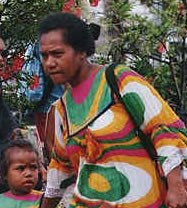
Photo Source:
Galen Frysinger
|
Send Joshua Project a map of this people group.
|
| People Name: | Vanuatu Melanesian |
| Country: | Solomon Islands |
| 10/40 Window: | No |
| Population: | 17,000 |
| World Population: | 33,600 |
| Primary Language: | Bislama |
| Primary Religion: | Christianity |
| Christian Adherents: | 95.00 % |
| Evangelicals: | 33.00 % |
| Scripture: | Complete Bible |
| Ministry Resources: | Yes |
| Jesus Film: | Yes |
| Audio Recordings: | Yes |
| People Cluster: | Vanuatu |
| Affinity Bloc: | Pacific Islanders |
| Progress Level: |

|
Introduction / History
The Vanuatu Melanesian in Solomon Islands are best understood as people of ni-Vanuatu background living in the Solomon Islands, rather than as one narrow tribe with a single local homeland inside the country. The internal source identifies them as Vanuatu Melanesian, lists the alternate name Detribalized Vanuatuan, and places them in the Vanuatu people cluster rather than under a smaller island-specific identity. That is important because this is not a classic village-bound people group like many Pacific profiles. It is a broader diaspora-style Melanesian community, made up of people whose ethnic roots are in Vanuatu but whose present country location is the Solomon Islands.
For consistency with your language-placement rule, the primary language belongs here: their language is Bislama, the English-lexifier creole that serves as the national lingua franca of Vanuatu. The internal source specifically identifies Bislama as their main language in the Solomon Islands. That makes sense for a translocal Vanuatu-background community, because Bislama functions across island, denominational, and regional lines for many ni-Vanuatu. More broadly, public sources on ni-Vanuatu note that Bislama is one of the major shared languages of Vanuatu alongside English, French, and many local Oceanic languages.
Historically, the Vanuatu Melanesian in Solomon Islands should be understood within the wider Melanesian world of cross-island movement, where labor migration, church ties, marriage, trade, education, and regional mobility have long connected Vanuatu and the Solomon Islands. The internal source does not provide a full profile text, so caution is necessary. Still, it clearly shows this as a recognized people-group presence in the Solomon Islands, and the broader regional reality supports that. Vanuatu and the Solomon Islands are both part of the Melanesian cultural sphere, and movement between them is not unnatural or surprising. This means the Vanuatu Melanesian in Solomon Islands are best described as a settled Vanuatu-origin community within a neighboring Melanesian country, not as a single territorially bounded tribe.
What Are Their Lives Like?
Because this is a diaspora-style people group, the Vanuatu Melanesian in Solomon Islands are best pictured as living within the wider social and economic life of the Solomon Islands rather than in one isolated ethnic enclave. Their lives likely vary depending on whether they are in urban, peri-urban, or island-based settings, but the safest and most accurate description is that they are a regional Melanesian migrant-rooted community whose daily life is shaped by family networks, church ties, local work, and integration into Solomon Islands society. Since the internal source gives no detailed profile text, it would be careless to invent precise village locations, crops, or settlement forms.
What can be said responsibly is that they live inside a country where Melanesian identity is already the dominant social background, which makes their situation different from diaspora communities in non-Melanesian settings. In the Solomon Islands, most people are themselves ethnically Melanesian, and Solomon Islands Pijin functions as a major common language across the country, while English is official but not the main everyday language for most people. That means Vanuatu-background households in the Solomon Islands likely navigate life in a setting that is culturally related, but still distinct enough to preserve identity through Bislama, church life, family ties, and remembered origin.
Their daily life is likely shaped by the same broad pressures many Pacific urbanizing or mobile communities face: work opportunities, schooling, family stability, housing, transport, and maintaining identity across generations. Because the internal source labels them as "Detribalized Vanuatuan" in alternate naming, that strongly suggests a people group that is less defined by one village-based traditional structure and more by shared origin and language. That does not mean they have no culture. It means their identity is probably carried more through family, church, language, and community networks than through a single land-tied customary system inside the Solomon Islands.
What Are Their Beliefs?
The Vanuatu Melanesian in Solomon Islands are traditionally identified as Christian. Per your rule, this section is based strictly on the internal source. The internal source identifies Christianity as the dominant religion, with a smaller minority still connected to ethnic religious beliefs. That means it would be careless to assume that this people is untouched by the gospel, but it would be equally careless to assume that outward Christian identity automatically equals saving faith.
For a Bible-believing audience, the issue here is likely spiritual depth, biblical clarity, and ongoing discipleship, not merely first exposure to Christian language. In a people like this, many may know church structures, Christian vocabulary, and public worship, yet still need deeper repentance, stronger grounding in Scripture, and clearer personal faith in Jesus Christ. Where inherited church identity becomes cultural rather than truly biblical, the need is not more religious familiarity, but genuine conversion, spiritual maturity, and faithful obedience to God's word. Scripture is available in their language.
What Are Their Needs?
The Vanuatu Melanesian in Solomon Islands need strong biblical discipleship and spiritual renewal. Because Christian identity is already widespread, their greatest need may not be first exposure to the name of Jesus, but the ongoing work of the Holy Spirit bringing conviction of sin, deeper repentance, stronger assurance in Christ, and a life increasingly shaped by the authority of Scripture. They need pastors, elders, and faithful believers who can clearly teach the Word of God and help people move beyond nominal or inherited Christianity into mature, enduring faith.
They also need strong local churches and mature local leaders who understand the realities of a mobile or diaspora-rooted Melanesian community. Because this people group is not best understood as a single isolated tribal village, durable ministry must be grounded in family networks, urban and regional church life, and long-term relational discipleship. Fathers, mothers, grandparents, and younger believers need to see that following Christ is more than belonging to a Christian-identified Pacific community. They need homes where Scripture is honored, sin is confronted honestly, forgiveness is practiced, and Christ is openly confessed.
Practical realities matter as well. Communities shaped by migration or cross-island settlement can face pressures related to housing, work stability, schooling, transportation, identity across generations, and social integration. In the Solomon Islands context, that may also include the challenge of maintaining spiritual seriousness while navigating broader economic and social strain. Prayer is needed for resilient families, faithful local congregations, and leaders who can shepherd this people with truth, humility, and courage.
Prayer Points
Pray that the Vanuatu Melanesian in Solomon Islands would move beyond outward or inherited Christian identity and grow in true repentance, living faith, and joyful obedience to Jesus Christ.
Pray for pastors, elders, and faithful disciplers to teach God's Word clearly among the Vanuatu Melanesian with humility, biblical conviction, and deep love for the people.
Pray for believers among the Vanuatu Melanesian in Solomon Islands to reject shallow religion, spiritual complacency, and mere tradition, and to stand firmly on Scripture alone.
Pray for fathers, mothers, grandparents, and young people to be strengthened in family life, so that homes become places where Christ is honored and truth is passed on faithfully.
Pray for wisdom and practical help where needed in work, housing, education, transportation, and family stability, and pray that strong local churches would grow in maturity and faithfulness among Vanuatu-background communities in the Solomon Islands.