Tokode in Timor-Leste
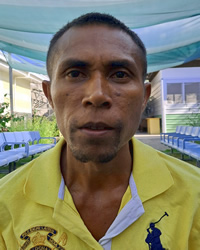
Photo Source:
Anonymous
|
Send Joshua Project a map of this people group.
|
| People Name: | Tokode |
| Country: | Timor-Leste |
| 10/40 Window: | Yes |
| Population: | 56,000 |
| World Population: | 56,000 |
| Primary Language: | Tukudede |
| Primary Religion: | Christianity |
| Christian Adherents: | 94.00 % |
| Evangelicals: | 2.00 % |
| Scripture: | Portions |
| Ministry Resources: | Yes |
| Jesus Film: | No |
| Audio Recordings: | Yes |
| People Cluster: | Timor |
| Affinity Bloc: | Malay Peoples |
| Progress Level: |

|
Introduction / History
The Tokode are an ethnolinguistic people of northwestern Timor-Leste, concentrated especially in Liquiçá Municipality and extending into nearby parts of Bobonaro and Ermera. Their language is Tokodede, also commonly written Tukudede, one of Timor-Leste's recognized indigenous Austronesian languages. Public references consistently place Tokodede speakers in the Liquiçá–Maubara area and along the Loes River corridor, which helps locate the Tokode in a long-settled northwestern Timorese setting rather than as a recent migrant population.
Historically, they belong to the older local societies of western Timor that were shaped by village alliances, customary leadership, and later Portuguese Catholic influence. Detailed public historical writing focused only on the Tokode is limited, but the broader regional record shows that this coastal and upland zone has long been culturally significant in Timor-Leste.
What Are Their Lives Like?
The Tokode are largely associated with villages and small towns in the northwestern districts of Timor-Leste, especially around Liquiçá and Maubara. Family life in this region is typically close-knit and strongly shaped by extended kinship, local custom, and village leadership. Because they live near both coastal and upland areas, their communities likely reflect a mix of farming, small-scale trade, and local market life rather than dependence on large urban centers. Publicly accessible ethnographic detail focused narrowly on the Tokode themselves is limited, so it is best to describe their daily life with care rather than claim highly specific customs that are not well documented.
Their language remains an important marker of identity, but in ordinary life many also move in a multilingual environment. Tetum and Portuguese are the country's official languages, and Tukudede is one of the recognized local languages, so many Tokode likely use their own language in home and community settings while relying on Tetum or Portuguese more broadly. In practical terms, daily life likely includes subsistence farming, garden crops, local livestock, and market exchange, with meals shaped by Timorese staples such as maize, rice, cassava, vegetables, and locally available fish or meat. Community life in Timor-Leste is often highly social, with family gatherings, church events, village ceremonies, and music all carrying more weight than modern commercial entertainment.
What Are Their Beliefs?
The Tokode are mostly Christian, and the dominant form of Christianity among them is Roman Catholicism. They should not be treated as a people with no gospel witness. There is already a substantial Christian presence among them, and that changes how they should be understood spiritually. At the same time, outward Christian identity does not always guarantee deep biblical discipleship. In Timor-Leste, older customary beliefs and spiritual assumptions can remain influential beneath formal Christian affiliation, and where that happens, the issue is not first exposure but deeper repentance, biblical clarity, and wholehearted trust in Christ alone.
Because there is already a strong Christian base, the central need is not simply more contact with Christianity but stronger, more biblically grounded faith. Scripture resources are reported as available in their language.
What Are Their Needs?
The Tokode need spiritually mature churches, faithful local leaders, and believers who know the gospel clearly rather than merely identifying with inherited Christianity. Since they already have a broad Christian presence, the deeper need is for biblical depth, sound teaching, and households shaped by repentance, holiness, and confidence in Christ rather than ritual or nominal religion.
They also likely face practical needs common in parts of Timor-Leste outside the capital: stronger access to medical care, educational opportunity, and stable local livelihoods. In communities spread between coastal and upland districts, transport and service access can still affect family stability. Practical help matters, but in a people with a strong Christian base, it should strengthen—not replace—the need for mature discipleship and healthy churches.
Prayer Points
Pray that Tokode believers would move beyond nominal religion into deep, biblical faith in Jesus Christ.
Pray that the Lord would raise up faithful pastors, teachers, and spiritually mature families among them.
Pray for stronger access to medical care, education, and stable livelihoods in Tokode communities.
Pray that Tokode Christians would become a gospel force to other peoples in Timor-Leste and beyond who still lack a clear witness to Christ.