Bisu in Myanmar (Burma)
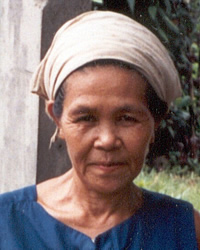
Photo Source:
Asia Harvest-Operation Myanmar
|
Send Joshua Project a map of this people group.
|
| People Name: | Bisu |
| Country: | Myanmar (Burma) |
| 10/40 Window: | Yes |
| Population: | 1,100 |
| World Population: | 1,100 |
| Primary Language: | Pyen |
| Primary Religion: | Ethnic Religions |
| Christian Adherents: | 35.00 % |
| Evangelicals: | 15.00 % |
| Scripture: | Portions |
| Ministry Resources: | Yes |
| Jesus Film: | No |
| Audio Recordings: | No |
| People Cluster: | Kuki-Chin-Mizo (Zo) |
| Affinity Bloc: | Tibetan-Himalayan Peoples |
| Progress Level: |

|
Introduction / History
The Bisu inhabit the villages of Namt Theun and Yaw Tan within Mongyang Township in Shan State's Kengtung District. Mongyang is also home to several other distinct tribes, including the Blang, Khun, Mok, and Muak Sa-aak.
The first sign of the Bisu people in Myanmar came in early censuses of Burma. At that time, they were all Buddhists or animists. Several related groups share close cultural, historical, and linguistic roots. They were probably part of a single people group at one time, but drifted apart as families migrated away from their homeland and established new communities.
Although the Bisu population is small, their language enjoys vigorous use within their community. Many Bisu people also speak Lahu or Shan as a second language. Only a few speak the national language of Burmese.
The Bisu language has three tones and is the only language in Myanmar that is part of the so-called Bisoid branch of the Tibeto-Burman family. Linguists have on one hand described Bisu, Pyen, and Laomian as "closely related and largely mutually intelligible," while at the same time listing them as distinct languages. Although the Bisu population is small, their language enjoys vigorous use within their community.
Bisu history has reportedly been one of "harassment and persecution at the hands of neighboring groups. The Bisu migrated south along the Mekong River earlier this century, encountering hostile peoples wherever they went." Another source says: "The Bisu of Thailand say their ancestors may have been brought as war captives from their original homeland during the 18th or 19th centuries and may have once lived in a Bisu kingdom near Lamphun."
What Are Their Lives Like?
Today, the Bisu seek to live peacefully but are often harassed by the dominant ethnic groups. The Bisu are a closeknit community and seldom marry outside their group. In the rare case that someone breaks this code, they are forced to leave the village. Most Bisu women no longer wear their traditional dress but have adopted the clothing of neighboring groups.
What Are Their Beliefs?
Although many Bisu are nominally Buddhist, village life revolves around appeasing the spirits. This requires the ongoing sacrifice of livestock, a practice that keeps the Bisus trapped in poverty. The village sorcerer, called the bhu dtang, serves as a medium between the people and the spirits.
While most Bisu practice animism, some have responded to the gospel. Portions of Scripture have been translated into the Bisu language.
What Are Their Needs?
Many of the Bisu live in physical and spiritual poverty. They need missionaries who are willing to demonstrate and share the gospel. They would also benefit from a full Bible translation.
Prayer Points
Pray for the Bisu to be open to the truth.
Pray for missions and humanitarian organizations to focus on the Bisu.
Pray for the Bible to be made available in a language that will communicate clearly with the Bisu.
Pray that soon Bisu disciplers will be discipling many.