Hpon in Myanmar (Burma)
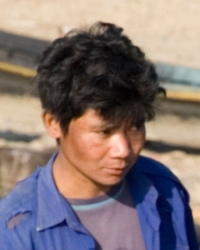
Photo Source:
Asia Harvest-Operation Myanmar
|
Send Joshua Project a map of this people group.
|
| People Name: | Hpon |
| Country: | Myanmar (Burma) |
| 10/40 Window: | Yes |
| Population: | 1,600 |
| World Population: | 1,600 |
| Primary Language: | Burmese |
| Primary Religion: | Buddhism |
| Christian Adherents: | 1.00 % |
| Evangelicals: | 0.40 % |
| Scripture: | Complete Bible |
| Ministry Resources: | Yes |
| Jesus Film: | Yes |
| Audio Recordings: | Yes |
| People Cluster: | Tibeto-Burman, other |
| Affinity Bloc: | Tibetan-Himalayan Peoples |
| Progress Level: |

|
Introduction / History
The Hpon tribe lives along the banks of the Ayeyarwady (formerly spelled Irrawaddy) River in northern Myanmar's Kachin State. They are dispersed into approximately 15 villages in remote river gorges, from Bhamo in the north to the small town of Sinbo in the south. The Hpon have been viewed as a distinct people group for over a century. The 1921 census listed 367 "P'un" people, which increased to 667 in 1931. Bhamo, which is called Manmaw (meaning "potter's village" or "village of jars" in the Shan language), sits just 40 miles (65 km) from the Chinese border and was regarded as one of the key trading and migration gateways between Myanmar and its giant neighbor.
A 1964 book on Asia's ethnic groups described the Hpon as "a small group of shifting agriculturists of mixed cultural and linguistic affiliations…. There are two divisions based on dialect variations, the Hpon Hpye and the Hpon Samong. They are reportedly becoming similar in culture and language to the Shan, who surround them on all sides, and most of them are nominally Buddhists." Several decades passed with scarcely a word of information about the Hpon, until the Australian linguist David Bradley featured them in his writings. Although they have largely lost the use of their native language, the Hpon retain a proud distinct identity.
While half a century ago the Hpon were adopting the Shan language over their mother tongue as they were absorbed by that people group, today most Hpon speak Burmese as their first language. Originally, Hpon was a Tibeto-Burman language closely related to Lhaovo (Maru), but it was never reduced to writing. In 2007, Bradley found that two dialects were previously spoken by Hpon people, but he wrote: "The southern variety is now extinct, and the northern variety is severely endangered. None of the older speakers can speak the language fluently. They only remember some lexical items. The last person to speak Hpon as their first language survived into the 1990s."
More than 1,500 years ago, the town of Bhamo was called Sampanago and served as the capital of the now-extinct Shan kingdom of Manmaw. The ruins of the old city walls, dating from the fifth century, can be seen three miles (5 km) from the modern town. From 1869 to 1879, Bhamo was the seat of a British colonial leader who worked closely with the King of Ava. The area rose in prominence, and "due to its location at the highest navigable point of the river, it formed a part of caravan?routes bringing jade from India to China."
What Are Their Lives Like?
As their language was slowly replaced Shan and then Burmese, Hpon culture also gradually adopted more Buddhist features and festivals, so that most outsiders fail to see much difference between the Hpon and their neighbors today. The Ayeyarwady River has long been the lifeline of Hpon society. Many earn a living in the fishing industry on one of the many vessels that carry timber, gasoline, rice, and other goods up and down Myanmar's main waterway.
What Are Their Beliefs?
Although some sources today list the Hpon people as animists, they have been Theravada Buddhists for over a century. The 1931 census of Burma found that of the 667 Hpon people at the time, exactly 600 identified as Buddhists and 67 as animists. Not a single Christian was found among them. Those percentages have not changed much.
What Are Their Needs?
Because of their isolation and hidden identity, the status of Christianity among the Hpon is unknown, but it is believed there are very few followers of Christ among them. Being ethnically and historically related to the Lhaovo tribe affords an opportunity for the Hpon to hear the gospel, as about one in four Lhaovo people today is a Christian. However, it is not known if any effective outreach has ever been done to reach them.
Prayer Points
Pray for the Lord to raise up a strong movement to Christ to saturate the hearts and minds of the Hpon people.
Pray for God's blessing, strengthening and healing of Hpon families and communities within this people group through the abundant life Jesus offers to all who call on his name.
Pray for God's blessing on the leaders in this people group, along with their families, and for their communities to welcome and enjoy God's blessing.
Pray for the Lord to multiply the reception and influence of his word among this people group, leading them to love him with their whole being.