Oyda in Ethiopia
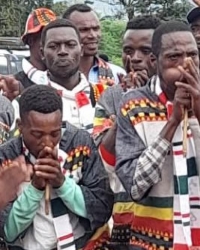
Photo Source:
Yonatan J
|
Send Joshua Project a map of this people group.
|
| People Name: | Oyda |
| Country: | Ethiopia |
| 10/40 Window: | Yes |
| Population: | 89,000 |
| World Population: | 89,000 |
| Primary Language: | Oyda |
| Primary Religion: | Christianity |
| Christian Adherents: | 74.00 % |
| Evangelicals: | 59.85 % |
| Scripture: | New Testament |
| Ministry Resources: | Yes |
| Jesus Film: | Yes |
| Audio Recordings: | Yes |
| People Cluster: | Omotic |
| Affinity Bloc: | Horn of Africa Peoples |
| Progress Level: |

|
Introduction / History
The Oyda people are an indigenous ethnic group residing in the Southern Nations, Nationalities, and Peoples' Region (SNNPR) of Ethiopia, particularly in the Kembata Tembaro Zone and the Wolaita Zone. Known for their rich agricultural lands and vibrant community life, the Oyda engage in a mix of agricultural practices and traditional lifestyles, with active participation in local markets.
Historically, the Oyda have been pastoralists and agriculturalists, cultivating their land while herding livestock such as camels, cattle, and goats. Their identity and culture have been shaped by interactions with neighboring ethnic groups, with historical migrations influencing their social structures. Despite the pressures of modernization and political changes, the Oyda have managed to maintain their distinct language and customs. The Oyda language, part of the Cushitic branch of the Afro-Asiatic language family, is a vital aspect of their cultural identity.
What Are Their Lives Like?
The daily lives of the Oyda people are heavily influenced by their environment and cultural practices. Primarily engaged in agriculture and pastoralism, they raise livestock and cultivate crops such as maize, beans, barley, and sorghum. Additionally, they participate in trade by selling their agricultural products in local markets, which helps sustain their livelihoods.
Family and community relationships are central to Oyda life, with extended family units emphasizing communal support and cooperation. The Oyda have a rich cultural heritage characterized by music, dance, and art, which play significant roles in community life. Festivals celebrate important agricultural cycles, seasonal events, and rites of passage. While access to education is variable, there is increasing focus on improving opportunities for the youth by blending traditional knowledge with formal schooling. However, challenges such as limited access to healthcare and inadequate infrastructure continue to hinder their social and economic advancement. They conduct rituals for various life events, such as births, marriages, and communal gatherings, often involving music and dance.
What Are Their Beliefs?
In recent years, Christianity has become more accepted in Oyda communities, leading to the establishment of various churches and the blending of traditional beliefs with Christian practices. A high percentage of the Oyda has adopted Christianity.
Most Oyda people, even Christians, practice a traditional belief system that is intertwined with their agricultural practices and their connection to nature. They worship ancestral and nature spirits, believing in their influence on daily life. They often worship a traditional supreme being and believe in spirits that inhabit natural objects and landscapes.
What Are Their Needs?
The Oyda people encounter several challenges that significantly impact their quality of life. Increased access to markets, resources, and training in better agricultural practices is crucial for achieving economic stability. Investment in transportation and market access is needed for economic growth and better integration into the wider economy. Additionally, improved healthcare facilities and services are necessary to address both traditional and modern health concerns, particularly in maternal and child health and general medical needs.
There is also a pressing need for enhanced educational infrastructure and resources to promote literacy and skill development among Oyda youth. Expanding access to quality education, particularly for girls, is vital for future development and empowerment. Furthermore, efforts to preserve their language, traditions, and cultural heritage are essential, especially as modernization continues to influence their way of life. Assistance in agricultural training and support for small businesses would greatly enhance economic prospects within the community.
Prayer Points
Pray that the Oyda people will experience a deeper faith in Jesus Christ especially in the face of spiritual challenges.
Pray for an awakening within the Oyda community of their role in the great commission, prompting many to take the life-changing gospel to the less reached northern states.
Pray for the Lord to bless the Oyda community with enhanced agricultural productivity and sustainable farming practices, leading to economic stability.
Pray that the Lord will increase access to quality medical care, improved education for the younger generation, and better job opportunities and economic initiatives that can improve the quality of life for the Oyda people.