Nukoro in Micronesia, Federated States
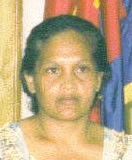
Photo Source:
Christian Jung
|
Send Joshua Project a map of this people group.
|
| People Name: | Nukoro |
| Country: | Micronesia, Federated States |
| 10/40 Window: | No |
| Population: | 800 |
| World Population: | 800 |
| Primary Language: | Nukuoro |
| Primary Religion: | Christianity |
| Christian Adherents: | 100.00 % |
| Evangelicals: | 14.00 % |
| Scripture: | Complete Bible |
| Ministry Resources: | Yes |
| Jesus Film: | No |
| Audio Recordings: | No |
| People Cluster: | Micronesian |
| Affinity Bloc: | Pacific Islanders |
| Progress Level: |

|
Introduction / History
Nukuoro Atoll is a teardrop of coral and coconut palms sitting just north of the equator in the Eastern Caroline Islands of the Federated States of Micronesia (FSM). Though it lies well within Micronesia geographically, the people who call it home are Polynesian in language, culture, and ancestry — making Nukuoro one of the Pacific's most fascinating cultural anomalies, known as a Polynesian outlier.
Oral tradition traces the community's origins to a migration led by Vave, a chief from the Manu'a Islands of Samoa, who navigated two double-hulled canoes across open ocean to reach the atoll, pausing at Kapingamarangi before settling. Archaeological evidence places continuous human occupation as early as the eighth or ninth century CE. Over the following centuries, the atoll received visitors and occasional settlers from across the Pacific — including peoples from Yap, Chuuk, the Marshall Islands, Fiji, and Palau — adding layers to an already complex ancestral heritage.
The island's first recorded European contact came in 1806 when Spanish naval officer Juan Bautista Monteverde sighted it. Over the following decades, traders introduced metal tools and outside goods, and by the mid-1800s, Protestant mission teachers from other parts of the Pacific were making periodic visits. By the time the American missionary Thomas Gray arrived in 1902, much of the island had already encountered Christianity through a Nukuoran woman who had lived on Pohnpei. The atoll passed through Spanish, German, Japanese, and American administration before Micronesian independence in 1986 made it a municipality within Pohnpei State in the FSM.
What Are Their Lives Like?
The Nukoro people inhabit one of the most remote corners of the Pacific. No airstrip connects the atoll to the outside world; a passenger boat calls irregularly, sometimes as infrequently as once every few months. On those arrivals, rice and other imported goods supplement what the island produces, but the community is fundamentally self-reliant.
Fishing and farming anchor daily life. Men take outrigger canoes into the lagoon and open sea, casting nets and lines for fish that form the core of the diet. Women tend the taro gardens that cover the atoll's narrow strips of land, alongside breadfruit trees, banana plants, coconut palms, and sweet potatoes. Copra — dried coconut meat — provides the main source of cash income, traded to boats that visit from Pohnpei. A small black pearl oyster farming project has opened a modest additional source of revenue. Animals, including chickens and pigs, are raised for food and celebrations.
Traditional leadership remains meaningful. The island is governed through a hereditary chiefly system in which a senior chief holds primarily ceremonial authority while community decisions are largely shaped by senior men. Kinship ties are organized through five extended family groups that define social identity and obligation. Celebrations include harvest gatherings, when the bounty of taro, breadfruit, bananas, coconuts, and sugarcane is marked with ceremony, feasting, and the participation of the entire community. Weaving — particularly the production of elaborate ceremonial attire — is a skill passed between generations and worn with pride. Songs and oral narratives preserve ancestral history and give the community a shared sense of who they are and where they came from.
Elementary schooling is available on the island, but children above primary age must leave for Pohnpei to continue their education. Many do not return, and the atoll faces a steady loss of its younger generations to the cities and to the United States mainland.
What Are Their Beliefs?
The Nukoro people are entirely Christian in their religious affiliation, divided roughly between Roman Catholics and Protestants. This Christian identity took hold during the late nineteenth and early twentieth centuries, and today the church plays a recognized role in community life.
Before Christianity arrived, Nukuoro religious life centered on a rich and elaborate system of trust in gods and deified ancestors. The most visible expression of this belief was the tino aitu — carved wooden figurines representing deities and ancestors, each associated with one of the five family groups. These were not decorative objects but active focal points of worship. Families placed them in homes and temples (malae) as protection against misfortune and hostile spirits. Food offerings were brought to the figures; they were dressed and adorned at major festivals; and each year during the harvest ceremonies, the figurines were understood to be inhabited by the deity's vital force. Priests served as intermediaries between the people and these spiritual powers, and in some traditions, a primary deity reportedly received human sacrifice annually. Today 37 of these carved figures reside in Western museum collections — removed from their spiritual context, but testifying to the depth of devotion that once surrounded them.
While the Nukoro community has adopted Christian identity, traditional understandings of spiritual power and ancestral influence can persist alongside formal religious affiliation in isolated Pacific communities.
What Are Their Needs?
The Nukoro people face real and pressing physical challenges. Rising sea levels and powerful storms threaten an atoll that already sits barely above the waterline, and several nearby islets have already grown smaller or disappeared within living memory. Access to advanced healthcare is extremely limited given the island's remoteness. The steady migration of young people to Pohnpei and beyond leaves behind a community that is aging and shrinking, creating uncertainty about long-term cultural and linguistic survival.
Prayer Points
Pray for protection over the Nukoro people as rising seas and storms increasingly threaten their low-lying island home.
Pray that young Nukoro people living in diaspora communities in the US and FSM will encounter the living Christ and carry his truth back to their families.
Pray that Nukoro believers will grow in deep, biblically rooted faith and move beyond nominal Christian identity into transforming relationship with Jesus.
Pray for the Nukoro language to be preserved, and for Scripture resources to be developed that speak directly to its remaining speakers.