Nsenga in Zambia
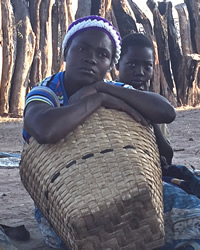
Photo Source:
Anonymous
|
Send Joshua Project a map of this people group.
|
| People Name: | Nsenga |
| Country: | Zambia |
| 10/40 Window: | No |
| Population: | 917,000 |
| World Population: | 1,212,000 |
| Primary Language: | Nsenga |
| Primary Religion: | Christianity |
| Christian Adherents: | 89.00 % |
| Evangelicals: | 18.00 % |
| Scripture: | New Testament |
| Ministry Resources: | Yes |
| Jesus Film: | Yes |
| Audio Recordings: | Yes |
| People Cluster: | Bantu, Chewa-Sena |
| Affinity Bloc: | Sub-Saharan Peoples |
| Progress Level: |

|
Introduction / History
The Nsenga people are a Bantu-speaking ethnic group primarily inhabiting the Luangwa River valley area of southeastern Zambia, with smaller populations in Mozambique and Zimbabwe. The name Nsenga means "land of sand" and reflects their journey to settle in the eastern regions of Zambia. They speak the Nsenga language, also called Chinsenga, which is closely related to Chinyanja and shares similarities with neighboring languages such as Chewa and Bemba. The Nsenga migrated into present-day Zambia around the fourteenth century from the Luba-Lunda Kingdom in what is now the Democratic Republic of Congo. They share this migration history with other peoples including the Bemba, Bisa, and Lala, with whom they maintain cultural connections.
During their migration southward, the Nsenga encountered both cooperation and conflict with neighboring groups. Raids by Bemba and later Ngoni peoples led Nsenga chiefs to construct substantial stockades for defense. The British colonial administration centralized authority by naming a senior chief, disrupting the traditional clan-based system of governance. The Nsenga observe matrilineal descent, and their society is organized around clans represented across different chiefdoms.
What Are Their Lives Like?
The Nsenga primarily live in rural communities in the Eastern Province of Zambia, particularly in the districts of Petauke and Nyimba. Subsistence agriculture forms the foundation of their economy, with families cultivating small plots of land on which they grow maize, groundnuts, cassava, millet, sorghum, and sweet potatoes for consumption. Cotton has become an important cash crop in areas where the climate is suitable. The Nsenga are also known for their practice of eating mice, which neighbors often tease them about, though it provides an important protein source.
The Nsenga are renowned for their cultural artistry, particularly their beadwork and basketry, which reflect traditional designs passed down through generations. They celebrate the annual Tuwimba ceremony, a cultural festival commemorating a historical drought when their ancestors sought divine intervention for rain. This ceremony attracts thousands of participants who watch traditional dances, including the chisungu performed by Nsenga virgins, and witness offerings made by the paramount chief at traditional shrines.
Many Nsenga seek employment opportunities beyond their homeland, migrating to Malawi, other parts of southern Africa, or the Zambian Copperbelt region in search of work. Extended family networks remain strong despite this migration, and exogamy between clans has created connections across different chiefdoms. Daily life in Nsenga communities follows patterns common to rural Zambia, with limited infrastructure, challenges in accessing healthcare and education, and ongoing recovery from the economic difficulties that have affected the region.
What Are Their Beliefs?
The religious landscape among the Nsenga reveals a complex mixture of Christianity and traditional African religious practices. While Christianity is the primary religion, with many Nsenga identifying as Christian through various denominations including Roman Catholic, Reformed, Lutheran, and Anglican churches, traditional religious beliefs remain deeply influential. The traditional worldview does not separate the secular from the spiritual but sees the spirit world as active and immediate in daily life. Ancestor veneration plays a significant role, with deceased family members believed to influence the living. Spiritual entities, both good and bad, are thought to be actively involved in family and individual affairs, while a distant Creator God is seen as uninvolved in daily human activities.
This syncretism between Christianity and traditional religion creates what some describe as a dualistic approach to faith. The Nsenga saying "Christianity is Christianity and tradition is tradition" reflects how many believers compartmentalize their religious practice rather than allowing the gospel to transform their entire worldview. Confusion about biblical teaching persists, particularly when Christians must worship and study Scripture in second or third languages like English or Chinyanja rather than in their heart language of Nsenga. This language barrier has left many Nsenga vulnerable to influences from witchcraft, spiritism, and sorcery, as they struggle to understand biblical truth clearly.
The completion of the Nsenga New Testament in 2016 marked a watershed moment for the Nsenga church. For the first time, Nsenga believers could read God's Word in their own language, removing barriers that had made Christianity feel foreign.
What Are Their Needs?
The Nsenga face significant physical challenges that impact their daily lives and future opportunities. Improved agricultural techniques, access to irrigation, and better-quality seeds would help families increase food production and achieve greater food security. Healthcare services remain inadequate in many rural areas, requiring families to travel long distances for medical care that is often limited in quality. Clean water sources and sanitation infrastructure would dramatically reduce disease and improve community health. Educational opportunities need expansion, with better facilities, trained teachers, and materials that would help children gain skills for the future.
Prayer Points
Pray that the Nsenga New Testament will be widely distributed and that literacy programs will enable more people to read God's Word for themselves, encountering Jesus personally through Scripture.
Ask God to raise up Nsenga pastors and evangelists who will boldly preach the gospel, teaching their people to distinguish between syncretistic practices and genuine biblical faith.
Ask the Lord to use agricultural development projects, healthcare initiatives, and educational programs as bridges for gospel witness and as demonstrations of Christian love.
Pray that God would break the power of fear, witchcraft, and ancestor worship in Nsenga communities, setting people free through the truth of Christ's victory over all spiritual powers.
Ask God to strengthen Nsenga families, protecting marriages from breakdown and raising up parents who will faithfully teach their children about Jesus.
Pray that as the Nsenga church matures in faith and biblical understanding, it would develop a vision for reaching other unreached peoples in Zambia and beyond.