Quechua, Margos Chaulan in Peru
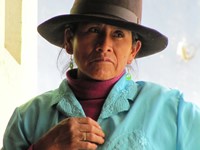
Photo Source:
Copyrighted © 2026
International Mission Board-SBC, Tommy Smith All rights reserved. Used with permission |
Send Joshua Project a map of this people group.
|
| People Name: | Quechua, Margos Chaulan |
| Country: | Peru |
| 10/40 Window: | No |
| Population: | 151,000 |
| World Population: | 151,000 |
| Primary Language: | Quechua, Margos-Yarowilca-Lauricocha |
| Primary Religion: | Christianity |
| Christian Adherents: | 86.00 % |
| Evangelicals: | 3.00 % |
| Scripture: | Complete Bible |
| Ministry Resources: | Yes |
| Jesus Film: | Yes |
| Audio Recordings: | Yes |
| People Cluster: | Quechua |
| Affinity Bloc: | Latin-Caribbean Americans |
| Progress Level: |

|
Introduction / History
The Margos Chaulan Quechua are an Indigenous Quechua-speaking people located in the highland region of Huánuco, Peru. They are part of the larger Quechua ethnolinguistic family, whose roots stretch back to ancient Andean civilizations and the Inca Empire. Their language, Quechua Margos?Yarowilca?Lauricocha, belongs to one of many Quechua dialect clusters spoken throughout the Andes. As with many Quechua groups, their identity has been shaped through centuries of adaptation to life in the mountains, the influence of Inca culture, and later the pressures brought by Spanish colonization, which altered their political, religious, and social structures.
What Are Their Lives Like?
The Margos Chaulan Quechua live primarily in rural mountain districts where daily life centers around community, agriculture, and livestock. Like many Quechua communities, they engage in subsistence farming, raising crops such as potatoes, maize, and other high-altitude staples. Families often keep animals such as sheep, goats, and chickens to supplement their diet and income. Their food reflects traditional Andean staples, relying heavily on locally grown produce.
Family life tends to be tightly knit and interdependent, with extended family relationships shaping social responsibilities. Community celebrations are important and often include traditional music, dance, and seasonal festivals connected to agricultural cycles. The cultural emphasis on communal labor and mutual support echoes a long Andean tradition of cooperative work practices, still visible among Quechua peoples today.
What Are Their Beliefs?
They are almost entirely Roman Catholic, but they blend Catholicism with ancient Andean spiritual concepts. Many maintain practices connected to the land, ancestral reverence, and the spiritual forces believed to inhabit the mountains, rivers, and earth. Such beliefs reflect patterns seen in other Quechua groups, whose worldview historically integrated local deities, nature spirits, and ritual observances tied to agriculture and community well-being.
Where followers of Jesus Christ are present among the Margos Chaulan Quechua, pray that they will grow in biblical understanding and become part of the gospel force serving less?reached peoples across Peru's Andean regions.
What Are Their Needs?
Many Margos Chaulan Quechua communities face the physical challenges common to high?altitude rural life, including limited access to healthcare, educational opportunities, and economic stability. Infrastructure barriers make transportation and communication difficult, affecting access to goods, services, and emergency support.
Spiritually, they need continued exposure to the truth and mercy of Jesus Christ, as many remain shaped primarily by traditional beliefs without a clear understanding of the gospel. Discipleship, Scripture engagement, and presence of mature Christ?followers are essential for long?term spiritual growth.
Prayer Points
Pray that Margos Chaulan Quechua families will experience stable harvests, good health, and improved access to essential community resources.
Pray that God will open doors for Christ?centered teaching, allowing many to discover the hope and salvation found only in Jesus.
Pray that believers among them will grow strong in faith and emerge as leaders of gospel influence in surrounding communities.
Pray for the Holy Spirit to radically transform their churches, drawing thousands to put all their faith in Jesus Christ.