Kimaragan, Tandek in Malaysia
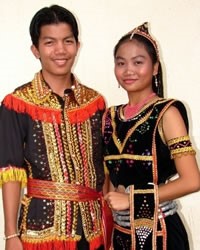
Photo Source:
MySabah.com
Used with permission
|
Send Joshua Project a map of this people group.
|
| People Name: | Kimaragan, Tandek |
| Country: | Malaysia |
| 10/40 Window: | Yes |
| Population: | 28,000 |
| World Population: | 28,000 |
| Primary Language: | Kimaragang |
| Primary Religion: | Christianity |
| Christian Adherents: | 60.00 % |
| Evangelicals: | 4.00 % |
| Scripture: | New Testament |
| Ministry Resources: | Yes |
| Jesus Film: | No |
| Audio Recordings: | No |
| People Cluster: | Borneo-Kalimantan |
| Affinity Bloc: | Malay Peoples |
| Progress Level: |

|
Introduction / History
Tandek Kimaragan in Malaysia are an indigenous people of northern Sabah, especially in the Kota Marudu, Pitas, and Beluran districts. Your comma rule applies here, so the correct final name is Tandek Kimaragan in Malaysia, not the editor's comma-separated form. The internal source places them specifically in those three districts, and reliable outside linguistic sources confirm that Kimaragang is a recognized Dusunic language of Sabah, with Tandek identified as one of its named varieties. Glottolog explicitly lists Tandek under Kimaragang, which is especially useful because it confirms that this is not just a political place-name but a real speech variety within the Kimaragang ethnolinguistic world.
They are best understood as part of the wider Kadazan-Dusun world of Sabah, while still preserving a distinct local identity. Outside sources describe the Kimaragang as one of the indigenous Dusunic peoples of northern Borneo, with particularly strong historical settlement in Kota Marudu and Pitas. A detailed academic overview of the Kimaragang notes that they are regarded as one of the indigenous sub-ethnic groups of Sabah and ties their identity to older Kadazandusun migration traditions connected with Nunuk Ragang, while also emphasizing that the Kimaragang developed their own recognizable language, customs, and social organization. Because the editor's form is "Tandek Kimaragan," the safest reading is that this profile refers to the Tandek-centered Kimaragang communities within that broader people.
What Are Their Lives Like?
Tandek Kimaragan in Malaysia live in the northern interior and foothill zones of Sabah, especially around Kota Marudu, Pitas, and nearby areas tied to the Tandek region. This is a landscape of rolling uplands, river valleys, village settlements, and access routes connecting rural communities to market towns rather than a dense urban environment. Outside sources repeatedly place Kimaragang communities in Kota Marudu and Pitas, and internal location data adds Beluran, showing that their life is rooted in northern Sabah's rural districts.
Their traditional livelihood has long centered on agriculture, especially hill rice cultivation, gardening, and use of forest resources. A focused academic study on the Kimaragang specifically states that they traditionally practiced shifting cultivation of dry hill rice, often together with maize, while another scholarly overview says their economy has historically depended on hill paddy cultivation, gardening, and forest harvesting. These are unusually valuable sources because they give concrete Kimaragang-specific detail rather than forcing generic Borneo assumptions. Over time, outside sources note that some Kimaragang also became involved in trade, port work, rubber plantations, and mining, especially as the colonial economy reshaped northern Sabah.
Their social life has also historically included longhouse living, though this changed over time. The same Kimaragang study notes that earlier settlement patterns included binattang (longhouses), but that these gradually shifted toward more scattered village settlement as economic and social changes took hold. This is important because it shows a people whose traditional communal structures were strong, yet whose present life likely includes more dispersed rural households than older longhouse concentration. Their language is Kimaragang, with Tandek recognized as one local variety. A Kimaragang phrasebook specifically notes lexical and phonological features of the Tandek dialect, confirming that the Tandek form is a real local speech variety. In daily life, many likely use their language in home and community settings while also using Sabah Malay and sometimes English in school, trade, government, and wider public life.
What Are Their Beliefs?
Tandek Kimaragan in Malaysia are identified primarily with Christianity, but this must be handled carefully. The internal source clearly lists Christianity as their largest religion, with many identifying as Christian, yet it also shows that evangelical depth is limited enough that they still need serious spiritual strengthening rather than being treated as a fully mature, deeply discipled church context. This is exactly the kind of setting where Christian identity may be real for many, but uneven in depth and mixed in practice.
Outside sources on the Kimaragang help clarify this. One academic field note specifically examines the impact of Christianity on traditional agricultural practices and beliefs among the Kimaragang, which shows that older belief systems and ritual patterns were historically significant. Another recent legal-cultural study mentions boboliyan, traditional Kimaragang ritual specialists or priestesses, showing that pre-Christian spiritual structures were not imaginary or superficial. That means some among Tandek Kimaragan in Malaysia may truly know Jesus Christ, while others may carry Christian identity more by family, church tradition, or community affiliation than by clear repentance and strong biblical grounding. Their deepest need is not more religious labeling, but genuine spiritual renewal, sound doctrine, freedom from syncretism, and lives increasingly shaped by the authority of God's Word. Scripture portions are available in their language.
What Are Their Needs?
Tandek Kimaragan in Malaysia need strong biblical discipleship in a setting where Christian identity is present but spiritual depth should not be assumed. When a people group has a substantial Christian profession yet only modest evangelical strength, the danger is often not open rejection of Christ but nominal Christianity, inherited church identity, and weak doctrinal grounding. They need pastors, teachers, and mature believers who will preach repentance, the new birth, and the authority of Scripture clearly rather than assuming that Christian background equals biblical maturity.
They also need discipleship that addresses the pull of older ritual patterns and customary spiritual assumptions. Because outside Kimaragang-specific research directly notes the interaction between Christianity and earlier traditional beliefs, and because traditional ritual figures such as boboliyan are still discussed in serious scholarship, it is reasonable to say that some believers may still feel pressure from inherited fears, cultural ritual memory, or community customs. They need careful teaching from Scripture so they can understand that Jesus Christ is Lord over fear, blessing, harvest, suffering, family pressure, and every spiritual power.
Their rural northern Sabah setting also matters. Communities spread across Kota Marudu, Pitas, and Beluran can face uneven access to transportation, education, medical care, and consistent connection to mature biblical teaching, especially outside the main town centers. Because earlier longhouse-based social cohesion has given way in many places to more scattered village patterns, local churches and family discipleship become even more important. They need strong local leaders, Scripture-centered homes, and durable fellowships that can remain faithful over time rather than drifting into shallow religion or cultural Christianity.
Prayer Points
Pray that Tandek Kimaragan in Malaysia would grow beyond nominal or inherited Christianity into deep repentance, strong faith, and joyful obedience to Jesus Christ.
Pray that where Christian identity is mixed with older ritual memory, inherited spiritual fears, or cultural religion, the Lord would bring biblical clarity, conviction of sin, and lasting transformation.
Pray for pastors, evangelists, and church leaders among Tandek Kimaragan in Malaysia to handle Scripture faithfully, teach sound doctrine clearly, and shepherd people with humility and courage.
Pray that families and village communities in the Tandek, Kota Marudu, Pitas, and Beluran areas would become places of prayer, Scripture, repentance, and faithful discipleship.
Pray that believers would reject every form of syncretism, fear-based spiritual compromise, and shallow religious routine, and would stand firmly on the gospel of Jesus Christ.
Pray for practical help where needed in areas such as transportation, medical access, education, and regular connection to mature biblical teaching in rural northern Sabah communities.