Morop, Iwur in Indonesia
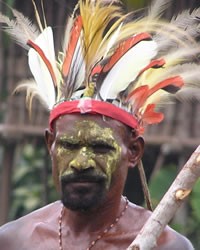
Photo Source:
Anonymous
|
Send Joshua Project a map of this people group.
|
| People Name: | Morop, Iwur |
| Country: | Indonesia |
| 10/40 Window: | Yes |
| Population: | 3,800 |
| World Population: | 3,800 |
| Primary Language: | Morop |
| Primary Religion: | Christianity |
| Christian Adherents: | 85.00 % |
| Evangelicals: | 10.00 % |
| Scripture: | Translation Started |
| Ministry Resources: | No |
| Jesus Film: | No |
| Audio Recordings: | No |
| People Cluster: | New Guinea |
| Affinity Bloc: | Pacific Islanders |
| Progress Level: |

|
Introduction / History
Iwur Morop in Indonesia are a Papuan people of the far eastern highlands of Indonesian New Guinea. Your comma rule applies here, so the correct final name is Iwur Morop in Indonesia, not the editor's comma-separated form. Outside language sources identify Iwur as the same language also known as Morop or Murop, showing that these names belong to the same ethnolinguistic setting rather than to separate peoples. Reliable linguistic sources classify their language within the Ok language family of New Guinea, placing them among the highly diverse Papuan peoples of the borderlands near Papua New Guinea.
A specialized linguistic source on Morop notes that the Morop people are made up of the District of Iwur and the District of Tarup, located southeast of Oksibil in the southern foothills of the Pegunungan Bintang or Star Mountains. That is a valuable outside clue because it ties the people directly to a real mountain-border geography rather than leaving them as an abstract listing. This setting helps explain why their identity has been preserved through local settlement, language continuity, and relative geographic isolation.
Their language is Morop, also known externally as Iwur, Iwoer, or Murop. Reliable language sources identify it as an Ok language of Papua and note that it has at least recognized dialects such as Dintere and Komanarepket. Glottolog likewise treats it as Morop-Dintere, confirming that this is a real and recognized language cluster rather than a vague regional label. In practical terms, their language remains central in home and community life, while Indonesian may be encountered more in administration, schooling, or contact beyond the immediate area.
What Are Their Lives Like?
Iwur Morop in Indonesia live in the rugged interior of Papua, in the southern foothills east and southeast of Oksibil near the Star Mountains border region. This is a remote upland environment where communities are typically organized around small settlements rather than large towns. The outside source that places them in the Iwur and Tarup districts suggests a people whose daily life is shaped by mountain terrain, difficult travel, and close dependence on family and village relationships. In a region like this, geography affects everything from access to markets and schooling to medical care and long-term church support.
Because detailed public ethnographic descriptions of the exact Iwur Morop subgroup are limited, caution is needed. Still, the available evidence strongly supports a picture of a remote Papuan highland-border people whose lives are shaped by mountain foothill settlements, kinship ties, local subsistence patterns, and the realities of living far from major centers. In such settings, faithful ministry usually requires patience, long presence, and deep respect for local relationships.
What Are Their Beliefs?
Iwur Morop in Indonesia are identified primarily with Christianity, but the internal source also indicates that this is a people in need of deeper spiritual strength rather than a fully mature, thoroughly discipled church situation. Since they are listed as largely Christian yet only partially reached in terms of evangelical strength, this is the kind of setting where Christian identity may be real for some but mixed, shallow, or unevenly rooted for others. That means this profile should not treat them as wholly unreached, but neither should outward Christian profession be mistaken for widespread biblical maturity.
Some among Iwur Morop in Indonesia may be genuine believers in Jesus Christ. Others may carry a Christian identity shaped by family, mission history, or community affiliation without strong grounding in Scripture. In parts of Papua, older customary beliefs and fears can also continue beneath a Christian surface, even where church life is present. For that reason, their need is not merely for religious identity, but for biblical depth, sound doctrine, faithful shepherding, and lives increasingly shaped by the authority of God's Word. Scripture portions are available in their language.
What Are Their Needs?
Iwur Morop in Indonesia need strong biblical discipleship in a remote mountain setting where Christian identity appears present but spiritual depth should not be assumed. Where a people group has substantial Christian profession yet only modest evangelical strength, the danger is often not open rejection of the gospel but superficial Christianity, uneven teaching, and churches that may lack long-term grounding in Scripture. They need faithful pastors, teachers, and believers who can patiently strengthen local churches in truth, holiness, and endurance.
Their geography also matters. Living in the foothills southeast of Oksibil means access can be difficult, and that can affect consistent pastoral care, theological training, fellowship, and practical support. In remote Papuan communities, travel challenges can make it harder for believers to remain connected to mature teaching and harder for leaders to receive sustained training. Strong local leadership is especially important in places where outside contact is limited or irregular.
They also need discipleship that reaches homes and whole communities, not only isolated individuals. If there are lingering customary fears or older spiritual assumptions beneath a Christian identity, believers need careful biblical teaching so they can understand the lordship of Christ over fear, suffering, sickness, and every spiritual power. Practical needs such as transportation, medical access, education, and regular contact with strong biblical fellowship may also affect church health in a remote borderland setting and should be prayed for carefully without exaggeration.
Prayer Points
Pray that Iwur Morop in Indonesia would grow beyond superficial Christianity into deep repentance, strong faith, and joyful obedience to Jesus Christ.
Pray for pastors, evangelists, and church leaders among Iwur Morop in Indonesia to handle Scripture faithfully, teach sound doctrine clearly, and shepherd people with humility and courage.
Pray that where Christian identity is mixed with fear, custom, or shallow understanding, the Lord would bring biblical clarity, spiritual renewal, and lasting transformation.
Pray that families and village communities in the Iwur and Tarup areas would be strengthened by God's word, so that homes become places of prayer, discipleship, and faithful witness.
Pray for strong local fellowships in remote foothill communities, and that believers would remain steadfast even when distance and isolation make consistent support difficult.
Pray for practical help where needed in areas such as transportation, medical access, education, and regular connection to mature biblical teaching in remote mountain-border communities.